

Not everyone has the time, money, or mindset to pursue a CFA or an MBA. And that’s completely okay. But in today’s finance-driven job market, there’s still a lingering question: can financial modeling alone help you land a job in core finance?
The short answer? Yes, it can—but there’s more to the story. In this article, we’ll explore where financial modeling fits in the absence of big-name qualifications, and what recruiters actually say when evaluating such profiles.
What Financial Modeling Actually Means (and Doesn’t Mean)
Let’s clear this up first. Financial modeling is not about knowing formulas off the top of your head or creating overly complex Excel sheets just for the sake of it.
At its core, financial modeling is about building spreadsheets that help answer business questions such as how profitable a project will be, what a company is worth, or how much funding is needed and when.
It’s a skill that turns raw data into business insights. And for many finance roles, it’s not just helpful—it’s expected.
Does Financial Modeling Hold Weight Without a CFA or MBA?
Surprisingly, yes—especially for entry-level and junior positions. Recruiters often say that hands-on modeling skills can be more valuable than a generic degree. As one recruiter from a mid-sized investment firm put it:
“If a candidate knows how to build a full financial model and about P&L, cash flow, balance sheet and DCF, they’re more job-ready than someone with a generic MBA who doesn’t know where to start in Excel.”
That said, a CFA or MBA still adds value as these credentials can boost your credibility, expand your network, and open more doors. But if you don’t have the time or resources for these programs, you’re not out of the running. Strong modeling skills, clear logic and the ability to explain your work can make you stand out.
Why Some Recruiters Prefer Skills Over Degrees
Degrees can be great for networking, brand recognition, and long-term progression. But from a recruiter’s point of view, they don’t always translate to ability.
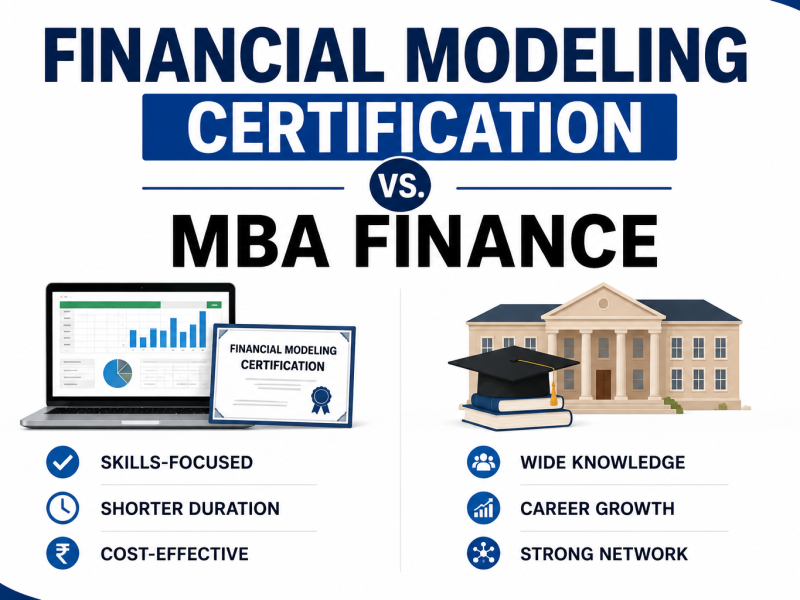
Here’s a quick look at how financial modeling compares with CFA and MBA:
| Criteria | Financial Modeling | CFA | MBA |
| Practical Application | High | Medium | Varies |
| Time Commitment | 2–3 months | 2–3 years | 1–2 years |
| Cost | Low | Medium | High |
| Immediate Hiring Value | High | Low (initially) | Depends on B-school |
That’s why some candidates who skip the CFA/MBA route still manage to land solid roles because they’ve mastered a skill that companies actually use on a daily basis.
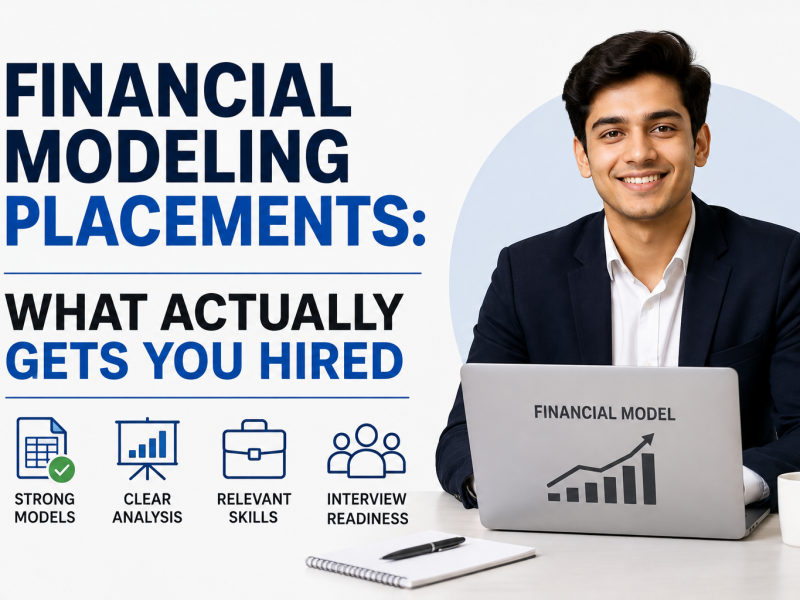
What Recruiters Look for in “Non-Degree” Candidates
If you’re not bringing in the weight of a degree, your skills need to speak louder. Recruiters tend to look for:
Project Experience
Even one or two good models like a valuation for a startup or a cash flow model for an NGO can show initiative. It doesn’t have to be a full-time job. Freelance, live projects, or even self-driven case studies count.
Business Understanding
A model is only as useful as the logic behind it. Recruiters want candidates who understand what the numbers mean, not just those who fill out Excel sheets with formulas.
Presentation and Clarity
Can you explain your assumptions? Defend your forecast? A good model should be clear, structured, and easy to follow. That matters a lot during interviews or case rounds.
Where Financial Modeling Makes the Biggest Impact
You don’t need to be in investment banking to use modeling. The skill is valuable in:
- Equity Research (earnings modeling, comparables)
- FP&A (budgeting, forecasting)
- Startups (cash runway, fundraising projections)
- Consulting (feasibility models, market sizing)
- Corporate Strategy (M&A analysis, cost optimization)
In all these roles, modeling skills can give you an edge—even more than a broad finance degree.
The Interview Advantage
Here’s how financial modeling helps in interviews:
- You’ll handle Excel tasks with confidence.
- You won’t panic if asked to “value this company.”
- You can explain business logic with numbers.
Many MBA grads struggle when interviews turn technical. If you’ve practiced real modeling, you’ll stand out.
Can You Learn Financial Modeling Without a Finance Background?
Absolutely. Many successful modelers come from engineering, science, or even humanities. What matters is:
- Comfort with Excel
- Basic accounting logic
- Business intuition
Often, those with sharp logic and structured thinking pick up modeling faster than those who only learned theory.
When Should You Learn Financial Modeling?
If you’re studying or between jobs, now is the perfect time. The earlier you learn, the more it shows up on your CV and in interviews. Many professionals wish they’d started sooner.
So, Is It Worth It?
If you’re skipping the CFA or MBA, financial modeling is probably your best shortcut into finance. It won’t guarantee a job—but it will get you noticed, and in a crowded market, that’s often the difference between being shortlisted or ignored.
Final Thoughts
In finance, degrees open doors, but skills keep them open. Financial modeling is a rare skill that:
- Is required in almost every finance role
- Can be learned quickly and affordably
- Has a direct impact on hiring decisions
If you’re not pursuing a CFA or MBA, mastering financial modeling isn’t just “worth it” but it might be your smartest career move.
Your article helped me a lot, is there any more related content? Thanks!
I don’t think the title of your article matches the content lol. Just kidding, mainly because I had some doubts after reading the article.
Your point of view caught my eye and was very interesting. Thanks. I have a question for you. https://www.binance.bh/ja/register?ref=FIHEGIZ8