
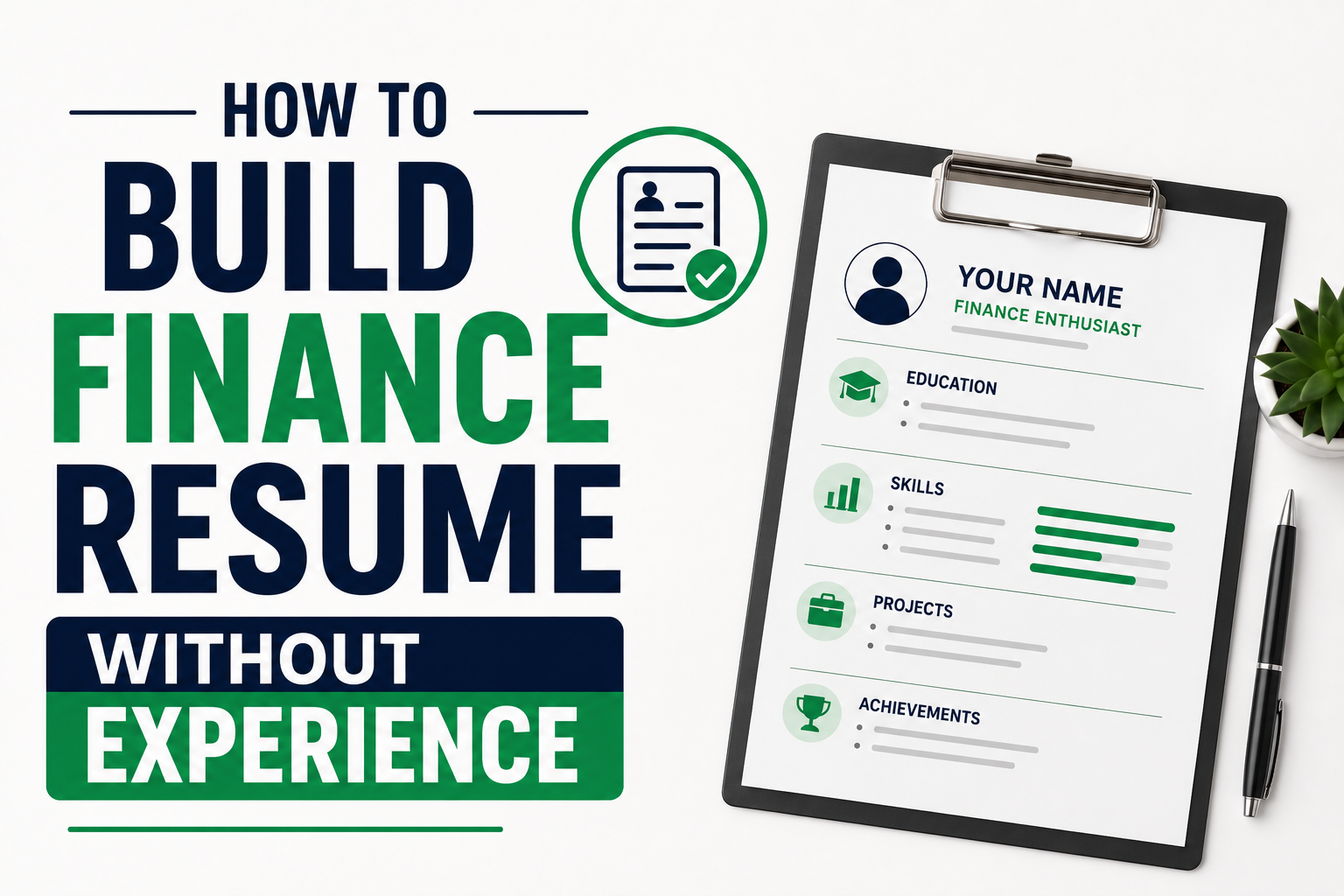
Landing your first job in the high-stakes world of finance can often feel like a “chicken and egg” problem. The recruiters demand experience, but first you need a job to get that experience. This is the primary hurdle for anyone drafting a finance resume for freshers. However, the secret that top-tier applicants in hubs like Delhi and Gurugram know is this: finance isn’t just about what you’ve done but more about what you can do right now.
Whether you are aiming for a financial analyst resume that stands out in a pile of hundreds or simply trying to figure out how to frame your finance resume without experience in a competitive market, this guide will walk you through the structural and strategic shifts needed to turn a blank page into a recruiter’s dream. By the end of this, you’ll see why a fresher finance resume can be even more compelling than an experienced one when it’s packed with the right technical “ammunition.”
1. The Mindset Shift: Skills Over History
When it’s about crafting a finance CV for freshers, the biggest asset is not your past employers- it’s your technical proficiency and academic rigor. In an entry level finance resume, the “Experience” section often gets replaced or bolstered by “Projects,” “Certifications,” and “Technical Skills.”
Recruiters spend an average of six seconds on a CV. If your resume doesn’t shout “I know Excel and Valuation” in the top third of the page, it’s likely headed for the bin. You have to treat your resume like a pitch deck where the product is your potential.
Think of your resume as a technical manual of your capabilities rather than a history book of your past. In the Delhi-NCR market, firms are looking for “plug-and-play” candidates who can handle data sets immediately without six months of hand-holding.

2. Essential Sections for a No-Experience Finance CV
– The Professional Summary
Forget the old-school “Objective” that says you want to learn. Use a summary that states what you bring to the table. For a professional financial analyst resume, try something like:
“Detail-oriented Finance graduate with a high GPA and advanced proficiency in DCF modeling and Bloomberg Terminal operations. Proven ability to analyze financial statements and build dynamic projection models through intensive academic capstones.”
– Education as the Main Event
Since you lack corporate history, your education is your “work.” List relevant coursework like Corporate Finance, Derivatives, and Econometrics. Mentioning high scores in specific quantitative subjects adds more weight to a finance resume for freshers than just a general GPA. If you were in the top 10% of your class at a reputable institution, highlight it.
– The Power of Projects
This is where you bridge the gap. If you’ve never worked at an Investment Bank, have you built an equity research report on a Nifty 50 company? That’s a project. If you have managed a mock portfolio or participated in a stock pitch competition, list it. Describe the tools used (Excel, Python, SQL) and the outcome (e.g., “Identified 15% undervaluation in Tech sector stocks using a 3-stage FCFE model”).
The “Interests” section can also be a secret weapon if used strategically to show a passion for markets. For instance, mentioning that you manage a personal paper-trading account or follow specific sector trends in the Indian economy shows you have a “market stomach.”

3. Certifications: The Experience Proxy
Certifications are the fastest way to add “experience” to a finance resume without experience. They signal to an employer that you have been vetted by a professional body and possess the stamina for industry-standard exams. However, clearing the exam is only half the battle. This is where premier institutions like The WallStreet School (TWSS) in Connaught Place (Delhi) and Andheri (Mumbai) step in– bridging the gap by pairing theoretical certifications with the practical, job-ready skills employers actually look for.”
– CFA Level 1: The ultimate credibility booster for global finance roles. It proves you have the foundational knowledge and the discipline to handle 300+ hours of study.
– Financial Modeling & Valuation: Essential for any financial analyst role. If you can build a 3-statement model from scratch, you are 80% ahead of other freshers.
– NCFM / NISM Modules: These are crucial for the Indian markets, specifically for Equity Derivatives, Mutual Funds, or Investment Advisor roles.
In a sea of identical degrees, certifications act as a quality filter for HR managers who are surfing through hundreds of applications. They represent a standardized benchmark of excellence that levels the playing field against candidates who might have had “prestigious” internships through personal connections.
To truly stand out, pursuing these certifications through The WallStreet School (TWSS) gives you a massive edge. Known for its flagship training and an exceptional success rate, TWSS does not just help you clear exams– it provides hands-on, practical training from industry veterans and structured placement support to ensure you actually land the job.
4. Technical Skills: The Finance Stack
A fresher finance resume must highlight a specific tech stack, as It’s no longer just about “MS Office.” You need to be specific about your capabilities:
| Category | What to Include |
| Excel Mastery | VLOOKUP, Index Match, Pivot Tables, Macros Financial Modeling, Sensitivity Analysis |
| Software/Terminals | Bloomberg, Reuters Eikon, Factset, or Tally (for accounting roles) |
| Data & Programming | Python (Pandas/MumPy), SQL for data extraction, R for statistical analysis |
Don’t just list the software- mention the specific functions you’ve mastered to show you are not just a casual user. For example, instead of just “Excel,” write “Advanced Excel: automated financial reporting using VBA and designed dynamic dashboards for portfolio tracking.”
This level of detail transforms a generic skill into a specialized tool that a hiring manager can actually envision using in their department.
5. Formatting for the ATS (Applicant Tracking Systems)
Most large firms and banks use software to filter an entry level finance resume before a human ever sees it. To ensure your resume survives the “bot audit,” follow these rules:
– Use standard headings like Education, Experience, and Skills.
– Avoid heavy graphics, logos, or complex tables that might confuse the parser.
– Sprinkle your keywords– like financial analyst resume and fresher finance resume– naturally throughout the bullet points.
The goal is to be “machine-readable” first and “human-readable” second, as the bot is the gatekeeper to the interview. Use a clean, chronological format that allows the software to easily map your skills to the job description’s requirements.
Consistency in font and spacing is not just about the aesthetics, but also to ensure that the parsing algorithm does not skip over your most important achievements or keywords.

6. Soft Skills: The “Client-Ready” Factor
Finance is as much about communication as it is about numbers. In your CV be sure to highlight instances of leadership or teamwork. Did you lead a college club? Did you present your research to a panel of professors? These show you can handle the collaborative and often high-pressure nature of the industry. Mentioning “Stakeholder Management” or “Presentation Skills” adds a layer of professional maturity to your profile.
In the high-pressure environments of investment banking or wealth management, your ability to remain calm and articulate is just as important as your math skills. Highlight experiences where you had to simplify complex information for a non-technical audience, such as explaining a college project to a diverse committee. This proves you are “front-office ready” and can eventually be trusted in front of high-net-worth clients or senior partners.
Conclusion
Building a finance resume without experience requires a shift from “what I was” to “what I am capable of.” By emphasizing certifications like the CFA, showcasing technical projects, and mastering the “Finance Stack,” you create a compelling narrative that proves your value. The lack of a previous job title is just a temporary state– your skills and your willingness to build models from scratch are your true currency in the finance market.
FAQ
1. How can I create a professional finance resume for freshers with no internships?
Focus on your academic projects and technical certifications. A strong finance resume for freshers should highlight your proficiency in tools like Excel and Python, alongside any relevant coursework like Corporate Finance or Portfolio Management. Treat your university capstone projects as your “work history” to demonstrate practical application.
2. What are the best certifications to include on a finance resume without experience?
The CFA Level 1 is the gold standard for proving your commitment and knowledge. Additionally, certifications in Financial Modeling and Valuation or NISM modules are excellent for a finance resume without experience, as they signal to recruiters that you possess job-ready technical skills that don’t require basic training.
3. What key skills must be present on a financial analyst resume?
A competitive financial analyst resume needs a balance of quantitative and analytical skills. You should explicitly list your ability to perform DCF modeling, three-statement integration, and sensitivity analysis. Proficiency in data visualization tools like Tableau or PowerBI also adds significant value for entry-level roles.
4. How do I optimize a fresher finance resume for Applicant Tracking Systems (ATS)?
To ensure your fresher finance resume passes the initial bot screening, use standard section titles and avoid complex formatting like multi-column layouts or images. Naturally integrate industry-specific keywords such as “Equity Research,” “Financial Reporting,” and “Valuation” within your bullet points to match the job description.
5. Is a finance CV for freshers different from an entry level finance resume?
While the terms are often used interchangeably, a finance CV for freshers can sometimes be more academic and detailed, whereas an entry level finance resume is typically a concise, one-page document focused on immediate employability. In both cases, the priority remains showcasing your technical “Finance Stack” and your potential to handle complex data from day one.
The point about shifting focus from work history to technical skills and projects is really important, especially for students trying to break into finance for the first time. A lot of freshers underestimate how much recruiters value practical exposure through case studies, Excel models, or valuation projects, even if they weren’t done in a formal job setting. It would also be interesting to see examples of how candidates can present academic projects in a way that feels relevant to real finance roles.
Solid advice on building a finance resume from scratch — emphasizing quantifiable achievements over generic descriptions is exactly right. While polishing the content, the visual presentation matters too. GPT Image 2 can help create a clean, professional LinkedIn banner or resume header that makes a strong visual first impression.
Solid actionable advice for finance job seekers. The emphasis on quantifiable achievements even from academic projects is a smart framing — recruiters respond to numbers regardless of where they came from.
Really helpful article! I’ve been using Whisper AI to transcribe client meetings and property walkthroughs — accurate text records from audio recordings saves a lot of time.
Well researched piece on the financial side. I’ve been building out a business content library and Miso One’s TTS has been useful for draft narrations — quality is good enough that some go straight to final.
Solid breakdown of How to Build a Finance Resume Without Experience. I produce financial education video content with Omni Video and well-written articles like this are great starting points. Very helpful!
Really practical advice for finance candidates without direct experience — the framing of transferable skills from consulting, data analysis, or even quantitative coursework in terms that resonate with front-office reviewers is something most career guides skip entirely. I was creating resume design template visuals for a career coaching platform and used Nano Image to mock up clean, finance-appropriate CV layouts that paired well with this kind of content strategy.
The chicken-and-egg problem in finance hiring is real — almost every entry-level posting lists experience requirements that make no sense for an entry-level role. The guidance on building a credible resume without traditional experience is exactly what first-generation finance job seekers need. I produce career coaching audio content for finance students using Miso One, and resume advice in voiced format tends to land better than written guides because listeners can follow along while working on their own materials.
The ‘chicken and egg’ framing of the entry-level finance job search is exactly right — it’s one of those fields where the barriers feel artificial until you find the right angle in. The advice on highlighting transferable analytical skills even from non-finance backgrounds is solid and actionable. I produce career prep content in video format and HappyHorse AI has streamlined how I turn written tips into short clips.
Practical advice here — the focus on transferable skills and quantifying academic projects is exactly right for breaking into finance without direct industry experience. The point about tailoring for specific firm cultures (bulge bracket vs boutique) is something most guides miss entirely. Worth bookmarking for anyone starting out.
Practical, actionable advice for finance job seekers without direct experience — the emphasis on showcasing analytical projects and coursework is spot on for entry-level candidates. For professional profile visuals and portfolio images, Nano Banana 3 has been a useful editing tool.
The advice on quantifying academic projects and case competitions is solid — recruiters in finance respond well to numbers even when the source is coursework. The section on transferable skills from non-finance roles is particularly useful for career changers who undersell analytical experience from unrelated fields.
Well-structured post. The risk assessment section is particularly useful. I created video explainers with Kling 3.5 for similar topics — the 4K quality holds up well for professional use.
The advice on leading with transferable analytical skills rather than apologizing for the lack of direct finance experience is exactly right — hiring managers in many finance roles are looking for evidence of structured thinking and quantitative reasoning, which can be demonstrated through academic projects, case competitions, and even adjacent industry work. The personal finance management section as a portfolio piece is an underrated suggestion. For career education content creators, AI animation tools like ToonComposer have been helpful for producing animated resume and career path explainers that make complex hiring criteria more visually digestible for entry-level candidates.
The emphasis on quantifiable achievements over generic duties is something most entry-level candidates miss entirely. Framing transferable skills from internships or coursework in the language of financial analysis is the smartest move highlighted here.
The tip about quantifying internship outcomes even when the role was unpaid is gold — most guides skip over that entirely. I’ve been helping some recent graduates with their job applications and this breakdown is one of the most practical I’ve come across.
Finance resumes without experience are genuinely difficult to craft well—the advice to lead with relevant coursework and certifications rather than trying to inflate minimal experience is exactly right. The suggestion to frame personal investment tracking as analytical experience is clever and maintains integrity. I was helping a student put together a portfolio presentation and used Seedance 2.0 to generate a short professional intro video; the output quality for career content was strong.
Given the average recruiter spends six seconds on a CV, does a fresher put certifications or projects in that top third? My instinct says the CFA line buys credibility faster, but an equity research report shows the technical work actually happened. Curious which one Delhi recruiters weight more.
This is super helpful, thanks! Also worth checking out: head-football – fun head-to-head soccer game, totally free to play.
The advice to replace a generic ‘Objective’ with a professional summary that highlights specific technical capabilities, like DCF modeling, is very practical. For freshers, it immediately shifts the focus from what they hope to learn to what they can actually deliver on day one. Highlighting academic projects with specific details, such as the valuation models used, seems like a much stronger way to demonstrate readiness than just listing course names.
Minimax H3 is an AI tool for generating both videos and images, which makes it a decent two-in-one for content experiments. It’s handy when you want to switch between stills and motion without juggling a bunch of different tabs.
The “chicken and egg” problem you described is exactly what I’ve been stuck on for months, especially when every job posting asks for “2+ years of financial modeling.” I really liked your point about breaking down academic projects and even personal budgeting into measurable outcomes—I’d never thought to frame my Excel-heavy coursework as “revenue forecasting” until now. That reframing alone makes my resume feel less empty, so thanks for giving me a concrete starting point.
lyria3-pro.com
Good read. I have also been working on similar projects and file-convert-factory has been a great help.
The “chicken and egg” framing really hit home for me—especially the part about how recruiters want experience but won’t give you the chance to earn it. I never thought about breaking down class projects into measurable outcomes like “increased portfolio returns by X%” to mimic real work, but that makes total sense now. Going to try rewriting my coursework section that way tonight.
glm5.app
The tip about using projects and certifications to fill the experience gap really resonated with me. I’ve been stuck in that same chicken-and-egg loop, and it’s refreshing to see a practical approach that doesn’t rely on internships. It makes me wonder if I’m structuring my projects effectively, though. When I need a mental break from tweaking my resume, I sometimes dive into a quick game like Home Is Where He Is to reset my focus before tackling the next draft. Home Is Where He Is
The point about treating coursework and personal projects as legitimate “experience” really clicked for me—I’d been leaving my capstone stock analysis off my resume because I thought it didn’t count, but framing it as a mini equity research report makes it feel relevant. I’m going to try the “skills-first” layout you suggested and see if that helps me get past the ATS filters. Thanks for breaking down the chicken-and-egg problem into something I can actually act on.
Muse AI
The point about treating coursework and academic projects as actual work experience really stood out to me—framing a capstone thesis as a financial analysis project is something I’d never considered before. I’ve been stuck in that exact chicken-and-egg loop for months, and this gives me a concrete way to fill the gap without pretending I have internships I don’t. Also, the tip on quantifying even small responsibilities, like budgeting for a student club, is a simple shift that makes a huge difference in how recruiters read a resume.
seedream5-pro.net
The part about treating coursework and academic projects as real-world experience really stood out to me—I’d never thought to frame my financial modeling class that way, but it makes total sense for entry-level roles. I’m currently stuck in that same chicken-and-egg loop, so I’m going to try restructuring my resume around those projects tonight. Thanks for breaking down a problem that feels way more intimidating than it actually is.
Muse Code
Great practical advice on using certifications and projects to fill the experience gap. I’d add that for freshers specifically targeting investment banking or equity research roles, building a simple financial model from public data and posting it on GitHub with a short video walkthrough can be a powerful differentiator. It shows not just technical skill but also the ability to communicate complex ideas—something recruiters in Delhi and Mumbai often say is missing. For those looking to structure this process, this guide offers a useful framework to turn theoretical knowledge into portfolio-ready work.
Nice post! For free HDR photo enhancement, try this online tool.
The “chicken and egg” framing really hit home for me—especially the part about recruiters wanting experience before you’ve had a chance to earn it. I’ve been stuck in that loop for months, and your suggestion to reframe academic projects and even personal budgeting as quantifiable “finance work” gave me a concrete way to break the cycle. I’m going to try building out a sample portfolio of mock portfolio analyses this weekend, just to have something tangible to point to in interviews.
seedream5-ai.org
The point about shifting from ‘what I was’ to ‘what I can do’ is spot on—especially for finance roles where technical skills often outweigh past roles. I’d add that even without formal experience, building a small portfolio of financial models (like a simple DCF on a public company) and sharing it on GitHub or a personal site can be a tangible proof point for recruiters. It also gives you something concrete to discuss in interviews, turning a potential weakness into a talking point. For those looking to structure this, this guide can help organize project ideas and skill-building steps.
The part about treating coursework and academic projects as actual work experience really clicked for me—I’d been underselling my financial modeling class project, but framing it as a mini-equity research report makes total sense now. I also appreciate the tip on using numbers like portfolio returns or budget variances from school clubs, since that’s the only way to show impact without a corporate title. Thanks for breaking the chicken-and-egg cycle into actionable steps.
flux3-ai.net
Fantastic article! Anyone looking for a reliable file converter should try HEIC to JPG. Really solid!
The point about treating coursework and personal projects as “real” experience really stood out to me—I’d never thought about framing my capstone analysis as a mini equity report, but that makes total sense for a finance resume. I’m going to rework my bullet points tonight using that angle and see if it helps me get past the first screen. Thanks for laying out the exact structure, especially the part about quantifying even small tasks.
seedream5-ai.org
[object Object]
The part about treating coursework and academic projects as real-world experience really stood out to me—I’d never thought about framing my financial modeling class that way before. It’s a simple shift in perspective that makes the resume feel less empty when you’re just starting out. I’ll definitely be reworking my bullet points to highlight the analytical skills from those group projects.
wan-3.app
The part about treating coursework and academic projects as actual work experience really clicked for me — I’d been leaving my capstone analysis off my resume because it wasn’t a paid role, but framing it as a financial modeling project makes total sense. I’m going to rework my bullet points to highlight the specific tools and outcomes from that project now. Thanks for laying out the steps so clearly.
kling5.app
The part about framing academic projects and coursework as tangible experience really hit home for me—I’ve been stuck on how to present my capstone analysis without calling it “work experience.” I also liked the tip about using numbers from class simulations, since recruiters seem to respond to metrics even if they’re not from a real job. Definitely going to rework my bullet points tonight with that approach.
aipostergenerator.ai
Can personal valuation projects really carry the same weight as professional certifications on a finance resume? Framing rigorous academic coursework as direct technical experience seems like an effective workaround for freshers navigating such competitive entry-level roles.
[object Object]
The point about replacing the ‘Objective’ section with a ‘Professional Summary’ that states what you bring to the table is spot on. I’ve seen many freshers default to generic lines like ‘seeking an opportunity to learn,’ which adds no value. Framing education and projects as your ‘work’ is a smart reframe, especially when you can quantify outcomes like the FCFE model example. For those looking to add practical, hands-on skills that complement certifications, platforms offering project-based learning or mock portfolio building can be a strong supplement. Seadanse is one such resource that focuses on generating video content, which might be useful for creating a dynamic portfolio presentation or a short pitch video to attach to your application, though it’s more of a creative tool than a finance-specific one.
The part about reframing coursework and academic projects as “relevant experience” really clicked for me—I’d never considered listing my capstone portfolio analysis as a bullet point under a “Projects” section instead of just an education line. I’m going to try that approach tonight, especially the tip about quantifying results with metrics like Sharpe ratio or IRR. Thanks for making the chicken-and-egg problem feel a little less impossible for a fresh grad.
Seedream 6
The part about reframing academic projects and coursework as “financial analysis” really clicked for me—I’d been underselling my capstone work on valuation models, but now I see how to present it as tangible experience. I’m also going to try the tip about listing relevant certifications even if they’re in progress, since that at least shows initiative to recruiters. Thanks for breaking down the chicken-and-egg problem into actionable steps—this gives me a concrete starting point for my resume this weekend.
Krea 2 AI
The skills-over-history framing is right, and the version of it that actually moves recruiters is a link to work they can open. A cleaned-up three-statement model of a listed company, with your assumptions written out, does more for a fresher resume than any amount of coursework listing — it proves the thing the bullet point only claims. Worth adding a line on that. Also true that the Delhi/Gurugram market screens hard on Excel before anything else. Aside: I generate the charts and thumbnails for my own writeups in batches, the setup I use.
Awesome content! By the way, if you need to convert HEIC files to JPG, check out HEIC to JPG. Fast and free!
The part about treating coursework and academic projects as actual work experience really clicked for me—I’d never thought to frame my financial modeling class that way. It’s a smart reframe that makes the resume feel less empty without stretching the truth. I’m going to try the “skills-based” layout you suggested this weekend.
The part about treating coursework and academic projects as actual work experience really clicked for me—I’d never thought to frame my financial modeling class that way. It’s a smart reframe that makes the resume feel less empty without lying. Thanks for laying out such a practical first step.
Great tips on framing transferable skills! I used to struggle with this too. Did you know that showing off creative side projects can also help? I recently made some visual summaries of financial concepts using Muse Video — it was a fun way to demonstrate initiative and tech-savviness in my portfolio. Definitely worth considering if you want to stand out beyond the standard resume format! muse native audio to video