If you have ever walked out of a financial modeling interview thinking “that went fine” and then never heard back, you already know how confusing this process can be. You prepared. You knew your concepts. And yet somehow it wasn’t enough.
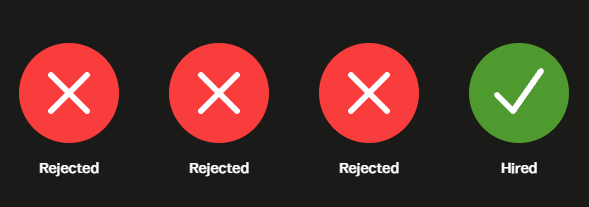
Virendra Singh knows that feeling well. He is a CFA Level 2 candidate who cracked his first Valuation Intern role at Finepolis Consultants LLP after three rounds of rejection and he is now placed at Asur Advisors, where he builds three statement models and runs DCF valuations on real companies. But before he got there, he went through that exact rejection loop three times, sitting through financial modeling interviews that didn’t go anywhere, and being honest enough with himself to ask why.
Here is his story and the four things he changed that finally got him hired.
Meet Virendra Singh: From Handicrafts to Equity Research

VIRENDRA SINGH
(placed at ASUR ADVISORS)
Virendra’s path into finance is not the usual straight line from a business degree to an analyst desk. He completed his Bachelor of Commerce in 2019 and a Master’s in Economics and Financial Management from the University of Rajasthan in 2021. Right after that, he actually ran his own business for over a year, selling handicraft products through Amazon, Flipkart and wholesale channels as the proprietor of Meha Creation.
After that he moved into a more traditional finance role as an Executive Accountant at Vidhema Technologies, handling financial planning, budgeting and vendor negotiations. Solid experience, but not the kind that got him closer to equity research, which is where he actually wanted to be.
So he made a call. He started preparing for CFA, cleared Level 1 and enrolled for a financial modeling course to build the technical skill set his resume was missing. That is where his interview struggles began and also where the real learning started.
Below Is The Interview Of Virendra With The WallStreet School
Q1: You cleared CFA Level 1 and picked up financial modeling skills. On paper that sounds like a strong profile. So what went wrong in your first few financial modeling interviews?
“Honestly, in the first interview, I thought CFA prep is enough, I’ll just talk theory and it’ll work out. I could tell them what DCF valuation is, what WACC means, all that. But then they said okay build a three-statement model in front of me, right now, from scratch. And I just went blank for like ten seconds. Like I knew the words but my hands didn’t know what to do. That’s when it hit me, there’s a huge gap between reading about financial modeling and actually sitting there doing it while someone’s watching you.”
Q2: That is such a common gap. What happened in the second interview?
Second one, honestly my resume killed it before I even opened my mouth properly. It was so boring though. Managed budgeting, handled vendor negotiations, etc, just job duty type lines. No actual project, no numbers, nothing that showed I could do modeling work. The interviewer literally said something like, I don’t see how this connects to the financial analyst jobs you’re applying for. And that hurt because inside I knew I wanted this, I was ready to learn, but my resume just wasn’t saying any of that on paper.
Q3: And the third one?
The third one is the one that actually changed me. The technical round went fine, no issues there. But then they asked, walk me through this comparable company analysis you did. And I just started jumping around, this point, then that point, going back, forgetting what I said earlier. It wasn’t coming out as a story, it was coming out all messy stuff. And I could literally see it on their face that they knew I hadn’t said this out loud before. That’s when it clicked, being okay in Excel and being okay in an interview room are honestly two totally different skills.
Q4: So after three rejections, what was the things that you changed? Can you walk us through that?
So there were four things basically, let me just go one by one.
First, I stopped just understanding financial modeling in my head and actually started working on them by building models, a complete model from start to finish. I took real companies, T-Mobile US, Amazon and built the whole three statement model myself, DCF valuation, WACC, comparable company analysis, scenario analysis, everything. And once I’d done this like five- six times on my own, financial modeling interview questions just stopped scaring me. Because I’d already messed it up in private, not in front of some interviewer judging me.
Second, my resume, I basically threw out the old one and started fresh. No more managed this, handled that. I put my actual projects, what I built, what the outcome was. Things like built an integrated financial model, prepared an equity research report with industry analysis and valuation. Suddenly my financial modeling skills were the first thing anyone saw, not buried under some old job title from an accounting role.
Third, mock interviews and I mean actually speaking out loud, not just thinking answers in my head. I’d time myself, explain a model exactly how I’d explain it in the actual room. Sounds small but trust me it’s not. Once you’ve said something out loud like ten times, it just comes out naturally, you don’t stumble.
Four, this one took me the longest to figure out honestly. I stopped hiding my career switch and started actually owning it. This is actually something that clicked properly only after I enrolled at The Wall Street School, in one of the sessions there we spoke about how to position your story and I realised I was doing it all wrong. Instead of skipping over my Meha Creation days or my accounting job like they were embarrassing, I started explaining how each one taught me something, negotiation from running my own business, planning from the accounting job, attention to detail. Once I could explain the logic myself, interviewers stopped being confused by my background.”
Q5: Did the fourth financial modeling interview feel different?
“Completely different, honestly. Like night and day. I wasn’t scared of them asking me to build something on the spot because I’d already done it so many times before, on my own. My resume wasn’t raising any weird questions anymore, it just told a clear story. And when they asked about my equity research project, I didn’t freeze, I just talked, the way I’d practiced it a hundred times basically. That interview ended in an offer for the Valuation Intern role at Finepolis Consultants. And honestly it felt so different from just applying for financial modeling placement with nothing real to show.”
Q6: That sounds like a big shift. Were there any hardships or tough moments while you were making all these changes and how did you push through them?
“Honestly yeah, it wasn’t smooth at all. The toughest part was doing this while I was still figuring out CFA Level 1 and also coming from a completely different background, accounting and then my own handicraft business, so I had zero network in equity research, nobody to ask for help. Also honestly, unlearning was harder than learning. I had spent so long being a master of theory only, from CFA, that when I took the course at The WallStreet School and actually had to build things practically, my hands just didn’t cooperate in the beginning, it felt like starting from zero even though I knew all the concepts on paper. There were nights I’d be stuck on why my DCF numbers weren’t matching and I’d just want to give up honestly, felt like I started too late compared to people who did finance straight out of college. Financially too it was tight, balancing course fees with everything else. What kept me going was just breaking it into small pieces, one model at a time, one mock interview at a time, instead of thinking about the whole mountain at once. And having mentors at the course to actually ask when I was stuck, that made a real difference, I wasn’t just Googling everything alone at 1 am anymore.”
Q7: Any advice for someone reading this who is stuck exactly where you were?
“Don’t wait for the interview to build your first real model, that’s my biggest advice. Do it now, on your own time, pick an actual company, don’t just copy some template. And say your answers out loud before anyone else hears them. Just these two things, honestly, would’ve saved me from three rejections.”
That Finepolis offer ended up being the turning point. Virendra is now placed at Asur Advisors, still doing the same kind of work, DCF valuations, financial models, real company research, just with a stronger platform behind him now.
What Virendra’s Story Actually Teaches Us?
Virendra’s experience is a pretty accurate picture of why so many candidates with good financial modeling skills still struggle to get hired. It is rarely about not knowing enough. It is usually one of four gaps, not enough hands on model building, a resume that does not show real work, no practice explaining your reasoning out loud and no clear story connecting your background to the role.
If any of that sounds familiar, the fix is not more theory. It is building real models, rewriting your resume around outcomes, practicing out loud and owning your story instead of hiding it.
Thinking About Building Your Own Financial Modeling Skills?
Virendra’s turnaround did not happen because he found a shortcut. It happened because he built real models, fixed his resume, practiced out loud and stopped hiding his career switch. If you are prepping for financial modeling jobs or a financial analyst interview and want a structured way to build the same skills, The WallStreet School’s financial modeling course is built around real company projects, valuation techniques and interview readiness, not just theory.
Watch this to see how the program works:
Talk to our counselors or attend a free demo session to see if it is the right next step for you.