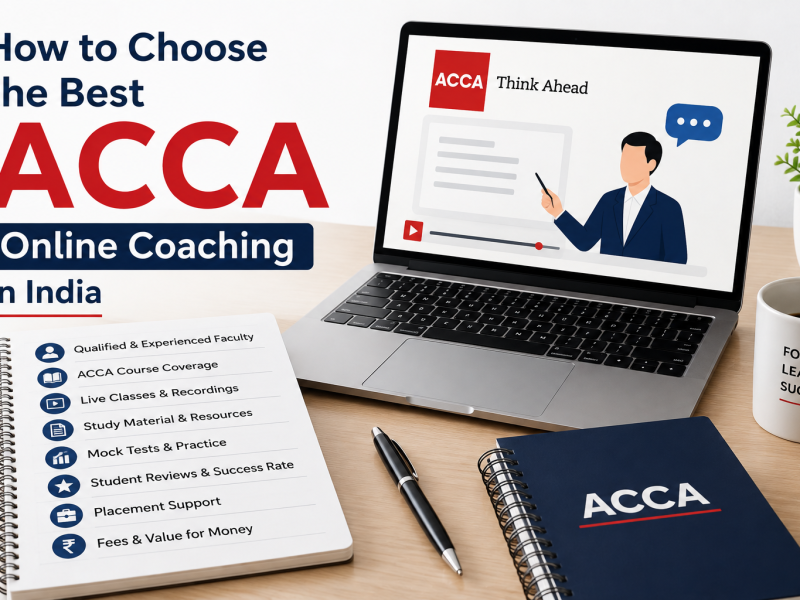
Ask any commerce student about their career plans and ACCA comes up sooner or later. It shows up on job postings, college websites, and in classroom chats. But most people using the word could not tell you what it means or why it matters.
Understanding the ACCA Full Form
The ACCA full form is Association of Chartered Certified Accountants. It is a global body for accountants, based in the United Kingdom, and it has been around since 1904. Over the years, it has become one of the most well known names in accounting and finance education, with members and students in more than 180 countries.
So when someone asks what is ACCA, It is both an organization and a qualification. The organization sets the rules, runs the exams, and gives out the certificate. The qualification is what a person earns after passing the exams and getting some real work experience. Once someone finishes the program, they become a Chartered Certified Accountant, a title that is respected in many countries.
Breaking Down the ACCA Meaning Further
Knowing the ACCA meaning is more than just knowing the full name. It stands for a certain way of training accountants, one built for a global career and not just a local one. Many accounting courses focus on one country’s tax rules. ACCA is different. It is designed to work across borders, which is why so many students choose it if they want the option to work abroad or with big international companies.
It also puts a lot of weight on ethics and real world skills, not just theory. This is one reason it stands out among other finance courses.
What Does the ACCA Qualification Actually Involve
The ACCA qualification has three parts. You need to clear the 13 exams, finish the Ethics and Professional Skills Module (EPSM), and complete the Practical Experience Requirement (PER).
There are 13 papers in total, split across three levels. Applied Knowledge has 3 papers covering business basics, management accounting, and financial accounting. Applied Skills has 6 papers covering law, performance management, taxation, financial reporting, audit, and financial management. Strategic Professional has 4 papers, 2 compulsory (Strategic Business Leader and Strategic Business Reporting) and 2 chosen from options like advanced taxation, advanced audit, advanced financial management, or advanced performance management. Every paper needs a 50% pass mark, and there is no negative marking for wrong answers. Applied Knowledge exams can be taken on demand, while Applied Skills and Strategic Professional papers are held in set sessions during the year.
The EPSM is not a written exam. It is a self paced online module with realistic work tasks, and it usually takes around 20 hours to finish. Most students complete it after Applied Skills and before starting Strategic Professional, since it also helps with the Strategic Business Leader paper.
The PER is the work experience part. Candidates need 36 months of relevant work, along with proof that they have met certain performance objectives on the job. This is what turns exam knowledge into real world skill, and it is a compulsory step before someone can call themselves a full ACCA member.
Why People Choose the ACCA Course
There are a few simple reasons students and working professionals pick the ACCA course.
First, it is known around the world. A qualification earned in one country still counts in many others. This matters for anyone who wants to work abroad or with global companies. Big accounting firms, banks, and large companies often value candidates who have this certificate.
Second, it is flexible. Students can start right after school. If someone already has a related degree, they may skip some early exams. This can save both time and money.
Third, the course stays up to date. It covers newer topics like data analysis and sustainability reporting, not just old style bookkeeping. This makes it useful for people who want to grow into leadership roles later, not just stay in basic accounting work.
Fourth, it can lead to good pay and strong career growth. People with this qualification often work as auditors, tax consultants, financial planners, or in corporate finance. Some go on to become finance managers or even chief financial officers.
Who Should Consider This Path
This path suits people who like working with numbers and also want a career that can take them anywhere in the world. It works well for commerce graduates, business students, and even people from other fields who want to move into finance.
That said, it takes real effort. The exams are tough, and studying while working or attending college needs discipline. Most people take a few years to finish, though the exact time depends on how many exams a person can skip and how fast they choose to move.
A Few Common Misconceptions
Some people think this qualification is only useful if you plan to leave your home country. That is not true. Many local companies, especially ones with global clients, also value it highly. Others think it is just like a regular accounting degree. It is not. It goes deeper into practical skills, ethics, and strategic thinking than most college courses do.
It is also not a quick process. Anyone hoping to finish in a few months will be disappointed. It takes real time and effort, but it tends to pay off with the range of opportunities it opens up.
Final Thoughts
At its heart, this qualification offers a solid path into finance and accounting, one that mixes real knowledge with hands on experience and strong ethics. Whether you are a student figuring out what to do after school, or a working professional thinking about a switch, understanding what this course involves is a good first step before deciding if it is right for you. Contact us at thewallstreetschool.com to get our expert guidance.
Frequently Asked Questions
How long does it take to complete the program?
On average, it takes two to four years. Besides passing the 13 papers, candidates also need 36 months of relevant work experience, so the exact time depends on exam pace, exemptions, and how the work experience lines up.
Can someone start this right after finishing school?
Yes, students can begin right after school. Those with a related degree may skip some of the early exams.
Is prior accounting knowledge required to begin?
Not really. The course starts from the basics, so someone with no accounting background can still join and move forward step by step.
What kind of jobs can someone get after finishing?
Common jobs include auditor, tax consultant, financial analyst, and management accountant. Some people later become finance managers or chief financial officers.
Is this qualification recognized only in the UK?
No, it is recognized in many countries. That is one big reason professionals pick it over courses that only work in one place.