Many commerce students today search questions like “Is CIMA worth it in India? What jobs can I get after CIMA? or How to build a career in management accounting?
In 2026, finance careers are becoming more specialized. Roles like risk management, financial analysis and corporate finance require not just theoretical knowledge but also practical decision-making skills.
This is where professional qualifications like CIMA (Chartered Institute of Management Accountants) play an important role.
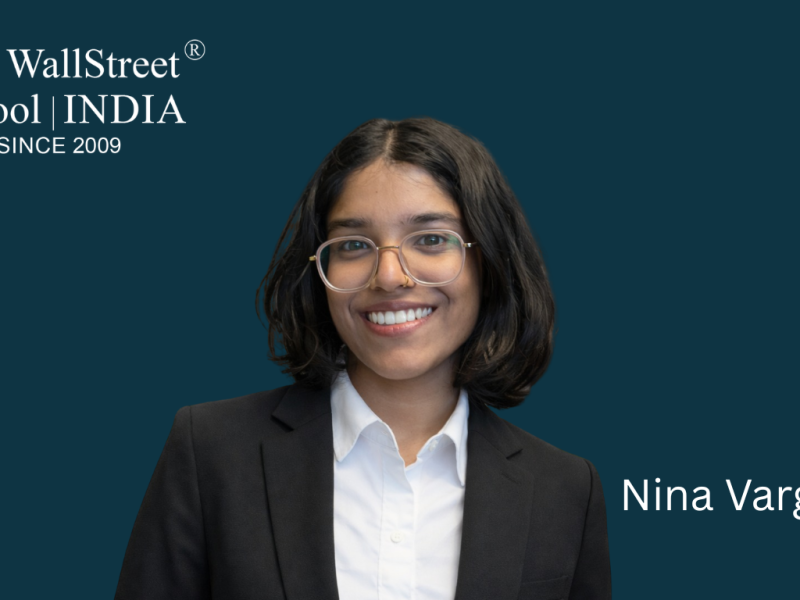
Anushka’s journey is a strong example of how combining a commerce degree with CIMA can lead to a stable and growing career in finance.
From B.Com to a Career in Risk Management
Anushka completed her Bachelor of Commerce (Accounting and Finance) from SRM IST Chennai.
During college, she was actively involved in extracurricular activities like painting and sports, while also building strong fundamentals in accounting and finance. But, like many students, she also wanted to go beyond a traditional degree and build a career with better long-term growth.
That’s when she decided to pursue CIMA certification.
CIMA focuses on management accounting, business strategy and financial decision-making, which makes it highly relevant for roles in corporate finance and risk management.
After completing her qualification and building the right skill set, she joined Equitas Small Finance Bank, where she started her career in operational roles and gradually moved into a more specialized position.
Today, she works as an Operational Risk Analyst (Assistant Manager II), handling responsibilities related to risk assessment, operational risk management, and problem-solving within financial systems.
Why is CIMA a Strong Career Option in 2026?
For students searching – career opportunities after CIMA or jobs after CIMA in India, CIMA is often considered a strong option because it focuses on real business decision-making.
It helps students understand how companies manage risks, allocate resources, and improve financial performance. Because of this, CIMA professionals often move into roles like risk analyst, financial analyst, management accountant, and corporate finance professional.
Below is a transcript of her interview with us:
Q1: Can you tell us about your background and how you decided to pursue CIMA?
I completed my B.Com in Accounting and Finance from SRM IST Chennai. During my college years, I was interested in finance, but I also wanted to build a career that had long-term growth and practical relevance.
That’s when I started exploring professional courses and came across CIMA. I liked the fact that it focuses on management accounting and business decision-making, which felt more aligned with real corporate roles.
Q2: Why did you choose CIMA over other finance courses?
One of the main reasons was its focus on practical application.
CIMA is not just about accounting concepts, it also covers business strategy, risk management, and financial decision-making. I felt that this would help me build a strong foundation for roles in corporate finance and risk analysis.
Q3: How did CIMA help you in building your career?
CIMA helped me understand how finance works in real business situations.
It gave me clarity on how companies manage risks, evaluate performance, and make decisions. These concepts became very useful when I started working, especially in roles related to operational risk.
Q4: Can you share your career journey after completing your studies?
I started working at Equitas Small Finance Bank, where I initially handled operational responsibilities.
Over time, as I gained experience and applied my knowledge, I moved into the role of an Operational Risk Analyst. My work involves understanding risks, assessing processes, and helping improve systems within the organization.
Q: How did your CIMA coaching help you in your current role as an Operational Risk Analyst?
My CIMA coaching played a very important role in preparing me for my current job. The way concepts were taught was not just theoretical but focused on how they are used in real business situations.
Topics like risk management, financial analysis, and decision-making directly connect with what I do in my role today. I was able to understand how risks are identified, assessed, and managed within an organization.
The structured learning approach also helped me think more logically and analyze problems better. So when I started working, I could relate my learning to real tasks instead of starting from scratch.
Q6: What advice would you give to students considering CIMA?
If you are interested in finance and want to work in roles where decision-making and analysis are important, CIMA is a good option.
Focus on understanding concepts rather than just clearing exams. Try to build practical skills alongside your studies, and stay consistent with your preparation.
Career Growth After CIMA: What Students Should Know
In 2026, finance careers are evolving beyond traditional accounting roles.
Students with qualifications like CIMA are increasingly moving into areas like:
- Operational Risk Management
- Financial Analysis
- Corporate Finance
- Business Strategy
Students searching for jobs after CIMA in India often find that roles in banking, consulting and corporate finance are common career paths.
Her journey shows that with the right combination of education, skills and experience, it is possible to build a strong career in finance.
People Also Ask: CIMA Career and Job Opportunities
1. Is CIMA worth it in India?
Yes. CIMA is valuable for students who want to build careers in management accounting, corporate finance, and business strategy roles.
2. What jobs can I get after CIMA?
Common roles include financial analyst, management accountant, risk analyst, corporate finance professional, and business analyst.
3. Can I get a job after CIMA in India?
Yes. Many CIMA students work in banking, consulting, and corporate finance roles across India.
4. Is CIMA better than other finance courses?
CIMA is more focused on management accounting and business decision-making. The best option depends on your career goals.
5. Does CIMA help in corporate jobs?
Yes. CIMA prepares students for corporate roles by focusing on real business scenarios, financial planning, and risk management.