
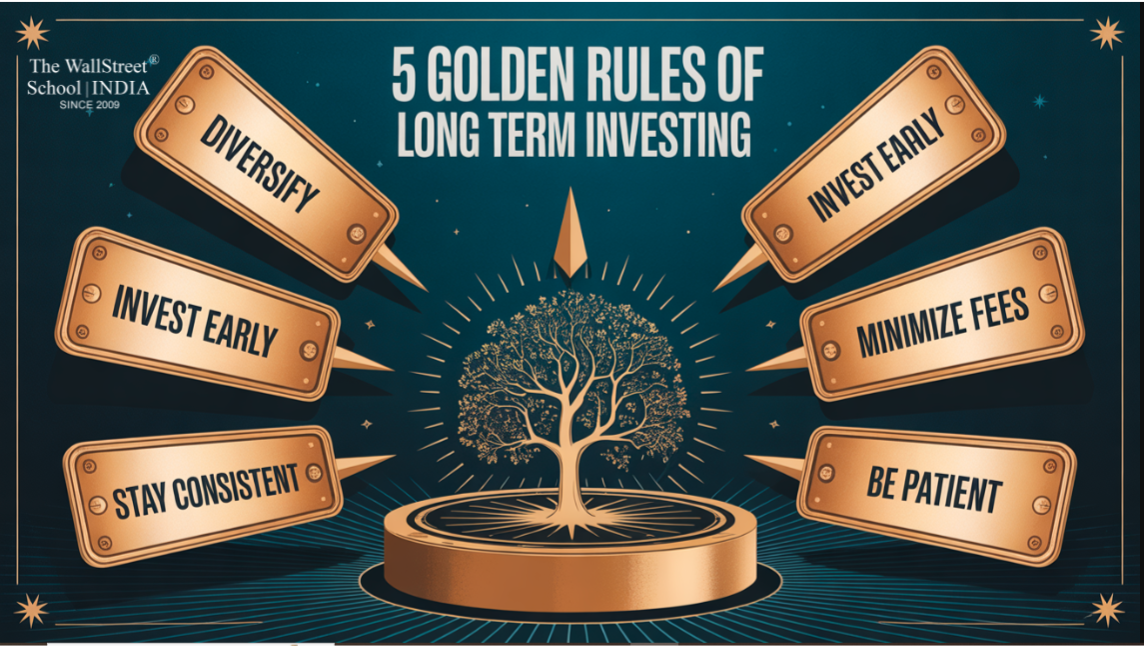
If there’s one thing the investing world has taught us, it’s that a small mistake today can cost years of progress tomorrow. Many people enter the market with high hopes, only to get excited or quit early.
The truth? We’ve been there too. That’s why we’ve broken down the 5 Golden Rules of Long-Term Investing in the simplest way possible, so you can start clear and skip the mistakes we made.
1. Divide Your Money into Different Places
If you keep all your money in one place and it fails, you could lose a lot. It’s better to put it into different types of investments.
Simple ways to do this:
- Put some money in stocks for growth.
- Keep some in bonds for safety.
- You can add real estate or mutual funds to keep things balanced.
- Try mixing both local and international investments for more choices.
If one investment drops, the others can still help your money grow. For beginners, low-cost index funds or ETFs are a simple and stress-free way to spread your money.
2. Think Long Term
-Don’t Stress Over Daily Changes
Markets go up and down all the time. This is normal. If you keep watching every little change, it’s easy to get nervous and make the wrong choice.
Long-term investing means focusing on the bigger picture. The longer you let your money grow, the better your chances of making good returns. Over time, your money can grow from the money you already have, like a snowball that gets bigger the longer it rolls. That’s how you truly learn to earn.
This also helps beat inflation, so your money grows faster than prices rise and keeps its value over time.
3. Have a Clear Plan and Real Goals
Before investing, decide exactly why you’re doing it. Is it for retirement, your child’s education, or to increase your money? Once you know your “why,” the “how” becomes easier.
Set a time frame for your investment, 5 years or more if you want to handle market ups and downs without stress. Keep your money goals real, so you don’t feel sad later.
The most important thing? Stick to your plan, even when things feel unsure.
Also, long-term investments usually pay less tax on profits than short-term trades, so you get to keep more of your money
4. Know the Risks and Be Ready for Them
Every investment has some risk. Some give higher returns but also come with bigger chances of loss.
Tips for handling this:
- Higher returns usually mean higher risk.
- Match your investments to your comfort level.
- Avoid things you don’t understand.
- Stay informed so you can make better decisions.
When the market goes down, don’t panic. Stay calm and decide using facts, not fear.
It’s a good idea to check your portfolio now and then and make small updates if needed, so your investments stay balanced and your plan stays on track.
5. Keep Investing and Check Your Progress
The best investors don’t wait for a “perfect time”, they start and keep going. You can invest the same amount every month, whether the market is high or low. This divides your costs and stops you from buying only when prices are high.
Check your investments once or twice a year. If your goals or how much risk you can handle change, update your plan.
This small habit may feel slow at first, but it’s a safe way to grow your money over time.
Expert Tips That Really Help
- Start early and reinvest profits: The sooner you start, the more your money can grow on its own.
- Ignore trends and “hot” tips: Simple rules are better than following the trend every time.
- Keep an emergency fund: keep 3–6 months of savings ready before investing for the long term.
- Stick to your plan: changing it too much can hurt your growth.
Your Next Step, Make It Happen
Long-term investing isn’t about quick wins, it’s about making smart moves that work for years. These 5 rules will keep you on track, help you avoid common mistakes, and give your money the time it needs to grow.
To learn to earn, you need patience, a plan and the habit of following it.
And if you want to go deeper into the process, The WallStreet School Value Investing Program can guide you in putting these rules into action. It’s about building simple investing habits that keep paying off year after year.
FAQs
Q. Which one is best for long-term investment?
The best long-term investment is to divide your money in stocks, bonds, real estate, and mutual funds, invest regularly, stay patient, and follow a clear plan to safely grow your money
Q. What is the 7% rule in stocks?
The 7% rule is a stop-loss strategy. It says to sell a stock if its price drops 7–8% below what you paid. This helps limit losses and protect your money by cutting losses before they get too big.
Q. What if you invest ₹200 a month for 30 years?
If you invest ₹200 every month for 30 years, your long-term investing results could be:
- 6% return → around ₹200,900 ( ₹2 lakh)
- 8% return → around ₹296,700 ( ₹3 lakh)
- 10% return → around ₹454,700 ( ₹4.55 lakh)
(Assumes monthly reinvestment. Actual returns depend on market performance.)
Q. Which strategy is best for long-term investment?
The best long-term investment is to divide your money across stocks, bonds, real estate, and mutual funds, mix local and international options, invest regularly, know the risks, stay patient, and stick to your plan to safely grow your money and learn to earn.
Q. What is the 70/30 rule in stocks?
The 70/30 rule means 70% of your money goes in stocks (equities) and 30% in bonds (fixed income). It helps your money grow faster while keeping some safety. Stocks give higher returns, bonds reduce risk, but expect some ups and downs.
Great overview of the golden rules for long term investing. Rule number one about starting early and staying consistent is the most underrated advice out there. I have been building a habit of reviewing investment wisdom daily using KeepRule, which curates principles from Buffett, Munger and other great investors. It keeps me grounded when short term market noise gets loud. Would love to see a deeper article on asset allocation strategies for 2026.