
CFA Level II Course Training Online

HD Video Content
Placement Assistance
Access Anytime
Industry Expertise
FREE DEMO
We are here to help you!
Results That Are Hard to Ignore
Outcomes that reflect our commitment to real skills, guided learning, and long-term student success.
Trained
Granted
Hours
Operations
Building world-class accounting and finance professionals through rigorous, practical and industry-driven learning.




Super Mentor
Karan Singh, Ex-EY, Ex-GT, Ex-Infosys
- Chartered Accountant & Chartered Finance Analyst
- 10+ Years Work-Ex in Consulting (Valuations, Financial Modelling, Investment Banking)
- Appeared at Singapore Arbitration Court, Supreme Court in the Expert's Team
- Has led the operational team of RPs at India's biggest bankruptcy cases
- Taught 3000+ students of CFA (across levels)
Is CFA the Right Fit for You?
Answer a few quick questions to understand whether CFA aligns with your career goals, time commitment, and learning readiness.
CFA Level II Course Curriculum
AI-driven, comprehensive, concept-focused, and industry-focused curriculum.
Chapter 1: Ethical and Professional Standards
This topic is fundamentally similar to the standards studied in Level 1 itself. However, the complexity with regards to the questions in examination is obviously expected to be higher.
Practical Case studies pertinent to the Codes and Standards discussed in the Reading 1 & 2 are discussed here.
Chapter 2: Quantitative Methods
Topic Learning
Introduction to Linear Regression
Linear Regression explains the change in one dependent variable in terms of the change in independent variable.
Topic Learning
Multiple Regression
Multiple Regression refers to the regression analysis with more than one independent variable.
Topic Learning
Time Series Analysis
Time Series is a set of data points indexed in a time order. Discussion around calculation of trend value , identifications of violations such as heteroskedasticity, nonstationarity and serial correlation.
Topic Learning
Machine Learning
The statistician models discussed in the previous topics assume a set of assumptions about the distribution of the data points, whereas the ML is the process of preparing a computer system to identify patterns within a large database without relying on any complicated assumptions.
Topic Learning
Big Data Projects
Big Data refers to the humongous volume of information available due to the modern technology. The topes focuses on the basic understanding the same including, terminology, processes and techniques.
Topic Learning
Probabilistic Approaches: Scenario Analysis, Decision Tree, and Simulations
Discussion about the utility of simulations as a risk assessment tool.
Chapter 3: Economics
Topic Learning
Currency Exchange Rates: Understanding Equilibrium Values
Discussion about base currency and quote currency, bid-ask spread, international PPP etc. This is a very testable portion in exam involving a lot of number crunching.
Topic Learning
Economic Growth and Investment Decisions
Economic growth is measured by growth in a country’s GDP. This topic discusses around the factors promoting/curtailing growth and forecasting growth. Overall, its an important topic in order to develop an overall viewpoint on the economy.
Topic Learning
Economics of Regulation
Regulations in an economy play a key role in the economic growth and valuation of an enterprise. This theoretical focuses on broad understanding of the types of regulations and its implications thereof.
Chapter 4: Financial Reporting and Analysis
Topic Learning
InterCorporate Investments
This chapter teaches us the accounting principles for holding, joint venture and associates.
Topic Learning
Employee Compensation: Post Employment and Share Based
Post Employment Compensation refers to the super annuation benefits. Share based payments includes the SARs and ESOPs.
Topic Learning
Multinational Operations
Discussion around local currency, functional currency and presentation currency and its relevance for multinational companies.
Topic Learning
Analysis of Financial Institutions
Accounting / Valuation of Financial Institutions (Banks, NBFCs and Insurance Companies) is peculiar in nature. This topic focuses on the same.
Topic Learning
Evaluating Quality of Financial Reports
CFA L2 curriculum focuses on the valuation aspect of the securities. If the quality of the financial reports are compromised, the end result would not be reliable either.
Topic Learning
Integration of Financial Statement Techniques
This topic is a bridge between FRA and equity/corporate finance.
Chapter 5: Corporate Finance
Topic Learning
Capital Budgeting Decisions
Capital Budgeting Decisions involve decisions pertaining to the long term capital allocation of an entity. Coverage: Calculation of NPV, IRR, Decision, Scenario Analysis and Decision Making.
Topic Learning
Capital Structure
This topic discusses various capital structure theories and its impact on the overall value of the firm.
Topic Learning
Analysis of Dividends and Share Repurchases
Disbursement of the profits realized by an entity is a critical decision. This topic explores various theories of dividend policy and stock buybacks.
Topic Learning
Corporate Governance and Other ESG Consideration in Investments
Corporate Governance is the first and foremost eligibility requirement for the security of a company to be investable Similarly, ESG (environmental, social and governance factors) also play a critical role in the analysis of the company.
Topic Learning
Merger and Acquisitions (M&A;)
This topic performs an in-depth review of the corporate finance piece of the M&As.; Its important to understand the accounting piece of the events post M&A; had already been discussed in the topic 13.
Chapter 6: Equity
Topic Learning
Equity Valuation: Applications and Processes
This chapter provides a glimpse into the “equity” portion of the CFA L2 Curriculum.
Topic Learning
Return Concepts
Computation of the different types of return including HPR, returns based on CAPM, Fama Fench Model etc.
Topic Learning
Industry and Company Analysis
This topic focuses on the qualitative aspects of valuation framework and lays the foundation for the number oriented topics ahead in the curriculum.
Topic Learning
Discounted Dividend Valuation
Dividend Models utilize the forecasted dividends as an estimate of the cash flow to the shareholders. In this topic, we note various models around dividend decision of an entity.
Topic Learning
Free Cash Flow Valuation
Residual cash in the business in the hands of firm (bondholders and equityholders) is termed as FCFF. Similarly, residual cash is the hands of the equityholders is termed as FCFE. FCF is the single most important factor in computing the intrinsic value of an enterprise.
Topic Learning
Market Based Valuation: Price and Enterprise Based Value Multiples
Multiple Based valuation relies on the comparable (either price or transaction) to identify the value of the enterprise in question.
Topic Learning
Residual Income Valuation
This is yet another methodology to perform the valuation of an enterprise – although, the practical utility is industry is quite limited, but the testability from exam perspective is pretty relevant.
Topic Learning
Private Company Valuation
Broad discussion on the adjustments required in the methodologies discussed thus far to suit the needs of valuing a private company.
Chapter 7: Fixed Income
Topic Learning
The Term Structure and Interest Rate Dynamics
This topic lays the foundation for the fixed income subject.
- Basics of interest rate term structure and its effect on the bond prices.
- Discussion on forward rates, duration.
- Discussion on Spreads.
Topic Learning
Arbitrage Free Valuation Framework (AFV Framework)
AFV method value the securities in such a manner that the possibility of riskless profits is negated.
Topic Learning
Valuation and Analysis of Bond with Embedded Options
Embedded Options would include call options, put options. The candidates are expected to understand the impact of options on bond’s duration and convexity.
Topic Learning
Credit Analysis Models
Credit Risk refers to the risk of default and deterioration in the credit quality (in case default does not occur) of the security.
Topic Learning
Credit Default Swaps
CDS is an insurance contract wherein the protection buyer is compensated by the protection seller in case of an credit event. This topic details the pricing and valuation of CDS along with utility of CDS in managing the credit exposure.
Chapter 8: Derivatives
Topic Learning
Pricing and Valuation of Forward Commitments
Forward Commitments refer to Forwards, FRAs, and Swaps. This topic expects you to have a grip over the pricing and valuation of the mentioned instruments.
Topic Learning
Pricing and Valuation of Forward Commitments
Contingent Claims refers to options. This topic expects you to have a grip over the pricing and valuation of the mentioned instruments.
Chapter 9: Alternative Investments
Topic Learning
Private Real Estate Investments
This topic focuses on the asset class of real estate and the nuances involved in the same.
Topic Learning
Publicly Traded Real Estate Securities
Publicly traded Real Estate Securities include REITS, MBS and REOCs.
Topic Learning
Private Equity Valuation
This topic review assesses the perspective of both, the private equity firm and its investors. It discusses pre-money and post-money valuation of the investee company.
Topic Learning
Introduction to Commodities and Commodity Derivatives
In this topic, a broad understanding of commodity market is provided to the reader along with the applicability of the overall learning and adjustments thereof with respect to the commodity market.
Chapter 10: Portfolio Management
Topic Learning
Exchange Traded Funds: Mechanics & Applications
ETFs represent securities in a benchmark portfolio that trades on secondary market. The discussion is basic in nature involving portfolio perspective on ETFs.
Topic Learning
Using Multifactor Models
This topic extends form the CFA L1 & CFA L2 discussion on multifactor models and its implications on an overall portfolio level.
Topic Learning
Measuring and Managing Market Risk
The different approaches to measuring risk includes VaR, sensitivity risk and scenario risk and its applicability on a portfolio.
Topic Learning
Economics and Investment Markets
Discussion around business cycles, sector rotations, business cycles, and cyclical effects on valuation multiples.
Topic Learning
Analysis of Active Portfolio Management
This topic explores an overall review of the portfolio management including active return including its bifurcation, Information ratio, Sharpe ratio etc.
Topic Learning
Trading Costs and Electronic Markets
In this topic, execution piece of an investment is focused upon.
CFA Course Fees & Admission
The CFA Course builds expertise in investment management, corporate finance, and equity research. Each CFA Class level is recognized by The Wall Street School and supported with placement assistance.
CFA Level II
Self-paced Pre-recorded Course
- Unlimited Mock Exams
- An Extensive Question Bank
- Personalized Doubt-solving Sessions.
CFA Level II
Classroom / Live Online
- Unlimited Mock Exams
- An Extensive Question Bank
- Personalized Doubt-solving Sessions.
Real Results Since 2009
With a 92% successful result rate, our programs are led by Karan Singh, a star mentor who has guided thousands of students toward clearing the CFA exams through structured, outcome-focused learning.
Trained
Granted
Hours
Operations
Love From Our Students
Explore firsthand accounts of student experiences. Hear their stories, triumphs, and insights that make our community exceptional. Real voices, real impact.
CFA Course Related Posts
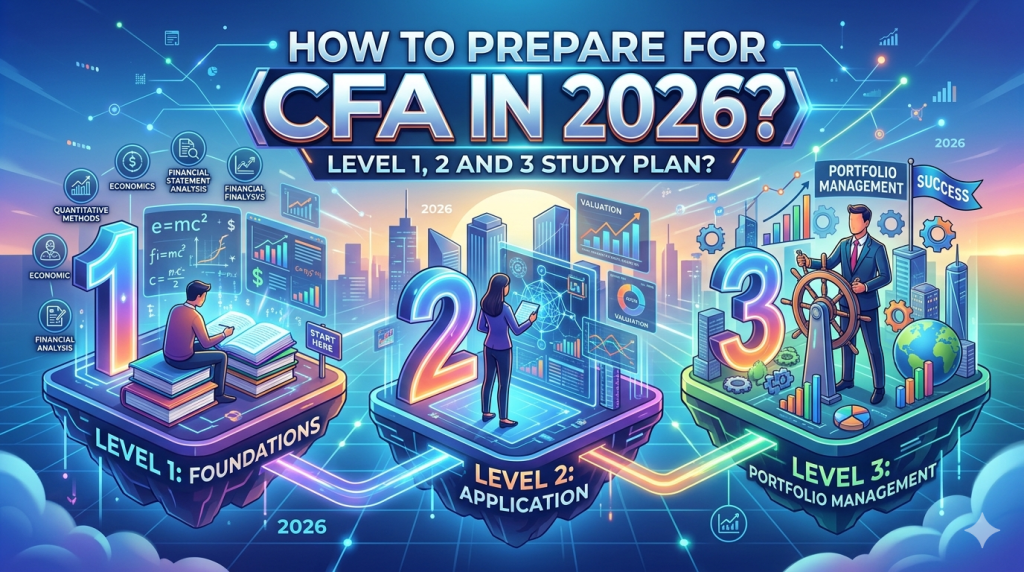
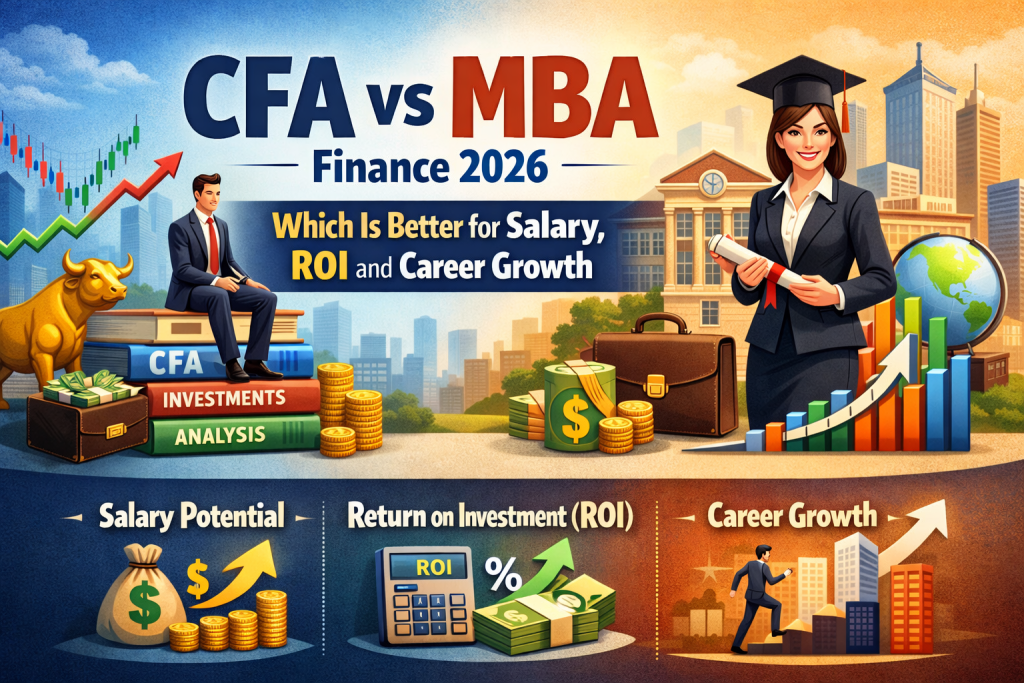
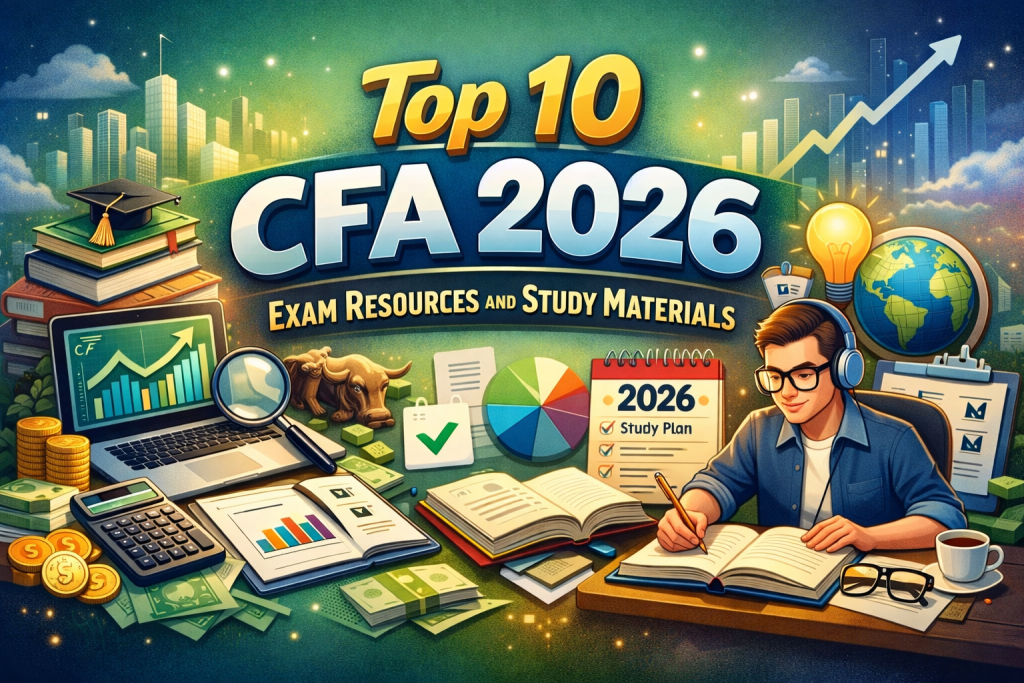
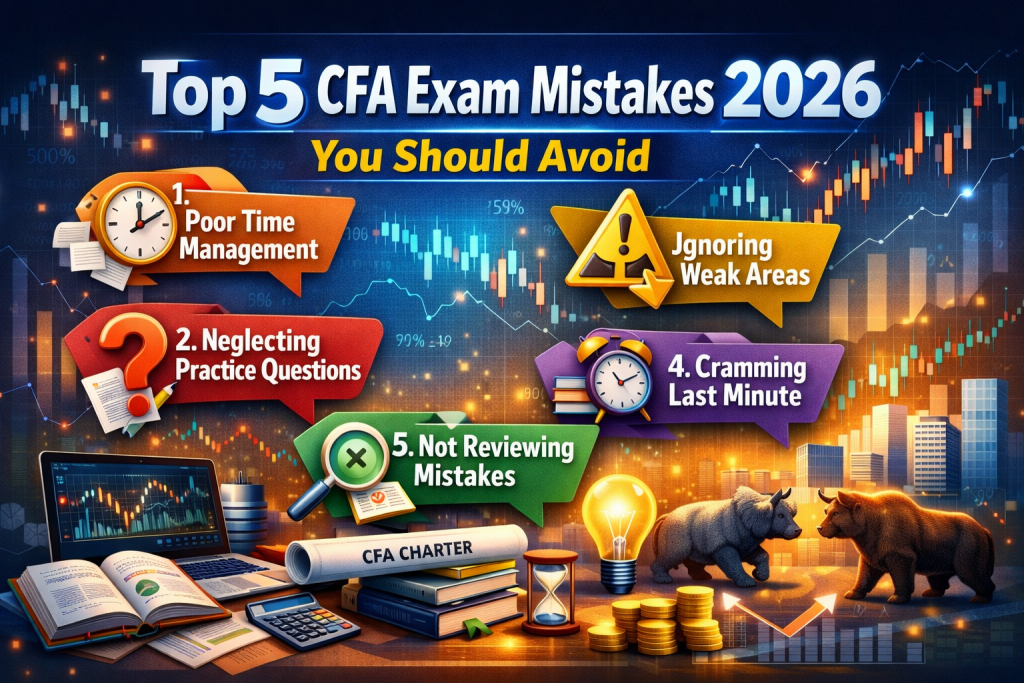
Fresh Thinking and Practical Wisdom for Tomorrow’s Finance Leaders


Frequently Asked Questions
Everything You Need to Know Before You Get Started
What is CFA Level II?
- Focus: CFA Level II emphasizes asset valuation, financial analysis, and the application of investment tools. It builds on the foundational knowledge from Level I and delves deeper into analyzing and valuing investments.
- Curriculum: Topics include asset valuation, equity investments, fixed income, derivatives, alternative investments, corporate finance, financial reporting and analysis, and portfolio management.
- Passing Rate: The average pass rate for CFA Level II is approximately 45%.
- Updates: As of January 2024, the curriculum includes expanded content on ESG (Environmental, Social, and Governance) factors, advanced quantitative methods, and the impact of AI and emerging technologies.
- Program Duration: Typically requires several months of study, focusing on applying advanced concepts and preparing for the exam.
CFA v/s Financial Modeling and Valuations
CFA (Chartered Financial Analyst)
- Scope: Broad certification covering investment management, financial analysis, ethics, and portfolio management.
- Curriculum: Includes Level 1 (Fundamentals), Level 2 (Valuation), and Level 3 (Portfolio Management).
- Focus: Ethical standards, comprehensive finance knowledge, and global financial markets.
- Recognition: Globally recognized with a strong emphasis on ethical practices.
- Career Path: Ideal for roles in investment management, research analysis, and financial planning.
- Requirements: 4,000 hours of professional experience and passing three levels of exams.
Financial Modeling
- Scope: Specialized skillset focused on building financial models for forecasting, valuation, and decision-making.
- Curriculum: Emphasizes practical skills in creating models using tools like Excel, analyzing financial statements, and applying valuation techniques.
- Focus: Practical application of finance principles to model financial scenarios, projections, and valuations.
- Recognition: Generally recognized within specific finance roles and industries, often through certifications or courses.
- Career Path: Ideal for roles in financial analysis, investment banking, corporate finance, and consulting.
- Requirements: Skills acquired through specialized training or experience, not necessarily formal certification.
Summary
- CFA offers a broad and in-depth understanding of finance and investment principles with a strong ethical framework.
- Financial Modeling focuses on practical skills for creating and interpreting financial models, often tailored to specific roles or industries.
Why Choose CFA Program?
- Global Recognition: Over 200,000 CFA charterholders in more than 160 countries.
- Rigorous Curriculum: Covers a wide range of financial topics across three levels (Level 1: 40%, Level 2: 45%, Level 3: 55% pass rates).
- Career Advancement: Enhances job prospects in investment management, research, and financial analysis.
- Ethical Standards: Emphasizes ethics with a strong code of conduct, crucial for trust and credibility.
- High Demand: Recognized by over 1,000 global firms as a standard for financial professionals.
- Professional Growth: Requires 4,000 hours of relevant work experience, promoting practical expertise.
- Program Duration: Typically 2-4 years to complete, with flexible study options for working professionals.
- Annual Enrollment: Over 200,000 candidates worldwide register for CFA exams each year, reflecting its popularity and demand.
What are the key highlights of the CFA program?
- Comprehensive Coverage: Detailed curriculum for CFA Level 1 and Level 2, focusing on investment management, financial analysis, and ethics.
- High Pass Rates: Our students benefit from an impressive pass rate of over 91% due to thorough preparation and expert guidance.
- Experienced Faculty: Instruction from CFA charterholders and industry professionals with extensive experience.
- Updated Curriculum: Includes recent enhancements such as ESG factors, advanced quantitative methods, and AI impacts since January 2024.
- Practical Training: Emphasis on real-world applications through case studies and simulations.
- Global Recognition: CFA Level 1 and Level 2 credentials enhance career prospects and are respected worldwide.
- Flexible Learning: Options for live classes, hybrid formats, and pre-recorded sessions for flexible, comprehensive study.
- Professional Networking: Access to a network of finance professionals and alumni for career support and opportunities.
Who is eligible for the CFA program?
Educational Requirements:
- Level 1: Bachelor’s degree or final year of undergraduate study.
- Level 2 & 3: Completion of Level 1; or, a bachelor’s degree with work experience.
Exams:
- Level 1: No prior finance certification required.
- Level 2 & 3: Successful completion of Level 1 is mandatory.
What career opportunities can one pursue after completing CFA?
The CFA designation is globally recognized and highly respected in the finance industry, opening doors to diverse career opportunities around the world. It is acknowledged by global firms and is a standard for excellence in investment management and financial analysis.
Career Opportunities After Completing CFA
- Investment Banking: Engage in mergers and acquisitions, underwriting, and advisory services.
- Portfolio Management: Oversee and manage investment portfolios for individuals and institutions.
- Equity Research: Conduct in-depth analysis and provide recommendations on stocks and securities.
- Financial Analysis: Evaluate financial statements and performance metrics for companies and investment firms.
- Hedge Funds: Analyze and manage investments to achieve high returns.
- Private Equity: Assess and manage investments in private companies.
- Corporate Finance: Handle financial planning, analysis, and strategic decisions within corporations.
- Risk Management: Identify and mitigate financial risks for organizations.
- Consulting: Offer strategic financial advice to businesses and individuals.
- Financial Advisory: Provide personalized investment and financial planning services.
What is the entry level requirement to register with CFA Institute
for CFA Level I?
for CFA Level I?
Meet any of the following enrolment requirements:
- Bachelor’s degree
- Undergraduate student (while they are in their second last year of graduation)
- Professional work experience including internships (4,000 hours of work experience acquired over minimum of three years). Professional work experience does not need to be investment related.
What is CFA Level 2 Course Overview
Discover Your Path to CFA Success with The WallStreet School
Did you know that the CFA exam ranks as the 6th most challenging test worldwide? And from a group of 100 ambitious students embarking on the CFA journey, only around 15 manage to conquer Level 3 on their first attempt. But don’t let these statistics discourage you!
At TWSS, we recognize these facts, yet we hold the key to ensuring you’re part of that coveted 15%.
Let’s delve into the essence of this exam:
Unveiling the CFA Level 2 Adventure:
- Embrace the Case Study Challenge: Unlike the Level I format of individual questions, CFA Level 2 takes you on a case study-driven exploration. Picture this: 22 sets of real-world scenarios, each housing 4 intriguing questions – a grand total of 88 MCQs. This format adds excitement and practicality to your learning journey.
- Master Application with Confidence: Level 2 exams demand you to grasp the “Why” behind concepts, transcending the mere “How.” To conquer this, you must conquer the vast CFA Institute Material, or CBOK. But here’s the catch – CBOK spans 6 voluminous books and a staggering 2000 pages. Yet, fear not! We guide you through every page, ensuring you’re primed for success.
Empowering Your Success: Wondering how we guide our candidates to success?
Here’s a 2-step tool to 3x your chances:
- Revolutionary Online Learning: Gain exclusive access to our proprietary online portal, meticulously designed to demystify CBOK concepts. Complexities are simplified, and case study strategies are integrated seamlessly, all in one lucid space.
- Trainers of Excellence: Our trainers bring over a decade of real-world expertise to the table. With more than 150 hours of meticulously crafted content, they’re not just educators; they’re your mentors, dedicated to propelling your success.
Result – Tripling Your Chances: Our excellently curated content, backed by 10+ years of expert experience, boosts your chances of success by a factor of 3. Our students have consistently surpassed the global average pass rate – a testament to the transformative power of our program.
Secure Your Spot Today: Ready to take your CFA Level II journey to new heights? Enroll in our classes now and witness firsthand the impact of our approach. Let’s exceed expectations, rewrite statistics, and turn challenges into achievements. Join The WallStreet School today, and let’s pave the way to your CFA success, one step at a time. We’re excited to have you in class.
How long is the CFA Level 1 course?
CFA consists of 3 levels of exams spanning over 36 months including requirements for working experience in the field of finance and accounts. It tests you for thorough knowledge in subjects like Financial Reporting, analysis, corporate finance, valuation, economics, qualitative techniques, etc. The TWSS CFA Level 1 course provides approx. 150+ hours of live and recorded training for the preparation of the level including extensive notes, question bank, summary sheets, mock tests, and much more. Join now to prepare for the CFA exams!
Is CFA a good career in India?
The CFA certification is based in the US and is designed keeping in mind the international needs of financial reporting and analysis to aid management decisions. Hence, you can endure a top career as a CFA anywhere in the world. Many Fortune 500 companies are entering India to manufacture and curate a market for their products. On the other hand, corporates in India are also expanding their operations globally. They prefer hiring experienced CFAs to meet international standards on financial reporting and help the management in decision-making. All-in-all the future certainly looks bright if you are a CFA in India.
Is CFA harder than CA?
Both CA and CFA are professional courses in the field of finance and accounting. But, it is difficult to say whether one is harder than the other. Although, CFA is certainly more widely accepted around the world. Here’s why:
The course is based in the USA and students from across the globe apply for the course.
While CA is focused on the preparation of accounts and auditing, the CFA course focuses on making use of the accounting data, analyzing it, and aiding management decisions.
CFA has a global outlook and focuses on learning about the International standards unlike CA which is more India-centric.
Is a CFA better than an MBA?
MBAs in general cover all aspects of management and hence have a broader outlook on how a business functions, CFA is a specialized certification in the field of finance. Usually, the role of a CFA is to analyze historical data and draw financial models for the business that will help the management make correct decisions. On the other hand, MBAs are a part of the management and use this analysis to make decisions and work on their implementation.
Is a CFA better than an MBA?
MBAs in general cover all aspects of management and hence have a broader outlook on how a business functions, CFA is a specialized certification in the field of finance. Usually, the role of a CFA is to analyze historical data and draw financial models for the business that will help the management make correct decisions. On the other hand, MBAs are a part of the management and use this analysis to make decisions and work on their implementation.
What is CFA Program Costs?
One-time enrolment fee of $350 when you register with CFA Institute. For each level, you have to exam fee. Early exam fee $900 and Standard exam fee $1,200.
Additionally, candidates have to pay 18% GST on above fees.
How much does CFA cost in India?
One of the reasons students are reluctant to apply for the CFA Level 1 course is because of the high tuition fees, exam fees at each level, etc. As the exam is conducted by the CFA Institute, USA, it costs more to appear for the exams from India. The components of the fees include:
- Standard Registration Fee
- One-time Enrollment Fee
- Exam Fees
- Exam Rescheduling Fees
But, it is our mission at TWSS to make learning affordable for the students. Hence, our CFA Level 1 course tuition charges are only Rs. 29,500 which is much lesser compared to the exam fees.
How long does it take to pass the CFA exam?
The CFA exam has three levels. You should prepare for at least six months for each level. So, if you pass all three levels one after another, you could complete the CFA exam in 18 months. But it’s a bit challenging to pass all three levels in a row because most students have other things to do besides studying for the CFA, like work or other responsibilities. On average, it takes candidates around 3 to 4 years to finish all the levels.
What percentage of people typically pass the CFA exams?
- CFA Level I exam pass rate close to 41%
- CFA Level II exam pass rate close to 45%
- CFA Level III exam pass rate close to 52%
(Based on 10-year average pass rate)
What is CFA exam minimum passing score (MPS)?
The CFA Institute doesn’t reveal the exact minimum passing score. Instead, the MPS (Minimum Passing Score) for each attempt is determined by the CFA Institute Board of Governors. From what we’ve observed, scoring around 70% is generally needed to successfully pass the exam.
What is the exam format for each level?
- For CFA Level I, there will be 180 multiple-choice questions (MCQs) with three options: one right and two wrong.
- For CFA Level II, there will be 22 case-study MCQs. Each case study will have 4 MCQs.
- In CFA Level III, there will be 11 case-study MCQs and 11 sets of essay questions.
What is the exam duration for each level?
Each level of the CFA exam takes place in one day and lasts for 4 hours and 30 minutes.
When exam results will be available?
For CFA Level I and II: Within 5-7 weeks of taking the exam
For CFA Level III: Within 6-8 weeks of taking the exam
What is CFA Level II?
CFA Level II is the second stage of the Chartered Financial Analyst (CFA®) program. It focuses on advanced investment valuation, asset analysis, portfolio management, and application-based learning using real-world scenarios.
How is CFA Level II different from CFA Level I?
While CFA Level I focuses on foundational concepts and basic analysis, CFA Level II emphasizes application, valuation techniques, and in-depth analysis of assets using case-based questions.
Is CFA Level II more difficult than Level I?
Yes. CFA Level II is considered more challenging due to its analytical depth, complex valuation models, and item-set (case-based) exam format.
What does the CFA Level II coaching program at TWSS include?
The program includes:
200–250 hours of in-depth video content
Downloadable, handwritten crisp notes
Full coverage of CFA Modules for all technical topics
CFA Premium Pack, CFA Modules & CFA Mock Exams
Highly active discussion forum for doubt resolution
1-on-1 doubt-solving sessions and personalized mentorship
Is the curriculum updated as per the latest CFA Institute syllabus?
Yes. The CFA Level II program has been updated since January 2024, with expanded coverage of:
Advanced asset valuation
Advanced quantitative methods
AI and emerging technologies impacting finance
Who teaches CFA Level II at TWSS?
- The program is taught by industry-leading experts, CFA charterholders, and seasoned faculty with over 15 years of experience in finance education and industry practice.
Does TWSS focus on practical learning?
Yes. The program emphasizes real-world case studies, simulations, and practical exercises to prepare students for both exams and finance careers.
What is the success rate of CFA Level II students at TWSS?
TWSS has a passing rate exceeding 92%, supported by structured learning, exam-focused preparation, and personalized support.
How large is the TWSS student and alumni network?
TWSS is backed by a 190,000+ strong global network, offering exposure to global expertise, practical skills, and ethical leadership.
Does TWSS provide placement assistance for CFA Level II candidates?
Is there any placement-related fee?
How does the placement assistance process work?
Placement assistance is available to all candidates
Students are added to the TWSS placement pool after completing assessments
TWSS follows a success-based placement model
How successful is TWSS in placements?
TWSS has successfully placed over 10,740 students since 2009 across finance and accounting roles in various sectors.
What career opportunities are available after completing CFA Level II?
After CFA Level II, candidates can pursue roles such as:
Investment Analyst
Equity Research Analyst
Portfolio Analyst
Valuation & Financial Advisory roles
Asset Management roles
Does CFA Level II help in long-term professional growth?
When are CFA exam results announced?
Results are typically released 6–8 weeks after the exam, as per CFA Institute timelines.
How long does it take to complete the CFA program?
What is the exam format for CFA Level II?
CFA Level II uses item-set (case-based) questions, testing the application of concepts rather than memorization.
What is the minimum passing score (MPS) for the CFA exam?
The CFA Institute does not officially disclose the MPS. It varies by exam session and is determined using statistical methods.
Who is eligible for the CFA program?
Eligibility is defined by the CFA Institute and generally includes:
Bachelor’s degree holders
Final-year undergraduate students
Candidates meeting required professional work experience criteria
Why should I choose The Wall Street School for CFA Level II coaching?
- TWSS offers:
- Experienced CFA faculty
- Updated and comprehensive curriculum
- Personalized mentorship and doubt sessions
- Proven placement track record
- Industry recognition and long-term career support
Have Questions About Something?
Talk to Us
+91-9355057509
Drop an Email
info@thewallstreetschool.com
Visit Us
Corporate Headquarter: 11A, 3rd floor, Block H, Connaught Place, New Delhi - 110001
More From The WallStreet School
- FRM Level 2
- CFA Course
- FMAV Course
- CMA Course
- CFP Course
- ACCA Course
- CIMA Course
- AI for Finance
- Value Investing Course