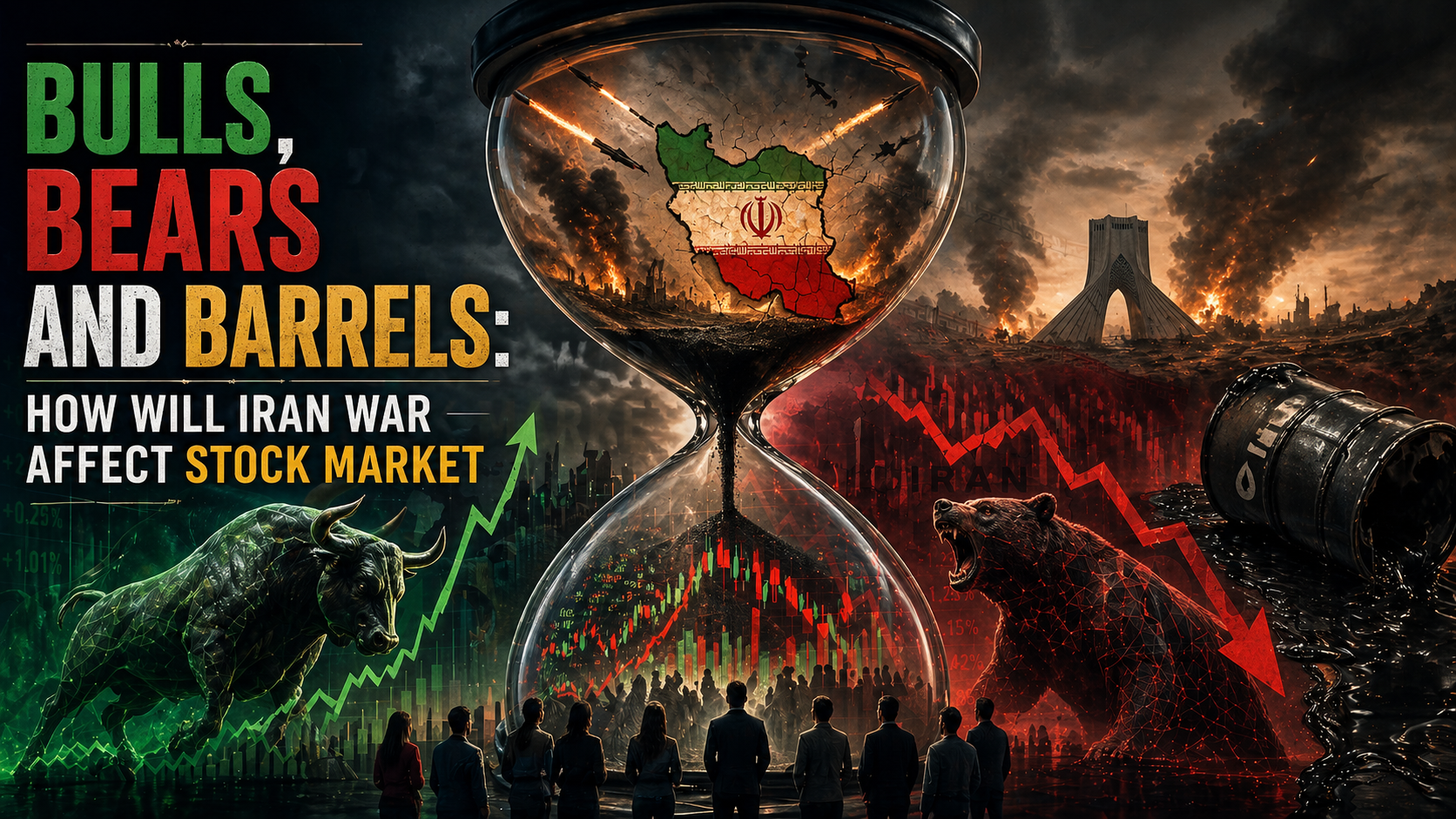
If you have glanced at a financial news ticker lately, you have most probably seen two things- a lot of red numbers and a lot of talk about the Middle East. It reflects how Geopolitical tension is not just a headline for history books but also a massive driver for your portfolio.
As of April 2026, the global economy is trembling with a significant “energy security challenge” following the escalation of conflict in war. From the closure of the Strait of Hormuz to surging Brent Crude prices, the Iran war effect on stock market dynamics is being felt in every corner of the trading floor.
So, grab a coffee (or something stronger) and let’s dive into how an Iran conflict stock market scenario actually works, which sectors are sweating, and where the “safe havens” are hiding.
1. The “Fuel to the Fire” Effect: Why Crude Rules the Market?
When the Iran war effect on stock market chatter starts, oil is always the lead actor. The reason for that is- Strait of Hormuz is essentially the jugular vein of the global energy trade sphere.
In early 2026, we have already seen Brent Crude surge past $120 per barrel. Let’s take a look at why that matters to your stocks:
- The Inflation Spike: High oil prices make everything- from shipping a sneaker to flying a plane more expensive. When inflation goes up, central banks get grumpy and keep interest rates high.
- The Margin Squeeze: If you share in a company that makes physical goods (such as a car manufacturer or a paint company), their “input costs” just went through the roof. Unless they can pass on those costs to customers, their profits will drop, and their stock price usually finds the same fate.
2. Winners and losers: Who’s Sinking and Who’s Afloat?
In an Iran conflict stock market environment, not all stocks are created equal. It can be better referred to as a game of “Sector Rotation.”
Those “Under Pressure”:
- Aviation and Travel: The biggest expense for airlines is Jet fuel. Then oil prices spike, airline stocks usually take a nosedive. We’ve already seen ticket prices jump as carriers try to maintain cash flow.
- Chemicals and paints: Did you know that crude oil derivatives are a vital component in your house paint? Companies like Asian Paints or Berger Paints often see their margins getting tighter when oil stays north of $100.
- Automobiles: The sight of higher fuel prices at the pump mean people think twice before buying a petrol-heavy SUV that barely gives 8 km/pl. In addition, the cost of manufacturing those steel and plastic parts just got pricier.
The “Relative Beneficiaries”
- Upstream Oil and Gas: Those companies that pull oil out of the ground (like ONGC or Exxon) love it when the prices soar. They end up making more money for every drop they find with the hike in their “realizations”.
- Defense and Aerospace: A geopolitical instability often leads to increased military spending. Defense contractors usually see a boost in sentiment and order expectations during times of war and conflict.
- Renewable Energy: Whenever there’s an oil crisis, the world reflects on why we want to move away from fossil fuels, towards long-term alternatives such as solar and wind.
The “Hormuz” Factor
The Strait of Hormuz carries around 20% to 25% of the world’s seaborne oil. A blockade threat from Iran is like a giant “Stop” sign for global trade.
Even if the oil is still flowing, the fear that it might stop is enough to make traders bid up prices. In regard to the Iran conflict stock market outlook this creates a “Premium Geopolitical Risk”.
3. The Safe Havens: Where do investors Hide?
When the stock market feels like a roller coaster without seatbelts, investors strive to find someplace “stagnant” to put their money.
1. Gold: Gold prices have historically been the ultimate “crisis companion”, because when the global market gets the flu, gold stays healthy. In times of turmoil, investors often ditch the digital tickers for something they can actually lock in a locker.
2. The US Dollar: In times of war, the Dollar usually gets stronger, as it is often viewed as the world’s reserve currency.
3. Consumer Essentials: While people might stop buying new cars or watches in times of war, they still need soap, toothpaste, and bread. Corporations such as Nestle are often seen as “defensive” plays.
4. The Stagflation Scenario
The biggest fear for the Iran war effect on stock market participants is Stagflation.
It is referred to as the “nightmare scenario” where you have:
- High Inflation (due to energy costs)
- Low Growth (because there is fear to spend)
From the perspective of a stock market investor, stagflation is tricky because traditional “buy the dip” strategies don’t work well when the growth is flatlining.
The Verdict: Don’t Panic, Just Pivot
The Iran war effect on stock market trends is immensely volatile, however, it is not a reason to sell everything and hide under the bed. Markets have a long history of “pricing in” war. Often, the anticipation of conflict is more volatile than the conflict itself once the situation stabilizes into a “new normal.”
The smart move here would be to Rebalance. If you are heavy on fuel-sensitive stocks (such as Airlines, Paints, Logistics), consider balancing them out with some upstream energy, defense, or “safe haven” assets.
FAQs
1. How does the Iran war affect the stock market daily?
– The war tends to trigger volatility, mostly through oil prices. When tensions spike, the energy stocks and gold usually rise, while fuel-heavy sectors like airlines and logistics face instant selling pressure.
2. What happens if Iran closes the Strait of Hormuz?
– This situation proves to be a “shiver” point for global trade. Closing this route would likely send oil prices past $120 per barrel, causing a sharp market correction as investors move funds into safe havens like the US Dollar and Gold.
3. Which Indian stocks are most affected by the Iran conflict?
– Aviation and Paint companies are usually hit the hardest due to high crude costs.
4. Is gold a safe investment during an Iran war?
– Yes, gold is the classic “saviour” in drastic situations. When geopolitical risk increases, investors ditch their volatile stocks for the yellow metal, which has historically driven its value up during Middle Eastern conflicts.
5. Should I sell my stocks during the conflict?– Instead of panic-selling, it’s better to go for rebalancing. Focus more on “defensive sectors” like Consumer Staples or Utilities that always hold their position when times get tough.