Finance professionals have more choices today than ever. Degrees, diplomas, short courses, bootcamps. But when it comes to credibility and industry respect, few things hold as much weight as the CFA charter. So, why should you consider CFA certification in 2025? There’s more than one good reason.
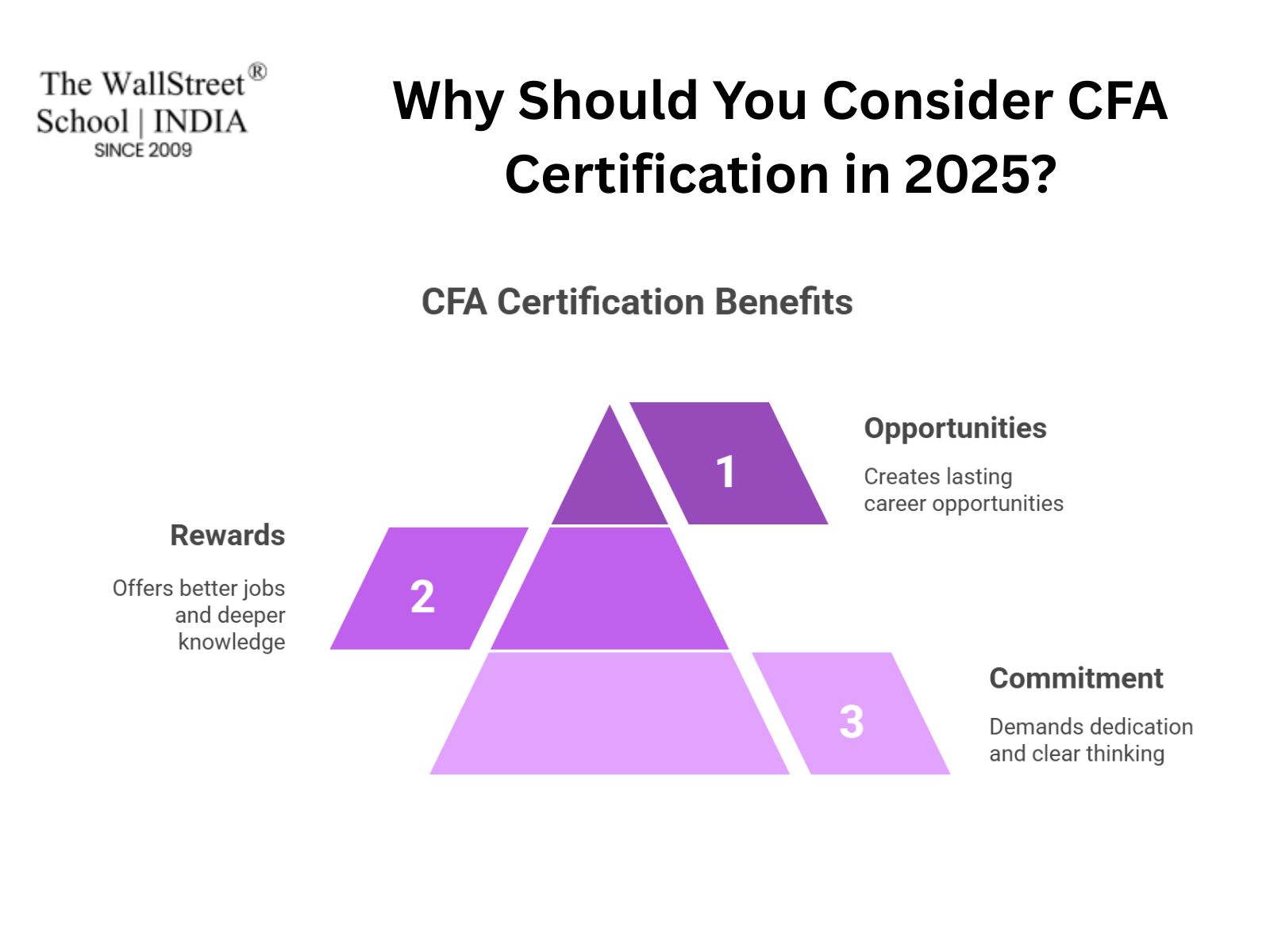
The CFA programme is no walk in the park. It demands commitment and clear thinking. Yet, for those who finish it, the rewards can be solid. From better jobs to deeper knowledge, it creates opportunities that last.
Let’s break down why 2025 could be the right year to begin.
The CFA Programme Has Evolved
Many people still think the CFA curriculum is stuck in theory. That may have been true ten years ago. But the Institute has moved with the times.
There’s now a stronger focus on practical learning. Topics like data science, ESG investing, and alternative assets are getting more attention. The shift is clear. They want candidates to be job-ready.
If you’re someone thinking long-term, the updates are timely. CFA certification in 2025 is more relevant to today’s finance jobs than it was in the past.
The Global Respect Remains Strong
Around the world, the CFA level 1 fees designation is viewed as a benchmark. Whether you’re in London, Singapore, or Mumbai, it signals that you know your numbers and your ethics.
Employers notice the CFA tag. It shows discipline, seriousness, and a sharp mind. That kind of recognition can open doors, especially if you’re looking to switch roles, move abroad, or grow within your current company.
Who Should Think About CFA Certification in 2025?
The answer isn’t just “investment bankers” or “analysts”. The field has widened. Take a look:
| Profile | Why CFA Helps |
| Finance Graduates | Builds credibility before entering the job market |
| MBA Students | Adds specialisation and supports career switch |
| Accountants | Deepens understanding of asset management |
| Engineers in Finance Roles | Strengthens finance fundamentals |
| Investment Professionals | Solidifies theory behind daily work |
| Consultants and Risk Analysts | Expands industry knowledge and role flexibility |
It’s flexible enough to suit many kinds of learners. Whether you’re early in your career or mid-level looking for a shift, CFA fits.
Real Skills That Stick
CFA focuses on finance as it happens in real offices more than just teaching academic fluff.
Topics include equity, fixed income, portfolio management, financial reporting, ethics, and more. You’ll read balance sheets, calculate valuation ratios, and analyse risk. Over time, you start thinking differently. You understand how investors make decisions. You ask sharper questions. You challenge poor assumptions.
The process builds mental stamina. Passing the three levels means you’ve read thousands of pages, sat for long exams, and still made it through. That in itself says a lot.
Is CFA Certification in 2025 Still Worth It?
This question comes up a lot. The short answer is yes, if your end goal is finance.
It may not give you overnight results. It takes time. But what it offers is trust. Hiring managers trust it. Clients trust it. Your peers respect it.
In a world full of quick courses and shortcuts, CFA remains solid and rigorous. That matters.
You Can Work While Preparing
Another benefit is that you don’t have to quit your job to study. Most candidates balance work and study. That means you keep earning while learning.
You study in the evenings, on weekends, and during breaks. It’s hard, but manageable. With the right discipline and the right guidance, you can pass.
The exams are now offered more times a year, so you have better control over your schedule.
What Does the Timeline Look Like?
The CFA journey is long. But if you plan it well, it won’t feel overwhelming. Here’s a sample timeline:
| CFA Level | Preparation Time (Months) | Topics Focused On |
| Level I | 4 to 6 | Basics of finance, ethics, and maths |
| Level II | 6 to 8 | Valuation, analysis, and applications |
| Level III | 6 to 9 | Portfolio management and strategy |
Assuming you pass each level in one go, you can become a charterholder in 2.5 to 3 years.
CFA Certification in 2025 vs Other Courses
There are other certifications like FRM, CAIA, and CPA. They all have value. But CFA stands out for investment roles. It’s broader, deeper, and better known globally. If your interest lies in equity, research, asset management, private banking, or risk, CFA is often the preferred choice.
Let’s compare:
| Course | Focus Area | Global Recognition | Job Roles Best Suited |
| CFA | Investment & Portfolio | Very High | Equity, research, portfolio roles |
| FRM | Risk Management | High | Risk, audit, compliance |
| CAIA | Alternative Investments | Medium | Hedge funds, private equity |
| CPA | Accounting & Audit | High (US-based) | Accounting, tax, audit |
If you’re still unsure, ask yourself this: where do you see yourself in 5 years? If the answer includes the words “finance”, “investment”, or “research”, CFA is a solid start.
Final Thoughts
CFA certification in 2025 is worth considering for one simple reason: finance keeps changing, and people who stay updated succeed.
The programme helps build thinking patterns, connects ethics to analysis and prepares you to handle complex financial situations with clarity.
Whether you’re a student, a working professional, or someone planning a career shift, CFA offers structure, knowledge, and recognition that stick for life.
It won’t be easy. But if you’re ready to invest time and focus, it will be worth it. And with the right guidance, like what The WallStreet School offers, the journey becomes more manageable and much more rewarding.
FAQs
- How expensive is CFA certification in 2025?
The total cost, including enrolment and exam fees, can go up to $3000 or more. It’s an investment. Many companies reimburse part of the cost if you’re working in finance. - Do you need a finance background to start CFA?
No. Many engineers, lawyers, and even liberal arts graduates have passed. What matters is effort and interest. - What if someone fails a level?
You can retake. Each level has multiple exam windows now, so it doesn’t delay things much. Failure is common. Sticking with it matters more. - Does CFA guarantee a job?
No. It increases your chances, makes your profile stronger, and shows employers your seriousness. But it works best when combined with internships, experience, or networking.