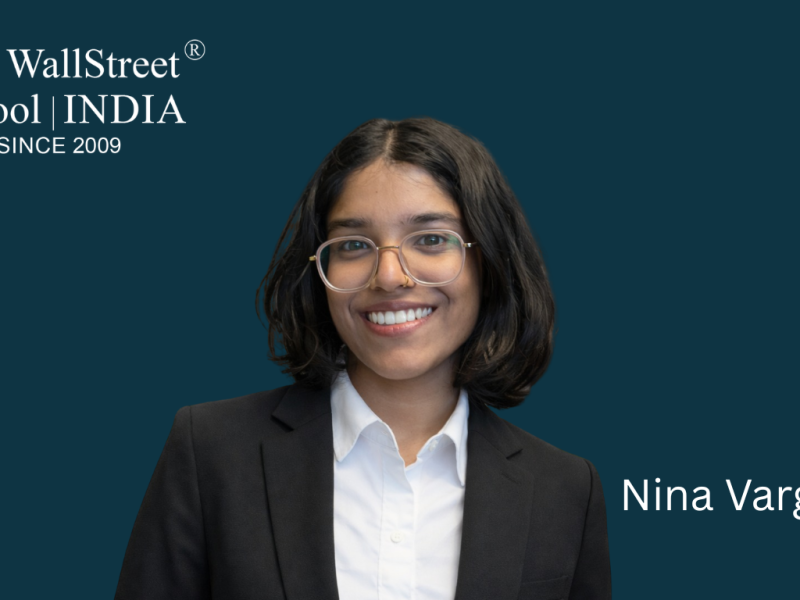
This is the story of Ritu, a CA who seemed to have everything sorted. A good job in finance, solid work experience and the kind of responsibilities most people aim for.
At Kotak Mahindra Bank, she was handling a ₹300 crore loan portfolio and was presenting cases to senior-level committees. From the outside, her career looked perfect.
But on the inside, something didn’t feel right.
There was no big breakdown or bad day. Just a quiet feeling that she wasn’t growing anymore. The work had become routine. Same formats, same steps, same kind of numbers. It felt like she was following a process instead of actually learning something new.
One day, while working on another credit file, she stopped for a second and thought, “If someone asked me to build a model from scratch right now, could I do it?”
And she knew the answer was NO. That question stayed with her. She couldn’t ignore it.
That night, she decided to fix it. She started checking what kind of skills are actually needed in core finance. Again and again, she saw one thing that came up was Financial Modeling. So she made up her mind to learn it properly. Not for a certificate or a promotion. Just to feel more confident in the work she was already doing.
Now, Ritu is placed at Lucrum Capital as Analyst. And this time, she’s not just reviewing numbers. She knows how to build things from scratch and look deeper into what the numbers are really saying.
Below is our conversation with Ritu — Straight from her experience
Q1: Ritu, you’re already a CA and working in credit. Why did you feel the need to learn financial modeling?
It’s strange because you’d think once you’re a Chartered Accountant and working in a good company you wouldn’t feel the need to learn anything new. That’s what I thought too for a long time.
But slowly I started noticing that I wasn’t building anything on my own. I would get files where projections were already done and I had to check if everything looked fine. I wasn’t asking where those numbers came from or whether the logic behind them made sense. I was just checking if they were within policy. That’s when I realised I had gotten used to a routine.
I didn’t want to spend the next few years just reviewing other people’s work. I wanted to be someone who could make those projections. Someone who could break down a business model and build it again from scratch in Excel. That’s why I thought learning financial modeling was the right step.
Q2: Was there any moment where you felt stuck and knew you had to do something about it?
Yes. There was this one case I was handling. It was a proposal for a company in the infra sector. Everything looked okay. All the ratios were decent. But I had a gut feeling something wasn’t right with the working capital cycle. I wanted to test how the cash flow would look in the next two years.
But the problem was I didn’t know how to model it properly. I could think through the issue but I didn’t have the tools to build a projection and actually see where it would fall short. That bothered me. I realised I had cleared Chartered Accountant and worked for years but I was still not fully confident when it came to applying concepts in a real way.
That was the moment where I knew I had to stop depending on just formulas and ready-made formats. I had to go deeper. I had to learn how to actually build models myself.
Q3: How did it feel when you started the course? Was it tough to manage with your job?
It was definitely not easy. My job keeps me busy most of the day. There are calls, meetings, emails and cases to review. On some days I would come home too tired to even open my laptop.
But I had made up my mind. I didn’t want to keep feeling stuck. So I gave myself a small target. Just one or two hours every night. No pressure to rush through. I just wanted to understand everything properly.
Some weekends I caught up with the topics I missed. Sometimes I watched recordings of the sessions late at night. It wasn’t perfect but it worked. I stayed consistent. What helped me most was reminding myself that I wasn’t doing this for a certificate. I was doing it for myself. To get better at what I already do.
Q4: Did anything in the course really surprise you or change the way you looked at finance?
Yes absolutely. There was this one case study we did on a retail chain that was planning to expand into new cities. On the surface everything looked good. The revenue projections were solid and the profit margins seemed steady. But when I started building the model and went deeper into the cost structure and inventory cycle I began to feel something wasn’t adding up.
I couldn’t figure out exactly what was wrong so I decided to take help from my trainer. That’s when he pointed out something I had completely missed. The company was actually running out of cash in the second year. Even though the profits looked fine the working capital was getting stretched because of how much inventory they had to hold and how slow the customer payments were.
That really shocked me. Until then I had only looked at growth and profits. I didn’t realise how bad the cash flow could get underneath all that. That one example stayed with me. It taught me that finance is not about what looks good in the summary. It’s about breaking things down and asking what can go wrong if your assumptions don’t hold up.
Q5: Did you feel uncomfortable picking up something new after already being a CA?
At first I did feel a bit uncomfortable. In our field once you clear CA everyone assumes you’re set. People think there’s nothing more to learn. Even I thought the same for some time.
But after that infra case and a few other moments where I felt limited I knew I needed to upskill. I didn’t want to stay in my comfort zone forever. The truth is clearing exams and applying skills are two very different things.
Once I accepted that it became easier. I didn’t care about what others would say. I just focused on becoming more confident in the areas I always felt weak in.
Q6: Do you think learning financial modeling changed how you work now?
Yes completely. I still work in credit but now I don’t just stop at ratios or policy checks. I try to understand the bigger picture. I ask how the business plans to grow, what kind of risks they’ve considered and whether their numbers are even realistic.
Earlier I would go by what was written in the documents. Now I feel like I can question things and come to my own conclusion. That makes a huge difference. I feel more independent and sure about my decisions.
Q7: What would you say to other CAs or finance people who feel stuck but don’t know what to do next?
I would say just take a step back and ask yourself if you’re still learning. If every day feels the same and you feel like you’re not growing anymore maybe it’s time to do something about it.
You don’t need to quit your job or make some huge career shift. Just pick a skill that excites you and start learning again. For me it was financial modeling. For someone else it could be something else. But whatever it is, don’t let yourself get too comfortable. Growth only happens when you step out of that comfort zone.
Q8: Looking back now, how do you feel about this decision?
Honestly I feel really proud. Not just because I finished the course but because I acted on that uncomfortable feeling I had for so long. I didn’t ignore it. I faced it.
Now when I work I don’t second guess myself as much. I feel like I actually understand the numbers and not just read them. That kind of confidence was missing earlier. I’m glad I took this step for myself.
Ritu’s story isn’t about changing her job or chasing a new title. It’s about something much simpler. She wanted to feel more capable at the work she was already doing. She didn’t want to stay stuck in a loop where things felt repetitive and growth had stopped.
So she took a step. She decided to learn financial modeling and started building real skills that made her work feel fresh again.
You can connect with her on LinkedIn: https://www.linkedin.com/in/ca-ritu-modi