
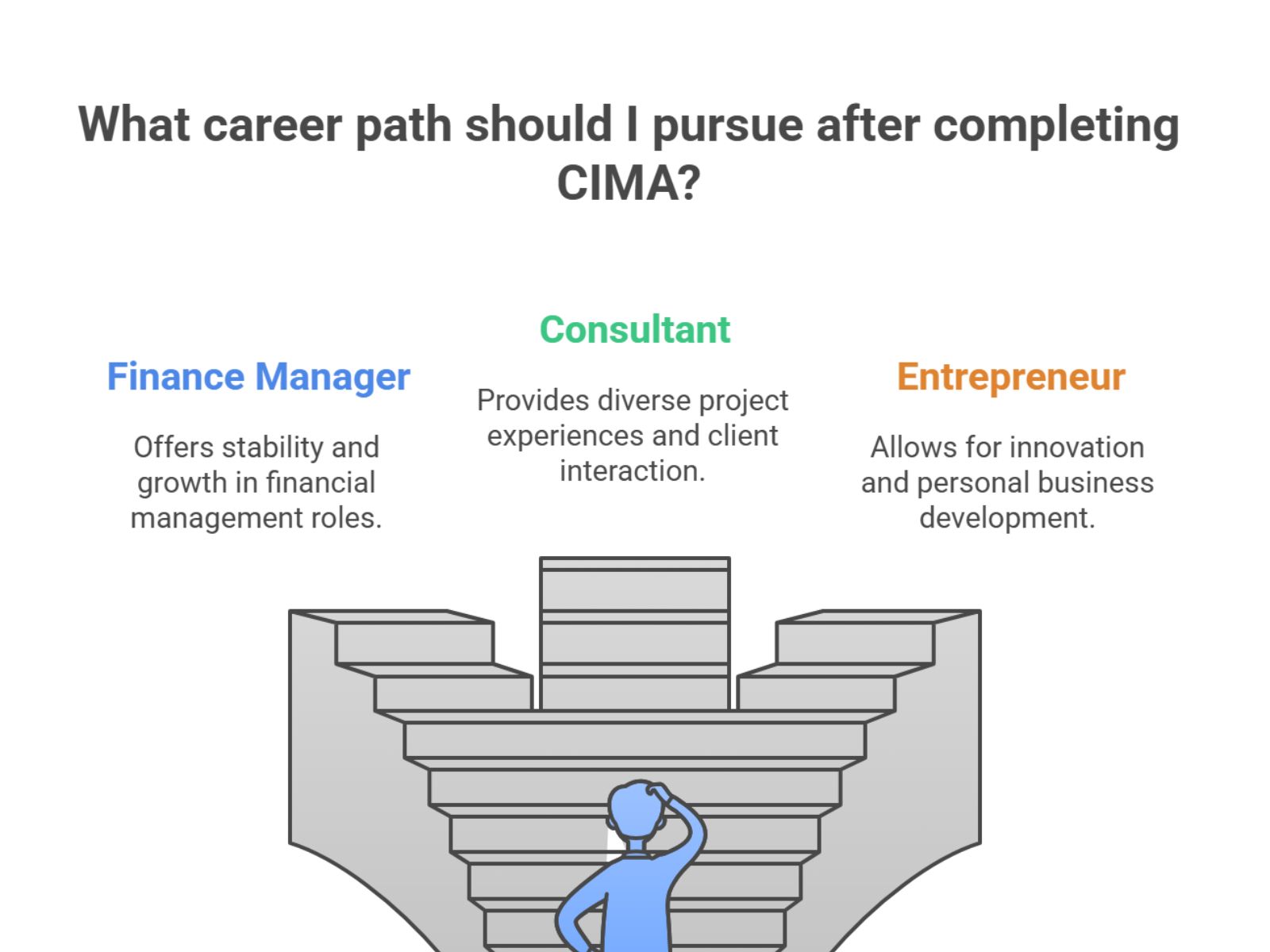
So, you’re nearly done with CIMA or maybe just wrapped it up. First off, congratulations. That’s a solid achievement and something to be genuinely proud of. Now comes the next big question, what to do after CIMA? It’s a common point of confusion for many, especially when there are just so many directions you can go in.
Let’s break it all down, one step at a time.
Step 1: Tick Off the Basics: Get the Required Work Experience
Finishing the CIMA qualification is just part of the process. To become a full member and call yourself a Chartered Global Management Accountant, you’ll also need at least three years of relevant work experience.
For most, this doesn’t mean switching jobs or starting something new. Many students gain this experience while studying, whether in finance, accounts, audit, or even in budgeting or forecasting roles.
You’ll need to log this experience through CIMA’s Practical Experience Requirement (PER) system. They’ve outlined the specifics clearly on their official website, so it’s worth checking that to make sure everything lines up.
Step 2: Pick a Sector That Matches Your Interests
One of the biggest perks of qualifying with CIMA is flexibility. It doesn’t tie you to one industry or type of company. Whether you’re into the fast-paced world of retail, the structured setting of banking, or want to work for the public, there’s a place for you.
Here are just a few sectors where CIMA professionals find strong footing:
- Retail
CIMA-qualified professionals play a central role in helping retail businesses cut down costs and boost profits. They give top-level advice on pricing, inventory, and budgeting decisions that have a direct effect on the bottom line. - Banking and Finance
This sector calls for people with sharp analytical skills. A CIMA qualification allows professionals to work in risk assessment, cost control, and strategic financial planning, things banks depend on to stay profitable. - Public Sector
It’s not all about private business. Many work in the NHS, education departments, or government bodies where they manage funds and reduce unnecessary expenditure. - Technology
With tech companies growing across the globe, there’s a demand for financially savvy people who can support high-growth operations with budgeting, forecasting, and investment planning.
Here’s a quick summary:
| Sector | Role Focus | Potential Impact |
| Retail | Cost control, profit planning | Boosting business margins |
| Banking | Risk, forecasting, compliance | Improving financial health of institutions |
| Public Sector | Budgeting, fund allocation | Saving taxpayer money, improving transparency |
| Technology | Growth planning, investment | Supporting rapid scaling |
Step 3: Choose a Career Path That Matches Your Strengths
Once you know where you want to work, the next step is figuring out what to do after CIMA in terms of the actual job. The role you choose can shape your learning, your lifestyle, and even how fast you move up.
Here are a few roles to consider:
- Management Accountant
This is a logical next step for CIMA grads. It involves monthly reporting, keeping track of assets, managing accruals, and helping the business meet its goals. It’s the foundation role that leads to many senior finance positions.
Approximate salary: ₹4L – ₹12.0L/yr
- Financial Analyst
If you enjoy digging into numbers and understanding business performance, this is a great option. Analysts help companies spot trends, budget better, and make smart financial decisions.
Approximate salary: ₹3L – ₹8L/yr
- Financial Controller
This role leans towards leadership. Controllers prepare balance sheets, oversee cash flow, and manage financial policies. You’ll likely be supervising a team and working closely with top management.
Approximate UK salary: ₹13.0L – ₹30.0L/yr
- Finance Director
The top finance position in most organisations. Finance Directors create company strategies, ensure compliance, and make sure the business runs smoothly from a financial point of view.
Approximate salary: ₹21.1L – ₹60.0L/yr
Step 4: Consider Further Study to Specialise or Grow
If you’re still asking what to do after CIMA, and you’re the kind who likes academic learning, you could go for further qualifications. This helps sharpen your skills and improve your chances of entering niche fields.
Some popular choices are:
- MBA (Master of Business Administration)
Great for those aiming for leadership or entrepreneurship. You’ll gain general management skills that go beyond finance. - CFA (Chartered Financial Analyst)
Perfect for those interested in equity research, portfolio management, or investment banking. It focuses heavily on financial analysis. - CTA (Chartered Tax Adviser)
If you want to work in tax, this one gives you a deep understanding of both corporate and personal tax systems.
Other options include:
- Chartered Institute for Securities and Investment (CISI)
- Financial Risk Manager (FRM)
- Investment Management Certificate (IMC)
All of these give a fresh edge and work well with the CIMA base.
Step 5: Think International
CIMA has global recognition. That means you aren’t limited to your home country. With the right visa or work permit, you can look at opportunities in countries like the UK, UAE, Singapore, Canada, or Australia.
This international scope makes the qualification more valuable, especially in companies that work across borders.
Conclusion: Still Wondering What to Do After CIMA?
If all this still feels like too much choice, remember, you don’t need to pick everything at once. You can start with a solid job, get the hang of the working world, and then slowly look at what to specialise in.
Everyone’s path is different. Some people jump into analyst roles straight away. Others work in operations or internal audit before finding their niche in finance. Some go straight into further study, while others wait a few years before taking on something new.
What’s important is to stay curious, keep learning, and make sure the work you’re doing teaches you something useful.
If you’re still figuring out what to do after CIMA, take a look at The WallStreet School. They’ve helped thousands of finance students transition smoothly from qualifications like CIMA into practical roles in investment banking, equity research, and more.
Their training focuses on practical tools like Excel, financial modelling, and valuation, all the things that real-world employers care about. And their placement support is a solid bonus.
FAQs
- How long does it take to complete CIMA?
Most students take around 3 to 4 years to complete all CIMA levels and gain their work experience. It depends on how much time you can dedicate alongside your job. - Is CIMA better than ACCA?
They serve different purposes. CIMA focuses more on management accounting, while ACCA is broader and includes audit and taxation. Choose based on the kind of work you see yourself doing. - Can one go into investment banking after CIMA?
Yes, but you’ll need strong financial modelling and valuation skills. A course like the one offered by The WallStreet School can help bridge that gap.
- Can CIMA-qualified professionals work abroad?
Absolutely. CIMA has a strong global presence. Many multinational firms actively seek CIMA members for roles in finance and strategy.
Can you be more specific about the content of your article? After reading it, I still have some doubts. Hope you can help me. https://www.binance.bh/register?ref=IHJUI7TF
Your point of view caught my eye and was very interesting. Thanks. I have a question for you. https://accounts.binance.bh/register/person?ref=IHJUI7TF