Liquidity risk in banking refers to the risk that a bank cannot meet its short-term payment obligations when they are due, without incurring significant losses.
In simple words, liquidity risk happens when a bank does not have enough ready cash to pay depositors, lenders, or counterparties on time.
This is the core idea behind liquidity risk FRM studies. It is not about how much money the bank owns overall. It is about whether the bank can convert its assets into cash quickly and safely.
Banks keep money in many forms: cash is one, loans are another, bonds and investments are another. The problem is that loans cannot be converted into cash overnight, bonds may need to be sold at a discount. Real estate cannot be sold fast at all.
Liquidity risk arises when money is locked but payments are due immediately.
For Example,
Imagine you own a house worth ₹1 crore. You also have gold worth ₹10 lakh. But you have only ₹20,000 cash in your wallet. Tomorrow morning, you must pay ₹1 lakh urgently for a medical emergency.
Are you rich? Yes.
Do you have liquidity? No.
That exact situation, at a much bigger scale, is what liquidity risk looks like in banking.
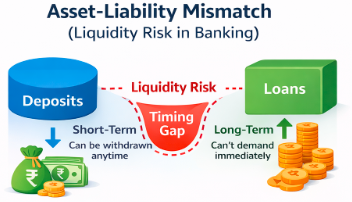
Figure1: Bank deposits can be withdrawn quickly, while loans take years to return, creating a cash timing problem for banks.
Why Does Liquidity Risk Happen in Banks?
Liquidity risk happens because banks borrow short-term and lend long-term.
Banks take deposits from customers that can be withdrawn at any time. At the same time, they use this money to give loans that usually run for 5, 10, or even 20 years. Because cash can leave the bank instantly while loans remain locked in for years, a timing gap is created. This gap between short-term liabilities and long-term assets is what we call maturity mismatch, and it sits at the core of liquidity risk FRM frameworks.
Banks deliberately operate this way because holding all deposits as cash would destroy profitability. Instead, they lend out most of the money to earn interest, which is how banks stay in business. As long as customer withdrawals are steady and predictable, this model works without any trouble.
Problems begin when this balance is disturbed. If withdrawals rise suddenly or if external funding sources become unavailable, the bank may struggle to arrange cash quickly. Such situations can be triggered by rumors, economic shocks, regulatory changes, or even fear-driven market panic.
What makes liquidity risk especially dangerous is that it does not depend on loan quality. Even when loans are healthy and borrowers are paying on time, the bank can still face liquidity stress if it needs cash immediately. This is why liquidity risk can emerge without any warning and why it is treated as one of the most serious risks in banking.
For Example, if many customers decide to withdraw money at the same time, the bank cannot call back all loans instantly. Even if borrowers are reliable, cash is simply not available on demand.
This is why liquidity risk FRM is closely connected with trust. When trust breaks, liquidity breaks.
What are the Types of Liquidity Risk in Banking?
Liquidity risk is usually divided into two main types. Both are tested deeply in liquidity risk FRM exams and used daily in banking risk analytics.
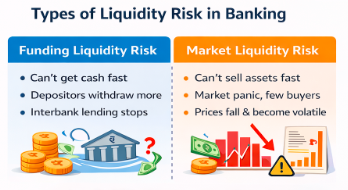
Figure 2: Shows the difference between struggling to get cash and struggling to sell assets during stressful market conditions.
1. Funding Liquidity Risk
Funding liquidity risk shows up when a bank needs cash and cannot get it quickly enough. It usually starts with higher-than-expected withdrawals or when short-term borrowing becomes harder than usual.
Banks do not rely on a single source of money. They use deposits, interbank markets, and short-term funding to keep daily operations running. Most of the time, this setup works fine and no one notices it. The problem is that this balance depends heavily on confidence. When confidence drops, even for a short period, funding access can tighten suddenly. At that point, the bank may still be financially sound, but cash becomes difficult to arrange.
For Example,
During financial stress, other banks may stop lending to each other. Money markets freeze. Even a healthy bank may struggle to borrow short-term funds.
This is why funding liquidity risk is treated as a confidence-driven risk and why liquidity risk FRM places so much emphasis on funding stability and contingency planning.
2. Market Liquidity Risk
Market liquidity risk is slightly different in nature. Here, the bank has assets, but turning them into cash becomes a challenge when markets are under stress.
In normal conditions, banks expect to sell securities without much trouble. Prices move, but buyers are usually available. When markets become nervous, that assumption breaks. Trading slows down, price gaps widen, and selling even good assets can mean accepting losses.
This matters because liquidity plans often rely on asset sales. When markets stop cooperating, those plans weaken. That is why market liquidity risk is closely linked to funding pressure and why it sits alongside funding risk in liquidity risk FRM and banking risk analytics discussions.
For Example,
During a crisis, banks may try to sell bonds to raise cash. But if everyone is selling at the same time, prices fall sharply. The bank either sells at a loss or holds the asset and faces liquidity stress.
This interaction between price risk and liquidity risk is a key topic in liquidity risk FRM and banking risk analytics.
A Real-Life Situation to Understand Liquidity Risk Better
Let us combine everything into one real-world story.
Imagine a mid-sized bank that mainly serves salaried customers. It invests heavily in long-term home loans and government bonds. Everything looks stable. Suddenly, a rumor spreads on social media that the bank is in trouble. Customers panic. Withdrawals increase. At the same time, money markets become tight due to a global event.
Now the bank faces three problems here at once: deposits are leaving, borrowing is difficult and Asset sales are costly. What’s scary here is that nothing is actually wrong with the bank, except that cash stops showing up when it’s needed.
This is why regulators around the world have tightened their focus on liquidity buffers and stress testing, with Basel norms 2026 shaping how banks prepare for liquidity stress.
Is Liquidity Risk Controllable? Then, How Do Banks Control It?
Yes, liquidity risk is controllable but never fully removable. That is the reality of banking.
Because banks cannot eliminate this risk, the focus shifts to managing it carefully through planning, buffers, and constant monitoring. This is where liquidity risk FRM moves from theory into real-world banking risk analytics.
In practice, banks deal with liquidity risk by keeping some money in forms they can access without delay. This usually means cash and government securities. These assets are not meant to generate returns. They are there for moments when cash is suddenly needed and there is no time to wait. With changes often referred to as Basel norms 2026, regulators are pushing banks to stay prepared for stress rather than scramble after it begins.
Even then, holding liquid assets is only part of the answer. Banks also spend time asking uncomfortable questions about what could go wrong. They run stress tests to understand how much cash would be needed if withdrawals spike or if funding markets slow down. At the same time, they try not to rely too heavily on any single source of funding, because that dependence can quickly turn into a weakness.
In India, this thinking shows up clearly in risk measurement India practices. Liquidity is tracked every day, different stress situations are reviewed, and banks operate under close watch from the central bank. Across countries, liquidity risk FRM ties these efforts together by giving banks a common way to think about liquidity before it becomes a problem.
Best Way to Measure Liquidity Risk
There is no single perfect measure, but some tools are considered industry standards.
The most widely used liquidity risk measurement tools come from Basel norms 2026 and are deeply covered in liquidity risk FRM.
Key Liquidity Risk Measures
- The Liquidity Coverage Ratio ensures banks can survive 30 days of severe stress.
- The Net Stable Funding Ratio ensures long-term assets are funded with stable sources.
- Banks also use cash flow mismatch analysis, stress testing models, and internal liquidity limits.
- In India, risk measurement India frameworks require banks to report liquidity positions regularly using regulatory templates.
- Modern banking risk analytics uses dashboards, scenario engines, and real-time alerts to track liquidity positions.
- Liquidity risk FRM connects all these tools into a structured risk framework.
Liquidity Risk FRM and the Indian Banking Context
Liquidity risk FRM is especially relevant in emerging markets like India.
Indian banks face volatile deposit behavior, seasonal cash demand, and market-linked funding pressures. Risk measurement India practices have evolved rapidly after past crises.
Basel norms 2026 have strengthened liquidity supervision and forced banks to improve transparency and stress resilience.
Indian banks now rely heavily on banking risk analytics platforms to track liquidity daily instead of monthly.
This shows how liquidity risk FRM is not just an exam topic but a living risk that changes every day.
Why Liquidity Risk Matters More Than Ever?
Liquidity risk has become more dangerous in a digital world. Money moves faster. Panic spreads faster. Withdrawals can happen in seconds through mobile apps. This speed makes liquidity risk FRM more relevant than ever before. Old assumptions about stable deposits no longer hold.
Banks must now manage liquidity risk in real time, using advanced banking risk analytics and strict regulatory compliance.
Basel norms 2026 acknowledge this reality and demand higher standards from banks worldwide.
Bottom Line
Liquidity risk in banking is not about profits or losses. It is about timing, trust, and survival.
A bank can be strong on paper and still collapse if it cannot access cash at the right moment. This is why liquidity risk FRM sits at the core of modern banking risk management. Understanding liquidity risk helps not only FRM students but also depositors, investors, and regulators. It explains why banks hold liquid assets, why regulations exist, and why panic can destroy even healthy institutions.
With stronger Basel norms 2026, improved risk measurement India frameworks, and advanced banking risk analytics, banks are better prepared than before. But liquidity risk will never disappear.
Because at the end of the day, banking is about promises. And liquidity is what keeps those promises alive. If liquidity fails, everything fails.
If this made you see why liquidity risk FRM actually matters beyond exams, learning it in a structured way can make a big difference. The WallStreet School’s FRM course focuses on understanding risks the way banks face them in real life, not just how they appear in textbooks.
People Also Ask
What best describes liquidity risk?
Ans. Liquidity risk is when money exists on paper but is not available when payments are due.
What is liquidity with an example?
Ans. Liquidity means how fast you can use money. Cash is liquid. A house is valuable but not liquid.
What is an example of a liquidity risk situation?
Ans. A bank has assets but cannot pay withdrawals immediately because loans cannot be converted to cash quickly.
What is the difference between credit risk and liquidity risk?
Ans. Credit risk is about borrowers not paying. Liquidity risk is about not having cash on time.