Best FRM Coaching Institute in India: How to Choose (2026)
Every year, thousands of FRM aspirants in India go through the same ritual. They open ten tabs comparing coaching institutes, spend three hours reading reviews that all somehow sound identical, get distracted by a YouTube video of someone explaining VaR in fifteen minutes, and then make a decision based on whichever website had the most convincing testimonial. Two months in, they realise the “live classes” are actually pre-recorded videos from 2022 and the “expert faculty” hasn’t responded to a doubt in six weeks.
Choosing the right FRM coaching institute in India is one of the most consequential decisions in your entire FRM journey — and it’s also one of the most poorly made ones, because nobody tells you what to actually look for beyond the obvious. This blog does. No vague advice, no sponsored rankings, just a clear decision framework and an honest look at what separates genuinely good FRM preparation from a well-packaged disappointment.
Why This Decision Matters More Than You Think
The FRM certification has a combined global pass rate hovering between 40–55% across Part I and Part II. A significant chunk of the people who don’t make it aren’t underprepared in terms of hours spent studying — they’re under-guided in terms of how they studied. Wrong resource sequencing, insufficient mock testing, no conceptual clarity on the quantitative sections, or simply running out of steam halfway through Part II because the programme didn’t keep them accountable.
Good FRM coaching doesn’t just teach you the syllabus. It compresses the learning curve, keeps you on pace, tells you where you’re weak before the exam does, and helps you walk in on exam day with genuine confidence rather than “I think I’ve covered most of it” confidence. The difference between those two states is often the difference between a pass and another registration fee.
FRM coaching fees in India range from Rs 15,000 to Rs 90,000 depending on the institute and format. Add to that the FRM exam registration cost — roughly Rs 37,000– Rs 45,000 per part at current exchange rates — and you are looking at a meaningful financial commitment. Spending that and being underserved is expensive. Getting it right the first time is dramatically more cost-effective than paying for a second attempt.
The 6 Things That Actually Separate Good FRM Coaching From Average
Forget the brochure language. These are the six things that genuinely determine whether an FRM coaching institute will serve you well.
1. Faculty Specialisation, Not Just Finance Credentials
There’s a difference between someone who teaches finance broadly and someone who specialises in FRM. The FRM syllabus has corners — quantitative analysis, Basel III/IV regulatory mechanics, counterparty credit risk, and liquidity risk frameworks — that require instructors who understand these not just as exam topics but as living, breathing parts of the risk industry.
When evaluating an institute, ask specifically: who teaches Part II, what is their professional background, and have they worked in a risk function or just taught about one? A faculty member who has spent time at a bank’s credit risk or model validation team will teach you how to think about these problems the way the exam expects, not just how to memorise the formulas.
2. Mock Test Quality, Not Just Quantity
Every FRM coaching institute in India will tell you they offer mock tests. The question isn’t how many — it’s how close they are to the actual FRM exam in difficulty, format, and question style. Real questions are application-based, scenario-driven, and deliberately designed to reward understanding over recall. A question bank of 2,000 easy definitional questions is essentially useless preparation for that.
Ask to see a sample mock before you enrol. If the questions read like a textbook glossary quiz, that’s your answer. If they put you in a scenario and make you think, that’s closer to what the exam actually does.
3. Doubt Resolution That’s Actually Accessible
This seems like a basic requirement. It is. It also happens to be where a depressing number of FRM programmes quietly fall apart.
FRM preparation covers genuinely complex territory — duration convexity, expected shortfall, wrong-way risk, and operational risk capital models aren’t concepts most people pick up in one pass. Doubt resolution that consists of “post your question in the forum and someone will get back to you within 72 hours” is not doubt resolution. It’s delay disguised as support.
Look for programmes with live doubt sessions, accessible faculty, or at minimum an active student community where questions get answered by people who actually know the answer. This becomes particularly critical in the six weeks before the exam when the pace of revision accelerates.
4. Structured Curriculum vs Content Dump
Some programmes give you access to everything on Day 1 and call it “flexibility.” What it often produces is directionless studying where candidates jump between topics based on what feels manageable rather than what builds understanding systematically. Structured batches with a clear weekly plan, topic sequencing that mirrors how the exam builds complexity, and regular checkpoints that tell you whether you’re on track — these are signs of a well-designed FRM training programme.
5. Access Period and Reattempt Policy
FRM preparation for a working professional is rarely linear. Work surges happen, life happens, and sometimes a candidate genuinely needs more time than the original schedule allowed. What happens to your access when that occurs?
Programmes with rigid 6 or 9-month access windows leave candidates in a genuinely difficult position if they need to defer or reattempt. The better FRM online classes programmes in India offer validity until you clear the exam — which removes the financial pressure of paying again for content you’ve already purchased and lets you focus on preparing rather than on racing a countdown timer.
6. Post-Certification Career Support
The FRM certification exists to get you a job. An institute that treats exam day as the finish line rather than the starting gun is missing half the point of professional finance coaching.
Career support in the FRM context looks like: interview preparation for risk-specific technical interviews, resume guidance tailored to the roles FRM candidates typically target (market risk, credit risk, model validation, risk consulting), and access to a placement network or alumni community that can accelerate your job search. Ask specifically what career support looks like at the institute you’re considering, and ask for examples rather than generic assurances.
Online vs Offline FRM Classes in 2026: Let’s Settle This
The short version: for most FRM aspirants in India in 2026, online FRM classes are not a compromise — they’re often the superior choice.
FRM preparation is largely individual. Unlike MBA group discussions or CA articleship, the FRM exam tests your personal understanding of quantitative models and risk frameworks. You don’t need to be in a room with other people to develop that understanding — you need good teaching, good practice material, and accessible support. All three are now consistently available through quality online programmes.
The practical advantages of FRM online classes matter enormously for the typical candidate profile: working professionals in Bengaluru, engineers in Hyderabad, banking associates in Mumbai who can’t rearrange their commute around fixed batch timings. Recorded backup access, the ability to re-watch complex quantitative topics multiple times, and city-agnostic access to strong faculty are all meaningful advantages over a fixed offline schedule.
Offline FRM classes do offer one genuine edge: structured physical accountability. For candidates who genuinely struggle to maintain study discipline in a self-directed environment, sitting in a classroom with a fixed schedule and peer pressure from a cohort can be the variable that keeps them consistent through a six-month preparation cycle. This is a real advantage — just not one that outweighs the flexibility benefits for most working professionals.
The hybrid format — live online classes with recorded backup and accessible doubt support — is what most serious FRM training programmes in India now offer, and it’s the right answer for the majority of candidates.
FRM Coaching Fees: How to Think About Value, Not Just Price
FRM coaching fees in India range from ₹15,000 on the low end (largely self-directed recorded content) to ₹90,000 at the premium end of structured programmes with mentorship and placement support. Most quality programmes with live instruction, mocks, and doubt support sit in the ₹30,000–₹60,000 per part range.
The framing that most candidates get wrong is optimising for the lowest fee rather than the best outcome. Consider: a single re-attempt at the FRM costs Rs 37,000–Rs 45,000 just in registration fees, before you count the opportunity cost of another 4–6 months of preparation time. A programme that costs ₹15,000 more but meaningfully improves your first-attempt probability is the more economical choice by a considerable margin.
What you should actually be asking: does this programme include both Part I and Part II? What is the access validity? Are mocks included or extra? Is career support included or a paid add-on? The headline fee number tells you very little without those answers alongside it.
The Red Flags Checklist: Walk Away If You See These
Consider this your FRM coaching due diligence checklist, The Matrix style — the red pill version of what’s actually happening behind the brochure.
“Guaranteed pass” in the literal sense. No institute can guarantee your FRM result. What legitimate programmes offer is guaranteed support, extended access, or fee waivers on re-enrolment — not a literal pass promise. Any institute that claims otherwise is either misusing the word or being deliberately misleading.
No demo class or trial option. A programme confident in its teaching quality offers a free demo or trial session without hesitation. One that doesn’t let you evaluate the teaching before committing is betting that you won’t notice what you’re missing until after you’ve paid.
Pass rate claims without context. “90% pass rate” is a marketing number until you know the base: how many students sat, what their backgrounds were, and whether the cohort was self-selected from stronger candidates. Numbers without context aren’t data — they’re decoration.
Faculty who can’t explain what they teach in plain terms. Attend a demo session and ask a direct question about a complex FRM topic — wrong-way risk, for instance, or the difference between expected and unexpected loss. How a faculty member explains a difficult concept in plain terms tells you more about their teaching ability than any credential listed on the website.
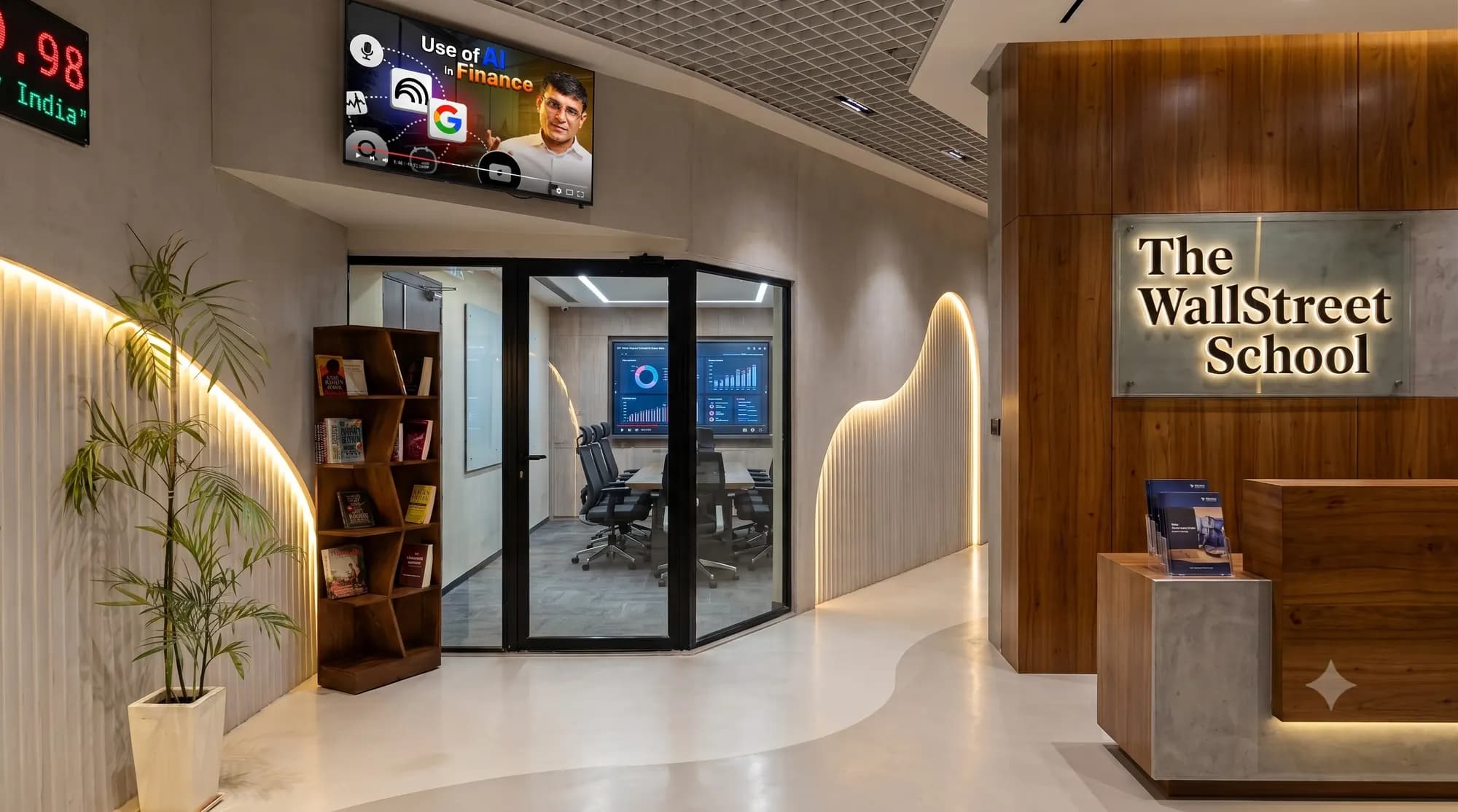
Why The Wall Street School Is the Right Place to Pursue Your FRM
There are good FRM coaching institutes in India. There are also institutes with large marketing budgets and mediocre classrooms. The gap between the two is real, and it shows up not on the website but in the exam result.
The Wall Street School (TWSS) sits firmly in the first category — and here’s specifically why that matters for FRM preparation.
TWSS brings faculty with real industry experience into every session, not just curriculum knowledge. The difference is tangible: when a concept like counterparty credit risk or liquidity coverage ratio gets taught by someone who has applied it inside a bank’s risk function, the explanation carries a layer of context that no textbook can replicate. Students don’t just leave understanding the definition — they leave understanding why it matters, how it’s used, and how the FRM exam tests it in practice.
The mock examination programme at TWSS is built to mirror actual exam difficulty — scenario-based, application-heavy, and genuinely representative of what you’ll face on exam day. Doubt resolution is structured and accessible, not a post-and-wait forum experience. And the preparation doesn’t stop at the exam — TWSS’s career guidance supports students through the transition from certified to employed, with interview preparation and industry placement support that reflects genuine knowledge of what FRM employers in India actually look for.
For candidates across India — whether you’re a working professional studying in the evenings, an engineer making the switch to finance, or a fresh graduate building your risk credentials from the ground up — TWSS’s FRM programme is built around how real preparation actually works, not how it looks on a brochure.
The Decision Framework: Three Questions That Narrow It Down
After everything above, here’s how to actually make the call.
Question 1: Does the programme fit my schedule and learning style?
If you need flexibility, online with recorded backup is non-negotiable. If you need physical accountability to stay consistent, look for institutes with offline or hybrid options in your city.
Question 2: Can I verify the teaching quality before committing?
Attend a demo. Ask a hard question. The answer tells you everything.
Question 3: What happens after the exam?
Institutes that invest in your career outcomes are making a statement about their long-term relationship with you as a student. That statement is worth paying attention to.
The FRM certification is genuinely demanding, genuinely valuable, and genuinely worth the effort. The institute you choose to prepare with shapes how efficiently you get there — and how confidently you arrive. Choose with the same rigour you’ll eventually apply to a credit risk assessment. It’s worth it.
Interested in Learning Finance Professionally?
Our courses take you from fundamentals to expert level — with live mentors and placement support.
Explore Our Courses