The number of CFA charter holders around the world is growing gradually, with more professionals eyeing the course. As of February 2023, there were around 1,90,000 CFA holders globally, of which 3,500 were from India. Moreover, India reportedly has the largest market share of CFA program enrollment globally.
As tough as it might be, it is one of the most coveted designations in the finance industry, explaining its popularity. However, given that it is a global certification, many are uncertain as to how relevant the course might be in the Indian context as opposed to, say, an MBA or a CA.
If you are undecided about the efficacy of enrolling in a CFA course in India, this blog will help you resolve your doubts. Learn what taking up the course entails, what it will prepare you for and more.
A Brief Overview of CFA
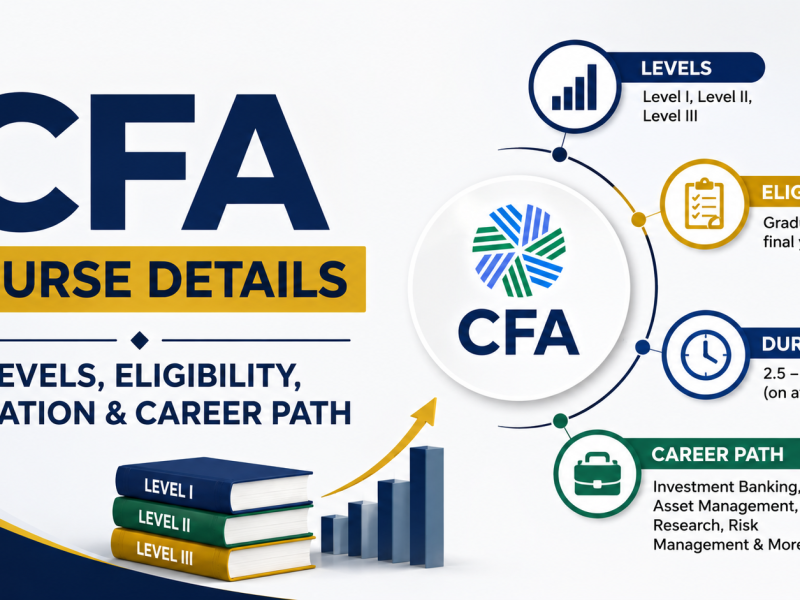
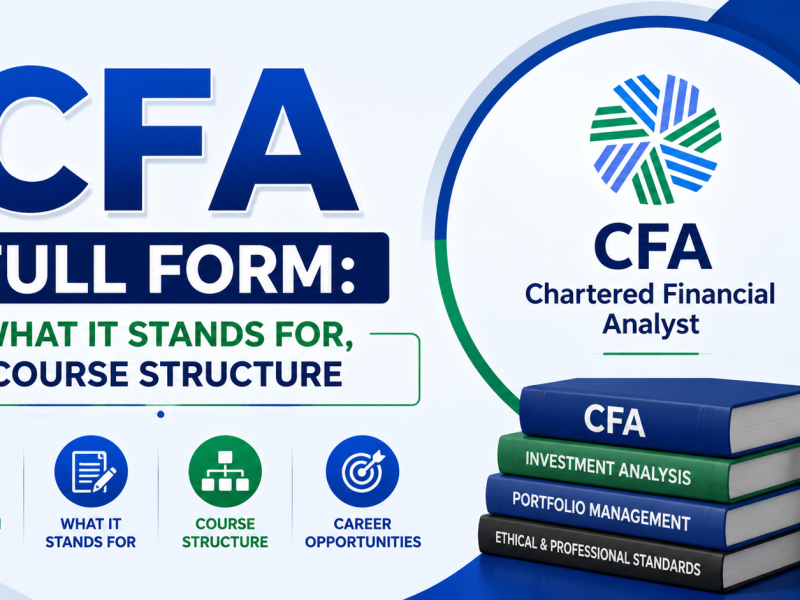
The CFA is a world-renowned certification offered by the CFA Institute, USA. The exam has three levels: Level 1, 2, and 3. Each level is more challenging than the former. The curriculum is designed to provide in-depth knowledge in areas like financial analysis, portfolio management, ethics, derivatives, private equity, and investment management.
Eligibility criteria
Recognised in about 160 countries, the primary reason the CFA course attracts so much attention is the broad range of employment opportunities it brings with it. You can become a financial analyst, risk manager, financial advisor, investment banker, equity research analyst and more.
To be eligible to enroll in the CFA course in India, you must:
- Have a Bachelor’s or an equivalent degree in any discipline or be enrolled in one. If you are following the latter, you must complete your Bachelor’s before you sit for Level 1.
- Before registering for the exam, have 4000 hours of relevant work experience or at least three years of employment.
The rigorous and comprehensive CFA curriculum covers a wide range of topics in finance and economics, making it ideal for anyone wishing to pursue a career in investment banking, asset management, or equity research.

Why the CFA Course in India is Popular
The finance industry in India is expanding rapidly, making it a hotbed for diverse finance-related roles. India is also gradually making a name for itself as a global player in various industries, be it investment, IT, technology, or finance. As such, there is a growing demand for qualified professionals who are well-versed in national and international financial services and their offerings.
The CFA designation is seen as a symbol of excellence in finance, making it an attractive option for those aiming to stand out in a competitive job market.
1. Global recognition
The primary reason the CFA course is popular in India is the global recognition it brings. The CFA charter is acknowledged and respected worldwide, opening doors to international job opportunities. For Indian candidates, this means they can pursue careers not just within the country but also in global financial hubs like New York, London, or Singapore.
2. Better career prospects
Whether you are an industry professional, have a non-finance background or are a student, a CFA can be a valuable differentiator. As a mid-level professional, you can jump to top-tier roles with higher pay, like corporate financial analyst, financial strategist, fund manager, and other diverse roles.
The average salary of a CFA charter holder in India is an impressive ₹28.6 lakh per annum.
3. Flexibility to study while you work
One of the unique aspects of the CFA course in India is its flexibility. You can pursue the course while working and gain valuable work experience without taking a career break. This benefits working professionals who want to upskill without leaving their current jobs. The self-paced nature of the program means you can study at your convenience, fitting it around your work and personal commitments.
4. Networking opportunities
Enrolling in a CFA program allows you to join a global community of finance professionals. The CFA Institute and local CFA societies in India regularly host events, seminars, and workshops. These platforms offer valuable networking opportunities to connect with industry leaders, peers, and potential employers. While a CFA does not guarantee a job, the solid professional network it helps build can be crucial for career advancement.
5. Graduate-level knowledge in finance and exemptions to other certifications
An upside of CFA preparation is that you get extensive and in-depth knowledge of financial operations, how to navigate dynamic and global markets and more. In addition, once you clear all three levels of CFA, you earn exemptions from some certifications and even waivers to GRE and GMAT requirements.
Wrapping Up
Completing the CFA course in India is a challenging journey, but it can pay off significantly in terms of career growth and professional satisfaction. You get global recognition, in-depth knowledge, better career prospects, and networking opportunities.
Take the next big step in your career and enroll in a CFA course today!
FAQs
- Can I do CFA with B.Com?
You can enroll in a CFA program while studying for your B.Com. A B.Com degree provides a strong foundation in finance and accounting, which can be highly beneficial when studying for the CFA exams.
- Can I get a job after passing CFA Level 1?
You can get entry-level jobs like an intern in an accounting firm or an investment consultancy once you pass Level 1 of the CFA exams.
- Can a CFA work from home?
As a CFA, you can choose to work remotely since many small and medium clients are open to hiring financial analysts and consultants on a remote basis. However, the extent you can work remotely depends on the clients. Some clients may prefer to work face-to-face at least once in a while.