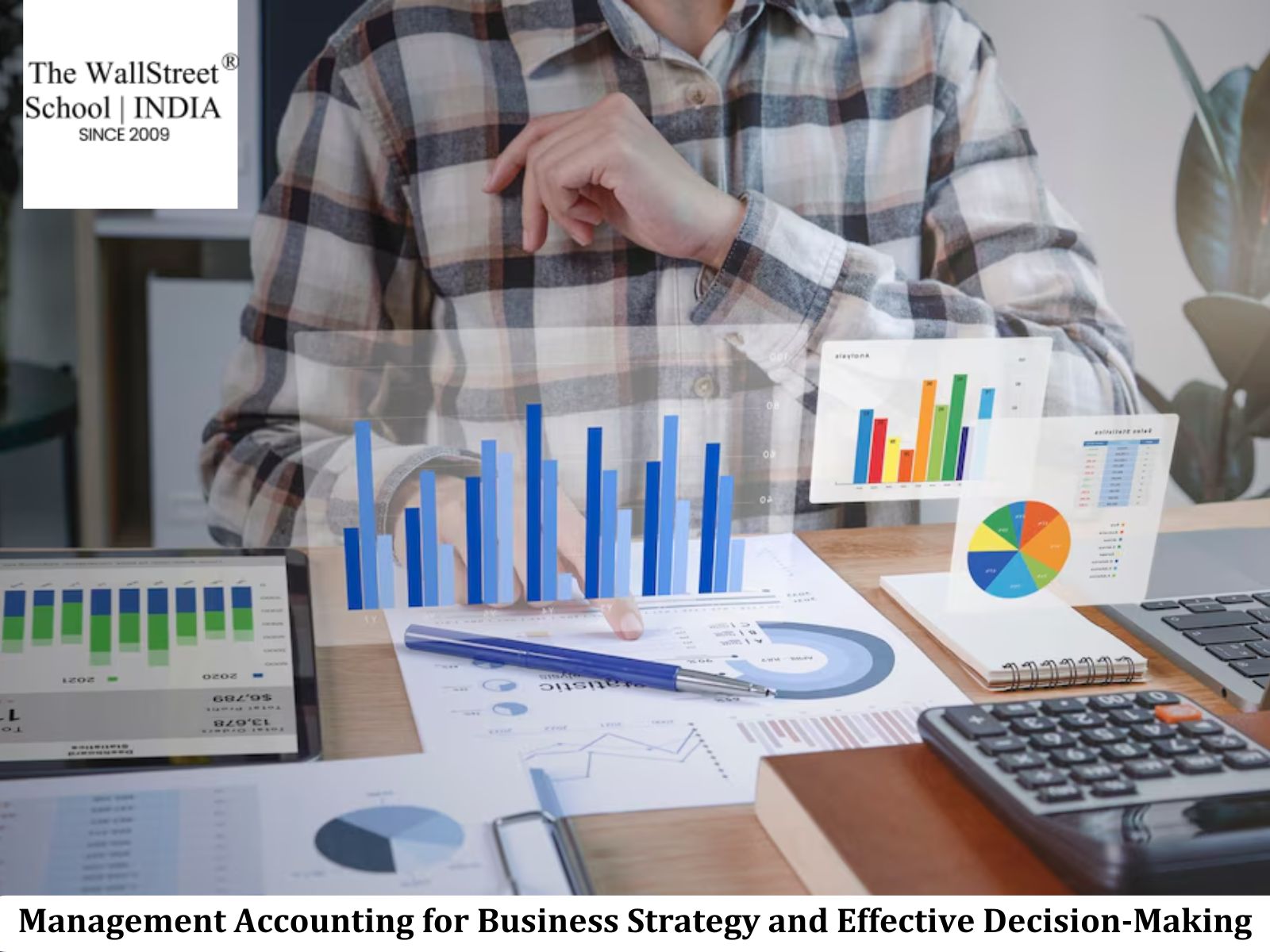
Every decision a business makes has the potential to impact its success. Not conducting accurate data and market analysis before making business-related decisions is like entering an examination hall unprepared. In today’s cutthroat competition, businesses should invest in strategic management to sustain, irrespective of their size and industry.
Robust data should support business decisions, with 63% of marketing professionals worldwide considering data-driven strategies the key to successful businesses.
Strategic decision-making involves analysing data, understanding the market competition, and identifying the best course of action to generate revenue and earn profits. Businesses should also have a thorough idea about when and where to invest for the best returns.
In this regard, the role of a Certified Management Accountant (CMA) is highly beneficial as it covers everything ranging from financial management, accounting, and operations of the business environment. If you look forward to learning more about the techniques contributing to effective managerial accounting, you can enroll in a CMA accounting course.
Key techniques for effective management accounting
For accurate data analysis, Certified Management Accountants count on specific techniques. These tools help businesses analyse and manage costs, assess the scope for profit, and evaluate investment opportunities. Taking a CMA accounting course can teach you more about these techniques.
Here’s a breakdown of some of the techniques:
- Cost analysis: Thorough management accounting helps to reduce costs, enhance efficiency, and boost profitability of an organisation. A Certified Management Accountant with a CMA accounting course certification can help businesses conduct a thorough cost analysis by calculating the cost of each activity. This way, owners and managers can make accurate decisions about how to allocate resources for the most beneficial returns.
- Margin analysis: This technique is used to determine whether a product, service, or activity is worth the investment. It compares the costs of something against the benefits it brings. If the benefits don’t outweigh the costs, business leaders might decide to stop offering it or rethink their approach to selling it.
Based on the results of margin analysis, businesses can also decide how to allocate their resources so that costs can be minimised and profits can be enhanced.
- Constraint analysis: The main motive of this technique is to identify the bottlenecks hindering the smooth execution of business operations. It is a systematic process that helps identify limitations, evaluate them, and manage them so that the overall efficiency and performance of the organisation can be enhanced.
Constraint analysis helps identify the limits or obstacles holding back a business. By understanding these limits, leaders can make better decisions, allocate resources more effectively, and reach their goals more efficiently.
- Capital budgeting: In this technique, CMAs analyse the potential profitability of projects to determine which projects are worth pursuing and where to allocate financial resources for optimum benefits.
Capital budgeting analysis involves calculating metrics like net present value (NPV) and internal rate of return (IRR) to help make critical financial decisions. Since capital budgeting involves significant financial commitments, these decisions directly affect the company’s profitability and future growth.
- Product costing and inventory valuation: Inventory valuation identifies and analyses the actual costs related to the company’s inventory. Analysts calculate the overhead charges and the direct costs related to the cost of goods sold. This technique helps in properly assigning costs to a product, thereby helping the business reap profit.
- Analysing product and service profitability: Some products and services generate more revenue than others. A CMA accounting course can teach individuals how to identify the most profitable for a business. Through this analysis, business owners and managers can decide which services and products to focus on and which to discontinue.
- Performance evaluation: Performance evaluation helps CMAs gather valuable data on how well business strategies are working. Evaluating performance can help business owners and managers identify areas for improvement and make informed decisions about formulating strategies that can improve performance.
- Budgeting and forecasting: Budgeting and forecasting in management accounting help assess an organisation’s financial health and performance. This information is used to create budgets and forecasts, which are crucial for guiding business decisions. With these insights, leaders can set goals, allocate resources, and track the organisation’s progress over time. Forecasts also help businesses anticipate trends and plan strategies to reduce potential risks.
Why management accounting is critical to business success
Management accountants play a crucial role in helping businesses thrive by using data to analyse financial and operational performance. Their insights are essential for both long-term strategies and day-to-day decisions.
Management accountants help businesses prepare for and manage risks by supporting smart financial planning. Certified Management Accountants, in particular, can spot potential risks early and set up measures to reduce their impact.
With clear insights from CMAs, businesses can streamline operations, boost financial performance, and make decisions rooted in strong data analysis, laying a solid foundation for success.
Wrapping up
Management accounting is a critical component that governs the decision-making of businesses, no matter their size. From tracking expenses to analysing profitability, management accounting can provide valuable information through which businesses can perform strategic planning and improve their business.
Enroll in a CMA accounting course and learn how to leverage data to make informed strategic business decisions.
FAQs
- How do accountants support strategic decisions?
Management accountants can offer valuable insights that can lead to strategic decision-making through techniques like cost analysis, budgeting, product costing, inventory valuation, margin analysis, constraint analysis, etc. A CMA accounting course can teach you more about these techniques.
- What is forecasting in risk management?
Forecasting uses past data to predict future events or conditions, giving businesses a heads-up about potential challenges. This way, they can prepare and take steps to reduce risks before problems arise.
- Why is margin analysis important in decision-making?
Margin analysis is a tool that allows businesses to maximise their chances of earning profit. Therefore, it plays an important role in deciding the pricing of products, services, or other deliverables.