
Why ACCA Is Gaining Popularity Among Commerce Students in India
Let’s be real– for a long time, the only “prestige” path for a commerce student in India was the CA (Chartered Accountancy) route. But as
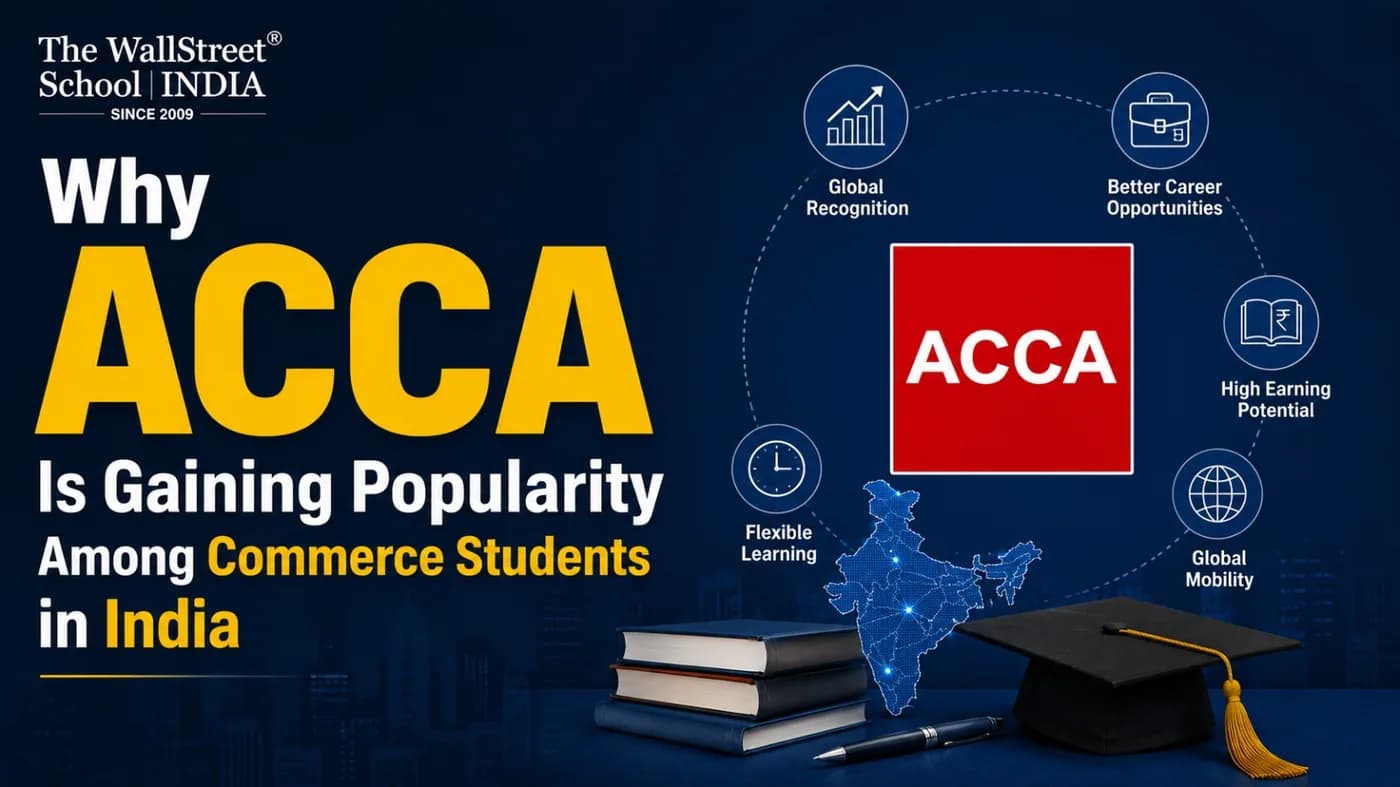
Let’s be real– for a long time, the only “prestige” path for a commerce student in India was the CA (Chartered Accountancy) route. But as we move through 2026, the tides have shifted. The ACCA popularity in India has skyrocketed because it offers something the traditional paths often lack– a global passport. ACCA is gaining popularity among commerce students in India because it combines a flexible, paper-wise exam structure with an internationally recognized curriculum focused on IFRS, making it the perfect launchpad for careers in the Big 4, MNCs, and global finance hubs.

The “Global” Factor: Why the ACCA Course India is Trending
The modern commerce student is not just looking at local firms, instead they have their eyes at London, Dubai, and Singapore. The ACCA course(India) has become the go-to because it is recognized in over 180 countries, effectively removing the geographical barriers of a professional degree.
- IFRS Mastery: Since ACCA is based on International Financial Reporting Standards (IFRS), you are trained for the global stage from day one. This makes you an immediate asset to multinational corporations that need to consolidate accounts across different countries.
- The Big 4 Magnet: Firms like Deloitte, PwC, EY, and KPMG are hiring ACCA professionals at record rates to man their Global Capability Centers (GCCs) in India. They value the standard of excellence that the UK-based body maintains, ensuring that an analyst in Delhi is as skilled as one in Manchester.
- Versatility in Roles: Unlike traditional accounting that often funnels you into audit or tax, ACCA opens doors to management accounting, forensic finance, and strategic leadership. It allows you to balance between industries– from tech startups to investment banks with ease.
Flexibility: ACCA for Commerce Students who Value Time
One of the biggest reasons for the shift toward ACCA for commerce students is the sheer flexibility of the exam model. Let’s face it, the “group system” in traditional exams often turns out to be a soul-crushing bottleneck.
- Paper-Wise Progression: In ACCA, you can take one exam at a time, allowing you to focus your energy and master one subject before moving to the next. This drastically reduces student burnout and allows for a much more balanced lifestyle compared to other professional courses.
- On-Demand Exams: For the foundation levels, you don’t have to wait six months for a cycle as you can book your exam when you are ready. This means a motivated student can speed through the initial stages at their own pace, potentially qualifying much faster than their peers.
- Exemptions for Graduates: If you are a B.Com graduate or part qualified or qualified CA/Indian CMA– you may get up to 4 to 9 exemptions, depending on your university and prior scores. This head-start makes it an incredibly efficient commerce career option for those who have already put in the work during college.
The Professional Edge: To truly capitalize on these exemptions and clear the remaining papers on your first try, you need more than just a textbook. The WallStreet School (TWSS) at Delhi and Mumbai is widely regarded as a great place for this course because they blend the ACCA curriculum with practical “job-ready” training. Their mentors don’t just teach the syllabus– they teach you how to apply it in a real-world corporate environment.
ACCA Career Scope: The 2026 Salary & Demand Reality
If you are wondering about the ROI, the ACCA career scope in 2026 is looking very green. The demand-supply gap for global accountants has pushed ACCA jobs in India into a high-salary bracket for freshers.
- Lucrative Starting Packages: A fresher who has cleared their professional papers can expect a salary ranging from Rs 6 to Rs 10 Lakhs per annum in metro cities. As you gain 3-5 years of experience, especially in a Big 4 or MNC setting, that number often jumps to the Rs 15 to Rs 20 LPA range.
- MNC Preference: Global companies prefer ACCAs because they don’t need to be “re-trained” on international standards. This preference translates into faster promotions and opportunities for international secondments, where you can work at the firm’s global headquarters.
- The Startup Opportunity: India’s fintech and startup ecosystem is booming, and these companies need strategic thinkers who can handle fundraising and global compliance. An ACCA professional is perfectly positioned to take on the role of a Finance Controller or even a CFO in a fast-scaling startup.
Why “Practical Grinding” Beats Word for Word Learning
The reason why many students struggle with professional exams is that they treat them like college finals, basically just– memorize and dump. ACCA is an application-based course, which is why your choice of coaching is the most critical decision you will make.
- Hands-on Mentorship: Learning about “Performance Management” is one thing, but seeing how it impacts a company’s bottom line is another. At premier educational institutions such as The WallStreet School, the faculty consists of ACCA-qualified trainers spearheaded by Shilpi Jain, a powerhouse ACCA mentor known for transforming complex global standards into easy-to-digest strategies. They bring their industry experience into the classroom, making the concepts stick through real-life simulations.
100% Placement Assistance: Getting the degree is only half the battle, as getting the job is the ultimate goal. TWSS is famous for its placement cell that has deep ties with the Big 4 and top MNCs, ensuring that their students are at the front of the line when recruiters come knocking.
Skill Integration: The best ACCA programs now integrate “Value Add” courses like Advanced Excel and Financial Modeling. By learning these alongside your ACCA papers at TWSS, you become a “Super-Analyst” who can build complex models and provide insights that a standard accountant simply cannot.
.
ACCA Benefits: Beyond the Ledger
While the money and the global mobility are great, the long-term ACCA benefits are what define a successful 30-year career.
- Continuous Professional Development: The ACCA body ensures its members stay relevant by requiring annual learning units. This means you will always be at the cutting edge of digital finance, AI in accounting, and the latest ESG (Environmental, Social, and Governance) reporting standards.
- Networking with 250,000+ Members: You become part of one of the world’s largest professional networks. Whether you need career advice or a job lead in London, the ACCA community is an incredibly supportive ecosystem that spans across every major industry.
- Ethical Leadership Training: ACCA places a massive emphasis on ethics through their “Ethics and Professional Skills Module” (EPSM). In an age of corporate scandals, being a professional who is literally certified in ethical decision-making makes you invaluable to the C-suite.
The Verdict: Is it the right move for you?
As we look at the landscape of numerous commerce career options in 2026, ACCA stands out as the most balanced path between rigor and reward. It offers the prestige of a Chartered status without the rigid, outdated structures that often hold students back.
The ACCA popularity in India isn’t just a temporary hype– it’s a response to a globalized economy that needs accountants who can speak the language of international business. If you are a commerce student who dreams of a career that is not limited by borders, starting your ACCA journey with a practical, job-focused institute like The WallStreet School is the smartest move you can make.
So stop waiting for an opportunity and build one that travels. Your global career starts with those four letters: “ACCA.”
FAQs
1. How is ACCA different from the Indian CA qualification?
The main difference between ACCA and CA lies in the focus– CA (ICAI) is essential for local practice and statutory audit rights in India, while ACCA is a global qualification recognized in 180+ countries. ACCA is often preferred by students aiming for MNCs, Big 4 firms, or international relocation because its curriculum is based on IFRS (International Financial reporting Standards).
2. Can I get exemptions in ACCA if I have a B.Com or CA degree?
B.Com graduates can get up to 4-5 paper exemptions, while qualified CAs can get up to 9 paper exemptions, meaning they only need to sit for the 4 Strategic Professional papers. This makes ACCA a popular “add-on” for Indian professionals.
3. Is ACCA tougher than CA?
While both are rigorous, ACCA is perceived as more student-friendly. This is due to its flexible, paper by paper exam structure and an average pass rate of 40-60%, compared to CA’s historically low single-digit pass percentages.
4. What is the average starting salary for an ACCA in India?
In 2026, an ACCA Fresher in India can expect a starting package between Rs 5 LPA to Rs 8 LPA at Big 4 firms or Global Capability Centres (GCCs). This can scale rapidly to Rs 15+ LPA as you gain 3-5 years of experience in specialized roles like Financial Planning & Analysis (FP&A).
5. Can I practice as a Chartered Accountant in India with an ACCA degree?
While ACCAs are highly sought after for corporate roles, they cannot sign statutory audit reports in India, as that right is reserved exclusively for ICAI-registered Chartered Accountants. However, ACCAs have signing authority in several other countries, such as the UK and Dubai.
Interested in Learning Finance Professionally?
Our courses take you from fundamentals to expert level — with live mentors and placement support.
Explore Our Courses