
Best Study Plan For CFA Level 1 Syllabus
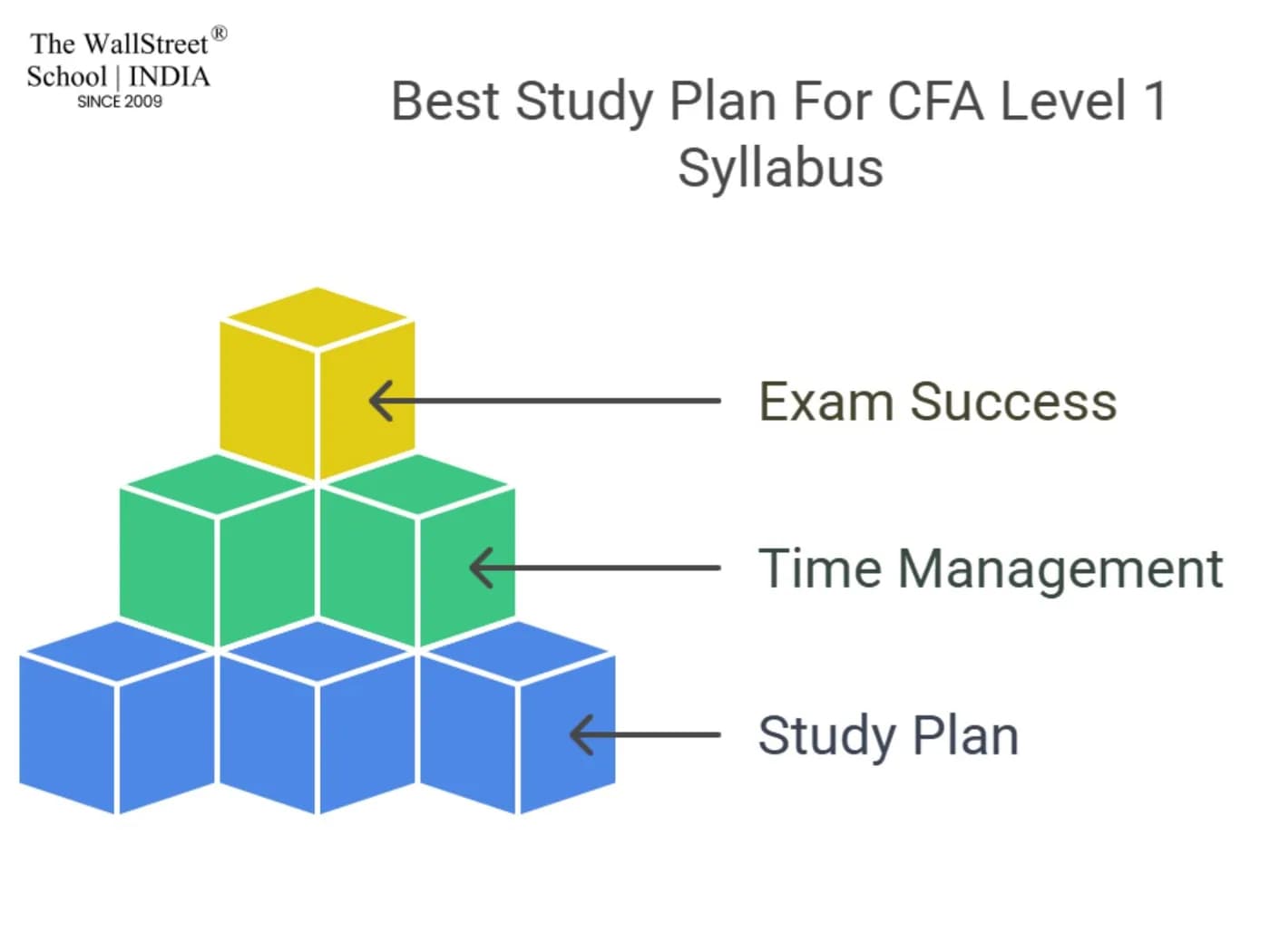
The CFA Level 1 exam is a major milestone. It lays the groundwork for the entire CFA journey. A structured study plan is key to success. Without a plan, preparation can feel overwhelming and scattered. Many Indian candidates struggle with managing their study time. Balancing work, studies, and personal life is challenging.
The CFA Level 1 syllabus covers multiple finance topics. It requires dedication, strategy, and smart time management. A well-organised approach simplifies learning and boosts retention.
This guide provides a roadmap for effective preparation. Follow it consistently, and results will follow.
Understanding the CFA Level 1 Syllabus
The CFA Level 1 syllabus covers ten broad topics. Each topic has a different weightage. Some sections require extra effort. The key focus areas are listed below:
- Ethical and professional standards: Ethics plays a crucial role in the CFA exams. You can learn about the CFA Institute’s Code of Ethics in detail. Understanding integrity, fairness, and transparency may help in ethical decision-making. The aim is to give you better clarity by helping you explore real-world ethical dilemmas.
- Quantitative methods: This section introduces key mathematical and statistical concepts. You might want to focus on probability, regression, and hypothesis testing. Practising calculations daily could help improve accuracy. Understanding time value of money and statistical distributions may be useful. You will need to solve quantitative problems regularly for developing speed and confidence.
- Financial reporting and analysis: This part covers financial statements and ratio analysis. You can learn about balance sheets, income statements, and cash flows. Understanding IFRS and GAAP differences might be beneficial. Financial statement adjustments and earnings quality analysis could be important topics.
- Corporate finance: This section focuses on corporate decision-making. You can explore key valuation techniques for business investments. Studying cost of capital and capital structure concepts may be helpful. Applying these concepts to real-world business cases will provide better understanding.
- Portfolio management: Understanding risk-return trade-offs can be important. You might want to explore diversification and asset allocation strategies. Studying the Capital Asset Pricing Model (CAPM) will be useful. Learning about market efficiency and portfolio construction will help in decision-making.
- Equity investments: This section introduces stock market analysis. You can explore different stock valuation models like DCF and P/E ratio. Fundamental and technical analysis might help in evaluating equities. You will have to stay updated with the latest economic conditions to have better insight into stock performance.
- Fixed income: Bonds and debt instruments are key topics here. You will have to explore bond pricing, yields, and duration calculations and learn about credit risk, interest rate risk, and term structures. Practising bond-related questions regularly will help improve problem-solving skills.
- Derivatives: This section covers complex financial instruments. You can learn about futures, options, and swaps used for hedging. You will learn about pricing models like Black-Scholes and binomial trees.
- Alternative investments: This section introduces non-traditional assets where you mwill study private equity, venture capital, and real estate investments. You will learn about about hedge fund strategies and commodity markets may be useful.
- Risk management and economics: Economics provides a broader view of financial systems where you can explore economic indicators and their impact on markets. Understanding risk management tools will help in financial decision-making.
The Best Study Plan for CFA Level 1
A well-structured plan is crucial. It ensures full syllabus coverage. Follow this simple plan to stay on track.
-
Set a Realistic Study Timeline
Most candidates study for 300+ hours. Spread this across 4-6 months. Studying daily is better than cramming. Aim for at least 2 hours per day. Increase study time closer to the exam. Break down the syllabus into smaller sections. Stick to a fixed timetable.
-
Prioritise High-Weightage Topics
Some topics carry more marks than others. Ethics, Financial Reporting, and Quantitative Methods are crucial. Spend extra time on these sections. Balance your efforts wisely. Cover weaker sections early to build confidence.
-
Use the Right Study Materials
Choose study materials that match your learning style. The CFA Institute books are detailed. Kaplan Schweser notes are great for revision. The WallStreet School offers structured courses. Select a resource that keeps you engaged.
-
Study Actively, Not Passively
Reading alone is not enough. Take notes while studying. Summarise key concepts in your own words. Solve questions after every chapter. Teaching someone else can also help.
-
Practice Mock Tests Regularly
Mock exams improve speed and accuracy. Take at least five full-length mocks. Simulate real exam conditions while practising. Analyse mistakes carefully. Learn from incorrect answers. Improve weak areas before the final test.
Common Challenges and How to Overcome Them
Preparing the whole CFA Level 1 syllabus can feel overwhelming. Many candidates struggle with consistency, time management, and conceptual clarity. However, with the right approach, these challenges can be tackled effectively.
Here are some common difficulties and ways to overcome them.
- Lack of motivation: Staying consistent can be tough. Set small, achievable goals to maintain focus. Reward yourself for completing study milestones.
- Overwhelming syllabus: The CFA Level 1 syllabus covers a lot. Break it into weekly or daily targets. Stick to a structured study plan.
- Conceptual clarity issues: Memorising formulas isn’t enough. Focus on understanding core concepts. Apply them to real-world financial scenarios.
- Time management struggles: Juggling studies with work can be challenging. Create a fixed study schedule. Prioritise high-weightage topics first.
- Difficulty retaining information: Revision is crucial. Use flashcards and summary notes. Teaching concepts to someone else can also help.
- Practice problems feel tough: The exam is application-based. Solve as many mock tests as possible. Analyse mistakes to improve accuracy.
- Exam anxiety: Test day nerves are common. Take timed practice tests regularly. Simulate exam conditions to build confidence.
Pro tip: The last month should be dedicated to revision. Go through all summary notes. Revisit incorrect mock questions. Take a final full-length practice test. Rest well before the exam. Avoid last-minute cramming.
Conclusion
Preparing the CFA Level 1 syllabus requires discipline, consistency, and perseverance. A well-structured study plan can make all the difference. Staying organised and following a clear strategy helps cover the vast syllabus effectively. Choosing high-quality study materials ensures you learn the right concepts in depth. Mock exams play a crucial role in assessing your preparation and improving time management.
Focus on conceptual understanding rather than memorisation. Regular revisions and practice questions help reinforce learning. Staying dedicated throughout the preparation journey will increase your chances of success. Keep a positive mindset, trust the process, and approach the exam with confidence.
FAQs
- How long does it take to complete the CFA Level 1 syllabus?
Most candidates study for 4-6 months. Around 300+ hours of preparation is recommended.
- What is the best study material for CFA Level 1 in India?
CFA Institute materials are detailed. Kaplan Schweser is great for revisions. The WallStreet School offers structured guidance.
- How many mock tests should I take before CFA Level 1?
At least five full-length mocks are recommended. More practice improves exam confidence.
Interested in Learning Finance Professionally?
Our courses take you from fundamentals to expert level — with live mentors and placement support.
Explore Our Courses