

The CMA USA certification stands for Certified Management Accountant, a globally recognised credential issued by the Institute of Management Accountants (IMA). It signifies expertise in financial accounting, strategic management, and decision-making.
In this blog, we’ll dive into the full form of CMA USA, its importance in accounting, and the benefits it offers to professionals aspiring for senior finance roles.
What is CMA USA?
Before diving into the details, let’s define what CMA USA stands for.
CMA Full Form in Accounting
CMA USA stands for Certified Management Accountant (USA). It is a globally recognised certification offered by the Institute of Management Accountants (IMA), USA. The CMA USA credential is designed for finance professionals specialising in management accounting and strategic financial management.
This certification enhances expertise in financial analysis, decision-making, and corporate financial strategy, making it a valuable asset for accountants and finance professionals worldwide.
Why Pursue CMA USA?
If you’re considering a career in financial management, CMA USA offers significant advantages. Here’s why it’s worth pursuing:
- Global Recognition: The CMA USA certification is respected in over 150 countries.
- Higher Earning Potential: Certified professionals earn up to 60% more than non-certified accountants.
- Career Advancement: Opens doors to leadership roles in finance and accounting.
- Shorter Completion Time: The CMA USA exam has only two parts, making it faster than other finance certifications.
Whether you’re an aspiring accountant or an experienced finance professional, CMA USA can accelerate your career.
Exam Structure and Syllabus
Understanding the exam format is crucial when deciding to pursue CMA USA. The certification consists of two parts, each testing different areas of financial management.
CMA USA Exam Structure
The CMA USA exam has two levels:
- Part 1: Financial Planning, Performance, and Analytics
- Cost management
- Internal controls
- Financial reporting
- Performance management
- Part 2: Strategic Financial Management
- Risk management
- Investment decisions
- Financial statement analysis
- Professional ethics
Each part consists of MCQs (multiple-choice questions) and essay questions. Candidates need to pass both parts to earn the CMA USA certification.
Career Opportunities: CMA USA
One of the biggest benefits of earning the CMA USA certification is the wide range of career opportunities it provides.
Job Roles for CMA USA Professionals
With a CMA USA certification, you can explore high-paying roles such as:
- Financial Analyst
- Chief Financial Officer (CFO)
- Corporate Controller
- Management Accountant
- Budget Analyst
Top Employers Hiring CMA USA Professionals
Leading multinational companies prefer CMA-certified professionals, including:
- Amazon
- Deloitte
- JP Morgan Chase
- PwC
- Coca-Cola
If you’re aiming for leadership roles in finance and accounting, CMA USA is a smart investment.
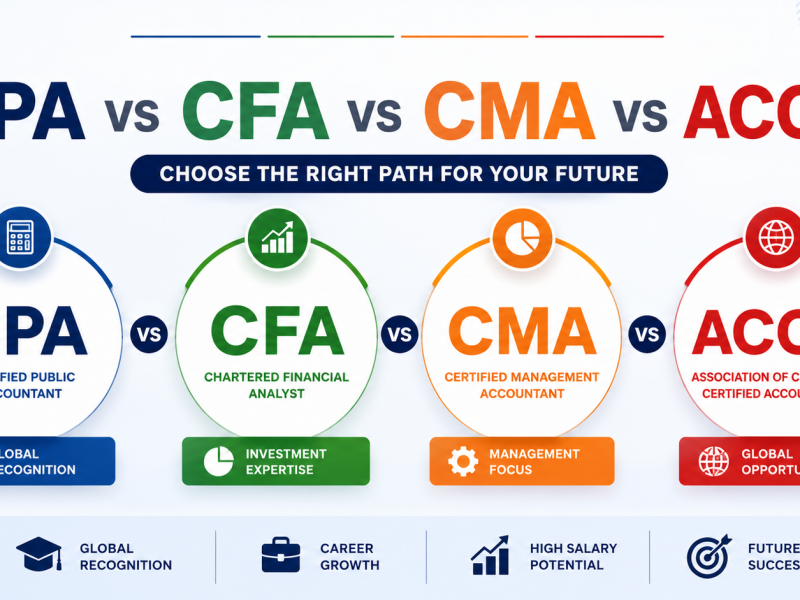
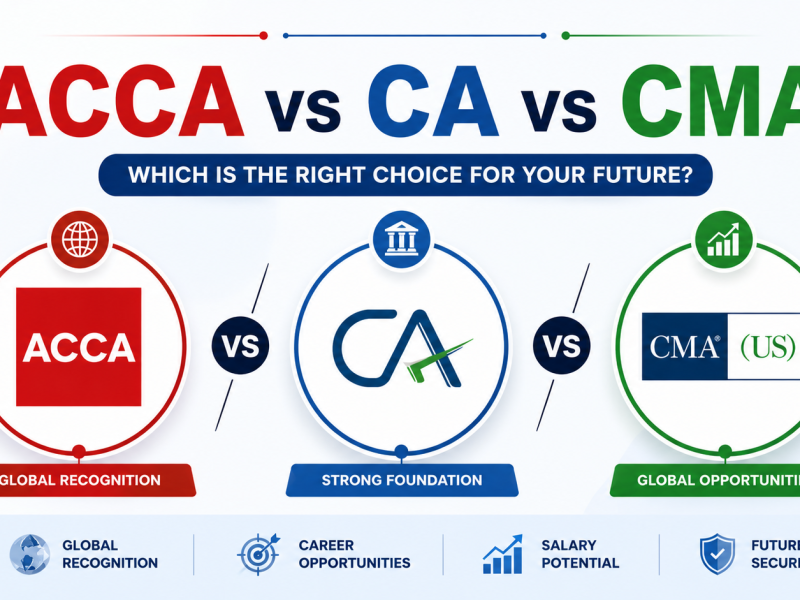
CMA USA vs Other Accounting Certifications
Comparing CMA USA with other popular certifications can help determine if it’s the right choice for you.
| Certification | Focus Area | Exam Levels | Duration to Complete |
| CMA USA | Management Accounting | 2 Parts | 6-12 Months |
| CPA (USA) | Public Accounting | 4 Parts | 12-18 Months |
| ACCA (UK) | Financial & Management Accounting | 13 Papers | 2-3 Years |
| CFA | Investment & Financial Analysis | 3 Levels | 2-4 Years |
If you want to specialise in corporate finance and management accounting, CMA USA is the best option due to its short duration and high ROI.
Cost of CMA USA Certification
The cost of the CMA USA certification varies depending on membership type and exam fees.
| Fee Component | Cost |
| IMA Membership Fee | $295 (₹25239.55) for Professionals / $49 and $160 (₹4192.33 and ₹13689.25 ) for Students |
| CMA Entrance Fee | $300 (₹25667.34) for Professionals / $225 (₹19250.51) for Students |
| Exam Fee (Per Part) | $495 (₹42351.11) for Professionals / $370 (₹31656.39) for Students |
| Total Cost (Approx.) | $1,325 – $1,800 (₹113364.09 – ₹154004.04) |
CMA USA is more affordable compared to other accounting certifications, making it a cost-effective investment in your career.
How to Become a CMA?
To earn the CMA designation, candidates must meet specific requirements set by the IMA:
- Educational Qualification: A bachelor’s degree from an accredited institution or equivalent certifications such as CFA or CPA.
- Work Experience: At least two years of continuous full-time experience in management accounting or financial management.
- Examination: Passing a rigorous two-part exam covering topics like financial reporting, planning, performance management, and strategic management.
- IMA Membership: Active membership with the IMA is mandatory.
Conclusion: Is CMA USA Right for You?
The CMA USA certification is an excellent choice for finance professionals looking to specialise in management accounting. It offers: Global recognition in over 150 countries. High earning potential and career growth. A fast-track certification process with only two exam parts. Opportunities in top multinational companies.
If you’re aiming for a career in corporate finance, strategic management, or leadership roles in accounting, CMA USA is the perfect certification for you.
FAQs
- What does CMA stand for in accounting?
CMA stands for Certified Management Accountant, a globally recognized certification that signifies expertise in financial accounting and strategic management.
- How long do I have to complete the CMA certification?
Once you register for the CMA program, you must complete both parts of the exam within three years. This timeframe allows candidates to balance their study schedules with work commitments while ensuring they can efficiently progress toward certification.
- Are there any continuing education requirements for CMAs?
Yes, CMAs are required to maintain their certification through continuing professional education (CPE). Specifically, CMAs must complete at least 30 hours of CPE every year, which includes a minimum of 2 hours in ethics training. This requirement helps ensure that CMAs stay current with industry trends and best practices in management accounting.
Thank you for your sharing. I am worried that I lack creative ideas. It is your article that makes me full of hope. Thank you. But, I have a question, can you help me?
Your point of view caught my eye and was very interesting. Thanks. I have a question for you.