The finance world has moved fast but education did not move at the same speed.
10 years ago, accountants spent most of their time doing manual work. Today, software does that work. AI helps with data. Reports get generated in seconds. What companies really need now are finance professionals who can think clearly, explain numbers in simple words, and help businesses make better decisions.
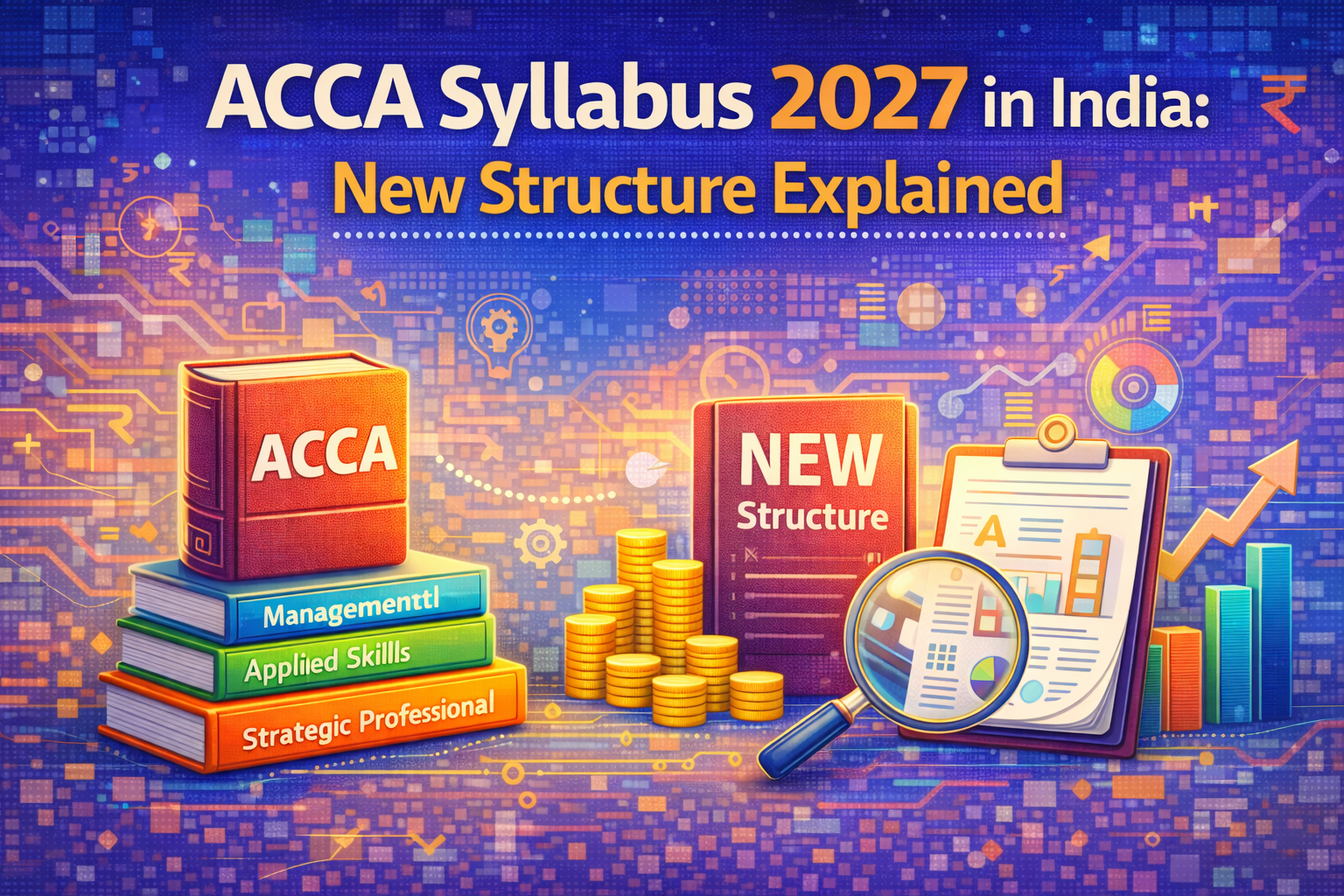
ACCA understood this shift early. That is why the acca syllabus is changing in 2027.
The focus is no longer only on passing exams. The new acca syllabus is built around real skills that matter at work:
- Skills that help students get hired and grow
- Understanding technology and AI, not fearing it
- Strong ethics and sustainability thinking
- Making business decisions, not just learning rules
This change is not about making ACCA easier. The accounting knowledge stays strong. What changes is how students are prepared. The goal is simple. When someone completes ACCA, they should feel ready for the real world, not shocked by it.
That is the reason behind the 2027 change.
If you are thinking about ACCA or a global finance career, this video gives a clear starting point:
When does the New ACCA Syllabus Start?
The timeline is very important here.
- Exams up to June 2027 follow the current acca syllabus
- Teaching for the new structure starts in July 2027
- First exams under the acca new syllabus 2027 start from September 2027
So if you are studying now, nothing suddenly changes for you.
Big Picture of the ACCA New Syllabus
Under the current system, ACCA has 3 levels. From 2027, the acca syllabus moves to 4 levels.
The goal is simple. Build students step by step, not rush them.
The 4 levels are:
- Foundations
- Knowledge
- Expertise
- Strategic Professional
This new structure replaces the old Applied Knowledge, Applied Skills, and Strategic Professional format.

Figure 1: ACCA 2027 syllabus roadmap showing the four ACCA levels from beginner to strategic professional.
Foundations Level: Entry Route for Beginners
The Foundations level is designed for students who are new to accounting or finance.
This level helps:
- School students
- Career switchers
- Non-commerce background learners
It builds confidence and basic understanding before moving into core accounting. This makes the acca syllabus more inclusive and reduces early dropouts.
Knowledge Level: Core Accounting Starts Here
The Knowledge level is where the real accounting journey begins.
Under the acca new syllabus, this level has 3 core exams:
- Financial Accounting
- Management Accounting
- Business Law
These subjects form the backbone of accounting knowledge. The difference is how they are taught and tested.
Instead of only learning rules, students learn:
- Why rules exist
- How they are used in real companies
- How decisions affect businesses
This makes the acca syllabus more meaningful and easier to connect with real work.
Expertise Level: Where Careers Take Shape
The Expertise level is one of the biggest upgrades in the acca new syllabus 2027.
Here, students study 5 mandatory subjects:
- Taxation
- Financial Reporting
- Audit, Risk, and Control
- Finance and Investment
- Performance and Data Analysis
This level blends technical strength with data skills and risk thinking. It prepares students for mid-level and senior roles in companies.
The acca syllabus here is demanding, but it reflects real workplace expectations.
Strategic Professional Level: Thinking Like a Leader
This is the final level of the acca syllabus and remains the most advanced.
Under the new structure:
- 2 core exams are compulsory
- One elective is chosen from five options
Some elective options include:
- Data Science Professional
- Advanced Tax Advisory
- Other strategic specialisations
This flexibility allows students to shape their qualifications around their career goals. The acca new syllabus finally recognises that not everyone wants the same finance career.
Fewer Exams but Smarter Design
One major highlight of the acca new syllabus 2027 is the reduction in exams.
- Old structure: 13 exams
- New structure: 11 exams
This does not reduce difficulty. It removes repetition and focuses on quality learning.
The acca syllabus now values understanding and application more than memorising large volumes of content.
Employability Modules: The Heart of the New ACCA Syllabus
This is the most important change and many students underestimate it.
Under the new acca syllabus, Employability Modules or EEMs are mandatory at every level.
These modules focus on:
- Ethics and responsible business
- Digital skills and AI awareness
- Sustainability and ESG thinking
- Leadership and communication
Examples include:
- Responsible Business Management
- Ethical and Sustainable Leadership
These are not just theory lessons. They prepare students for interviews, teamwork, and leadership roles.
PER Reduction Through Employability Modules
Another practical benefit of the acca new syllabus 2027 is linked to PER.
Normally, the Practical Experience Requirement is 3 years.
With the completion of the Employability Modules, PER can be reduced to 2.5 years.
This makes the qualification faster and more flexible for working professionals.
Transition for Existing Students
Many students worry about losing progress. That will not happen.
ACCA has clearly stated:
- All passes before 2027 remain valid
- No credits will be lost
- A transition mapping tool will guide students
If you start in 2026, you may follow a hybrid path. But you will not repeat content unnecessarily.
The acca syllabus change is designed to protect current students, not punish them.
Why the New ACCA Syllabus Is Future Proof?
The finance world is moving towards:
- Automation
- AI-supported decision-making
- Sustainability reporting
- Global compliance
The acca new syllabus aligns perfectly with this future.
It prepares students not just to get jobs, but to stay relevant for decades.
This is especially valuable for students aiming for:
- MNC roles
- GCC finance positions
- Global mobility
- Leadership roles in India and abroad
ACCA with Other Qualifications
Many students combine ACCA with CMA or similar certifications.
The new acca syllabus complements this well by adding:
- Strategic thinking
- Data analysis
- Leadership skills
This combination boosts career growth and salary potential.
How to Plan Your ACCA Journey Now?
If you are starting before 2027:
- Follow the current acca syllabus
- Do not delay exams
- Finish strong
If you are starting after 2027:
- Study the acca new syllabus carefully
- Understand electives early
- Focus on skill building, not just passing exams
In both cases, the outcome is a globally respected qualification.
The Verdict
The acca syllabus change in 2027 is not just an update. It is a mindset shift. ACCA is moving from teaching accounting as a subject to teaching accounting as a career. The acca new syllabus 2027 blends strong technical knowledge with employability skills like AI awareness, sustainability, ethics, and leadership.
For students who want long-term success, this is a powerful move. Change always feels uncomfortable at first. But in this case, it is clearly a step forward.
If you want help planning your ACCA journey under the new acca syllabus, or understanding which path suits your background best, check out The Wallstreet School’s ACCA classes.
People Also Ask
1. What are the changes in ACCA in 2027?
Ans. ACCA brings a new structure, fewer exams, more real-world skills, and stronger focus on technology, ethics, and careers.
2. Does the ACCA syllabus change every year?
Ans. No. Small updates happen sometimes. Big changes like 2027 come after many years, not every year.