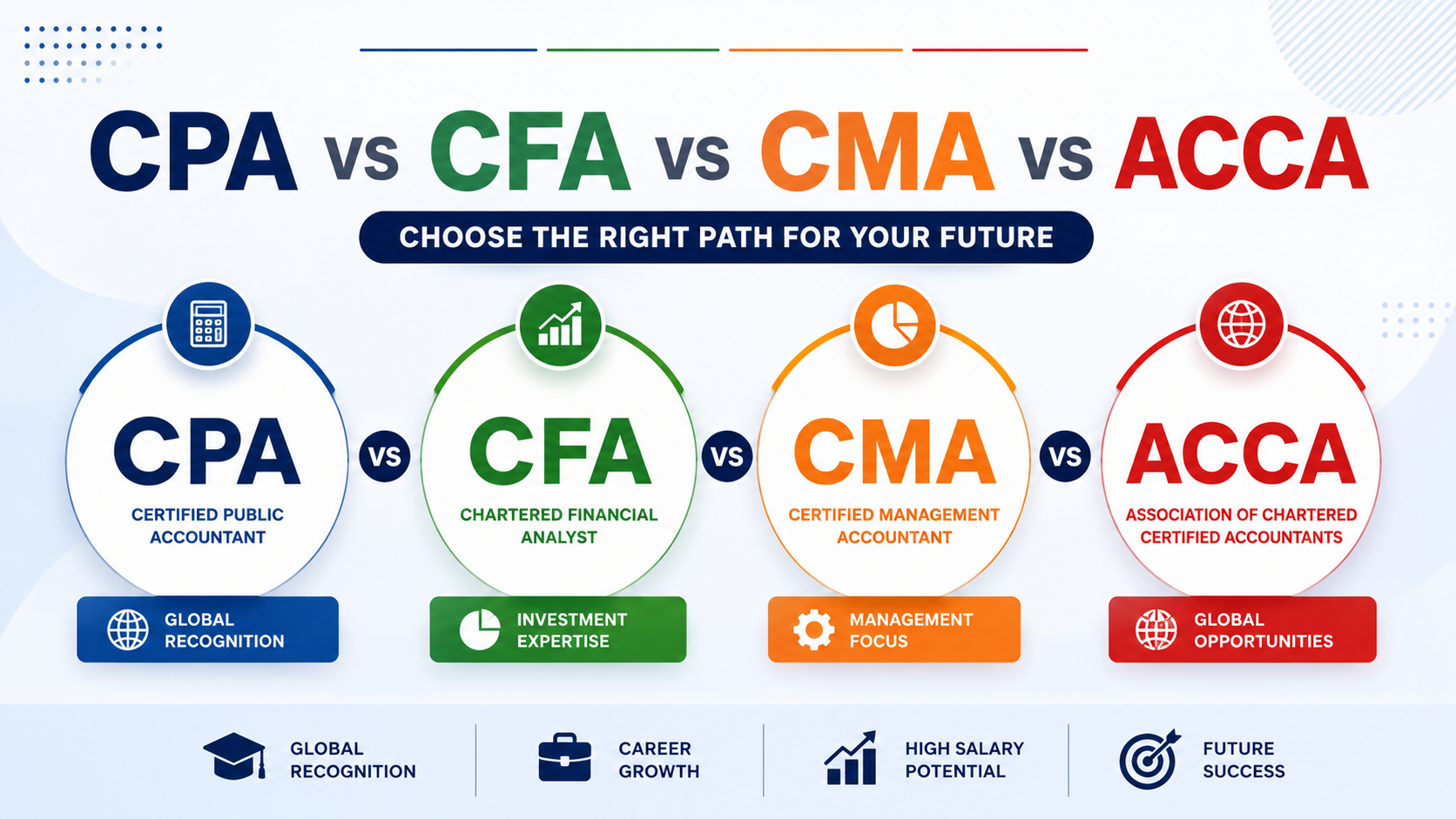
Four certifications. One career decision. We see this confusion every single day at The Wall Street School, and we understand why it feels overwhelming. CPA, CFA, CMA, ACCA each one promises to transform your finance career, but they serve very different purposes, demand very different time investments, and deliver very different salaries in the Indian job market.
We are going to cut through the noise. Below is everything you need to make an informed choice, built around what these certifications actually pay in India in 2026, not global averages that have no bearing on your day to day reality.
2026 Comparison: CPA vs CFA vs CMA vs ACCA (India Focus)
| Criteria | CPA | CFA | CMA | ACCA |
| Avg. India Salary | Rs.14-16 LPA | Rs.20-25 LPA | Rs.12-14 LPA | Rs.10-14 LPA |
| Senior India Salary | Rs.30-50 LPA | Rs.40-70 LPA | Rs.25-40 LPA | Rs.25-35 LPA |
| Study Hours | 300-400 hrs | 900+ hrs | 150-200 hrs | 600-900 hrs |
| No. of Exams | 4 sections | 3 levels | 2 parts | 13 papers |
| Best For | US-focused Audit/Tax | Investment & Research | CFO/FP&A Track | Global Finance Roles |
| India Job Market | MNCs, Big 4 | Buy/Sell Side Firms | Manufacturing, FMCG | Big 4, MNCs, GCCs |
CPA: The US Accounting Powerhouse
The CPA is the strongest credential for accounting and audit professionals who want to work with US-headquartered companies, Big 4 firms, or global MNCs in India. The four exam sections AUD, FAR, REG, and one discipline paper require 300 to 400 hours of study. The licensing process also requires meeting US state board eligibility criteria, which includes work experience under a licensed CPA.
In India, a CPA qualified professional working at a Big 4 firm or in a senior finance role at an MNC typically earns between Rs. 14 LPA and Rs. 16 LPA and VP level roles in audit or controllership ranging from Rs. 30 LPA to Rs. 50 LPA. The CPA Course is best suited for candidates targeting US GAAP reporting, statutory audit, or cross border tax functions.
CFA: The Highest Paying Finance Certification in India
If salary benchmarks in India are your primary metric, the CFA charter consistently sits at the top. Three levels, 900 or more total study hours, and a global pass rate of 40 to 45 percent per level make this the most demanding qualification on this list. The commitment is real. So is the payoff.
A CFA charterholder in India working in equity research, portfolio management, or investment banking at a domestic or foreign firm typically earns between Rs. 20 LPA and Rs. 25 LPA at the mid level. At senior positions such as Fund Manager, Head of Research, or Director at a PE or AMC firm, compensation ranges from Rs. 40 LPA to Rs. 70 LPA and beyond. The CFA Course is the right path if you are committed to the investment side of finance.
CMA: The CFO Track with the Fastest Study Path
The CMA is two papers, 150 to 200 hours of study, and a razor sharp focus on financial planning, analysis, budgeting, and internal controls. For someone who wants to move into an FP&A Manager, Finance Controller, or CFO role inside a manufacturing, FMCG, or services company in India, the CMA Course is often the most practical choice.
The IMA’s 2025 Global Salary Survey shows that CMA certified professionals earn 58 percent more than non-certified peers. In India, CMA holders at mid level roles earn between Rs. 12 LPA and Rs. 14 LPA on average. At the senior management and CFO level in large Indian corporates, compensation ranges from Rs. 25 LPA to Rs. 40 LPA. The CMA is particularly valued by Indian conglomerates, manufacturing groups, and multinationals with large India operations.
ACCA: The Global Passport for Indian Finance Professionals
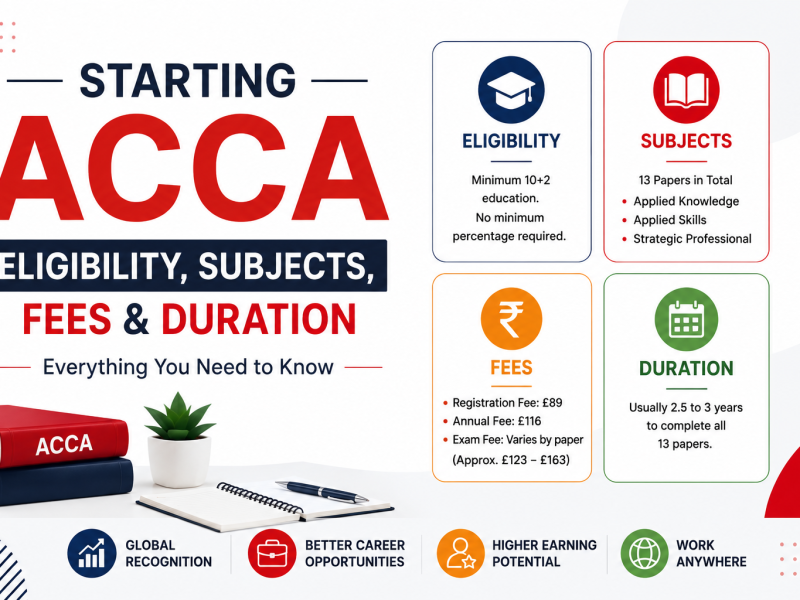
ACCA has 13 papers in total, but most Indian graduates with a BCom or MBA background receive exemptions on the foundational papers and begin from the Applied Skills level. Realistic study time from that entry point is 400 to 600 hours. The qualification opens doors across the UK, Middle East, Southeast Asia, and Global Capability Centres in India.
In India, a fully qualified ACCA member working at a Big 4, MNC, or GCC typically earns between Rs. 10 LPA and Rs. 14 LPA at the mid level. Senior ACCA professionals in Finance Manager and Finance Director roles at multinationals earn between Rs. 25 LPA and Rs. 35 LPA. The ACCA Course is the strongest choice for candidates who want international career mobility without leaving India to build their credentials.
Which One Is Right for You?
Here is how we frame it for candidates who come to us:
• You want to work in audit, US GAAP reporting, or tax at an MNC or Big 4 in India: go with the CPA Course.
• You want to work in equity research, wealth management, or portfolio management and are willing to put in the time: go with the CFA Course.
• You want the fastest route to a CFO or Finance Controller role in Indian industry: go with the CMA Course.
• You want global recognition and the option to work in India, the UK, or the Middle East: go with the ACCA Course.
The right answer genuinely depends on your target role and sector. Pick the certification that aligns with your end goal, not the one that sounds most impressive at a dinner table.
At The WallStreet School, we coach candidates for the CFA, CMA, and ACCA programs with faculty who hold the certifications they teach and understand the specific challenges Indian candidates face. If you are unsure which Finance Certification fits your career, speak with our counselling team before you decide. A clear conversation is worth more than six months of studying the wrong thing. Contact us at www.thewallstreetschool.com
Frequently Asked Questions
Q1. Which certification gives the highest salary in India in 2026?
Based on current compensation data, the CFA charter delivers the highest average salary in India among the four, particularly for professionals in asset management, equity research, and investment banking.
Q2. Is ACCA recognized in India for finance jobs?
Yes, and its recognition has grown significantly over the past three years. Big 4 firms, major MNCs, and Global Capability Centres in India actively hire ACCA qualified professionals for audit, financial reporting, and finance operations roles.
Q3. Can a working professional in India complete CMA while employed full time?
Yes, and many of our students at The WallStreet School do exactly that. The CMA requires 150 to 200 hours of preparation across two parts, which is manageable over six to nine months with disciplined weekend and evening study. The exam windows offered by IMA provide flexibility. It is genuinely one of the most practical certifications to pursue without taking a career break.