ACCA Scope in Europe: Jobs, Salaries & Recognition Across the UK, Germany, Ireland & More
Content reviewed by Shilpi Jain (Accounting · Lead Faculty, ACCA).
1 views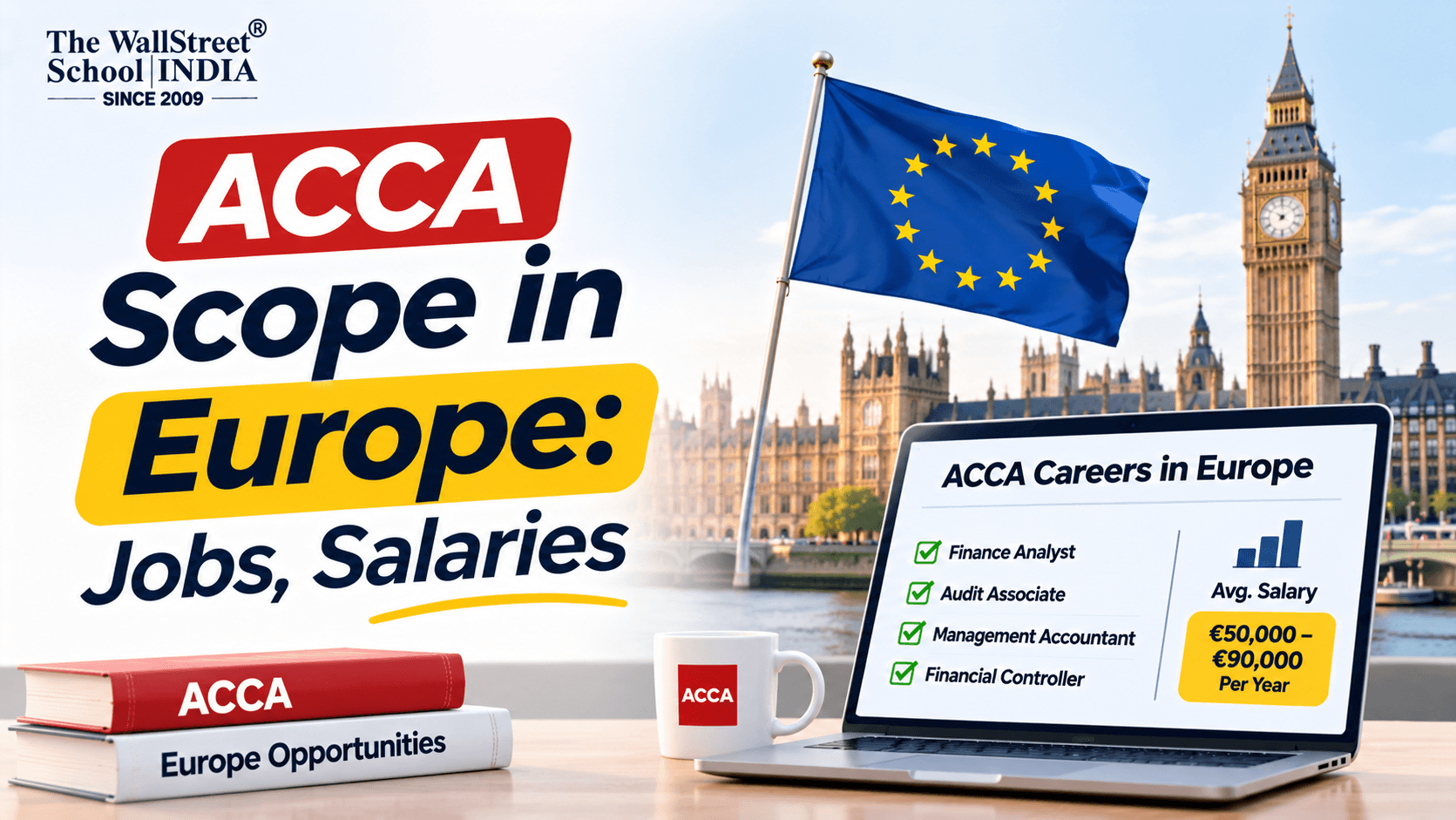
ACCA was founded in London in 1904, so Europe is home ground for the qualification. Even so, how far ACCA takes you depends a lot on which country you pick. The UK and Ireland treat it as a full professional qualification with legal standing. Germany treats it as a respected international credential, but not a licence to audit.
Students ask us about Europe often enough that we decided to put the ACCA Scope in Europe down in one place, country by country.
Why Europe Suits ACCA Members
Listed companies across the European Union use IFRS for their group accounts, and so does the UK. ACCA teaches IFRS from the first reporting paper to the last, so you won't be relearning the rules when you get there.
The other reason is language. A lot of multinational head offices, banks, and shared service centres in Europe run their finance teams in English. Those employers already know ACCA, and many of their existing staff hold it.
United Kingdom
The UK is where ACCA is strongest. It's a recognised body for statutory audit, which means an ACCA member who completes the right practical training and ACCA's audit qualification can get a practising certificate and register as a statutory auditor. Very few countries give a foreign qualification that kind of standing.
You'll find ACCA members in the Big 4, mid tier firms, banks, local councils, the NHS, and companies of all sizes. Nobody will ask you to convert to another qualification.
Pay varies a lot by city. Industry data puts newly qualified accountants at roughly £40,000 to £55,000 across the country and £55,000 to £70,000 in London. A few years later, finance manager and financial controller roles pay well above that.
Coming from India, you'd normally need an employer to sponsor you on a Skilled Worker visa. The salary thresholds for that visa get revised from time to time, so check the UK government site before you plan anything.
Ireland
For ACCA members, Ireland might be the best option in Europe after the UK. ACCA has statutory status there, Irish company law recognises it, and it counts as a competent authority under EU rules. Irish employers know it well.
UK and Irish statutory audit licences are currently recognised in each other's country, which is handy if you want to keep both doors open. One catch: becoming a statutory auditor in Ireland itself may mean sitting some Irish variant exams.
Most of the jobs are in Dublin, where tech giants, pharma companies, aircraft leasing firms, and fund administrators all hire accountants. Newly qualified salaries usually land between €50,000 and €65,000, and Dublin pays toward the top of that range. Rent in Dublin is steep, though, so factor that in.
Germany
Germany needs a bit more caution.
Statutory audits there are signed by a Wirtschaftsprüfer, Germany's own public auditor qualification. Holding ACCA doesn't give you that right. You would have to meet the German Chamber of Public Accountants' requirements and pass further local exams, which most ACCA members don't bother with.
Where ACCA does fit is in corporate finance teams. International groups, Frankfurt's banks, and shared service centres in Berlin and Munich need people for IFRS reporting, consolidation, and controlling. Some of these jobs are in English. Speaking German, though, will roughly decide how far you can go, so start learning it early if Germany is the plan.
Non EU professionals usually come in on the EU Blue Card. Its minimum salary changes every year.
Other Countries Worth a Look
Luxembourg is tiny but enormous in investment funds, and fund accounting and fund audit jobs there are plentiful. ACCA is common among accountants in the sector. French and German help, but a lot of fund companies work day to day in English.
In Malta and Cyprus, ACCA is probably the most common qualification among accountants. Both have busy financial services sectors, and Malta has a large gaming industry while Cyprus has a big shipping one.
The Netherlands, particularly Amsterdam, has plenty of international head offices and shared service centres. English is the working language in many of them.
Then there's Central and Eastern Europe. Krakow, Wroclaw, Prague, and Bucharest host shared service centres for companies all over Europe, and they employ accountants in very large numbers. ACCA is one of the most popular qualifications in those centres.
ACCA Jobs in Europe
Typical ACCA Jobs in Europe include financial accountant, management accountant, auditor, internal auditor, fund accountant, group reporting accountant, financial analyst, and finance business partner. Later on, people move up to finance manager, financial controller, and CFO.
Financial services, investment funds, tech, pharma, consulting, and shared services are where most of the hiring happens.
ACCA Qualification Europe: Recognition in Short
To sum up ACCA Qualification Europe recognition in a couple of lines: in the UK and Ireland, ACCA has full legal standing and a route to statutory audit. Everywhere else, it's well regarded for corporate, reporting, and shared service work, but audit rights usually require a local qualification.
So if you want a corporate finance career, ACCA travels well across Europe. If you want to sign audits outside the UK and Ireland, expect extra exams.
Building an ACCA Career in Europe
A few things make a real difference if you want an ACCA Career in Europe.
Finish ACCA and get two or three years of solid experience first, ideally at a Big 4 firm or a multinational. European employers value IFRS reporting, consolidation, and audit experience. Being comfortable with SAP, Oracle, Excel, and Power BI helps your CV too.
Think about language before you choose a country. You can work in English in the UK, Ireland, Malta, and Cyprus. In Germany, France, or the Netherlands, the local language opens a lot more doors.
Read up on visas early. Every country runs its own system, and the rules change, so go to official government sites rather than relying on forum posts.
The ACCA Opportunities in Europe are real. Getting there just takes planning and a few years of steady work.
How The WallStreet School Helps
At The WallStreet School, we teach ACCA with a strong focus on IFRS and the practical skills employers in Europe and elsewhere look for. Our mentors also help students plan the kind of experience that makes a move abroad easier.
Thinking about an accounting career in Europe? Reach out to The WallStreet School and start your ACCA journey with expert guidance.
Frequently Asked Questions
1. Is ACCA recognised in Europe?
Yes. In the UK and Ireland it's fully recognised, with a route to statutory audit. Elsewhere in Europe, employers respect it for corporate and reporting roles, but audit signing usually needs a local qualification.
2. Which European country is best for ACCA members?
The UK and Ireland, since ACCA has legal standing there and you can work in English. Luxembourg, Malta, and Cyprus are good too, especially in funds and financial services.
3. Can I work in Germany with ACCA?
Yes, in corporate and shared service roles. Statutory audit needs the German Wirtschaftsprüfer qualification, and speaking German will widen your options a lot.
Interested in Learning Finance Professionally?
Our courses take you from fundamentals to expert level — with live mentors and placement support.
Explore Our Courses