A Classroom Like No Other: The WallStreet School's 10 Masterclasses with The Economic Times
Content reviewed by Himanshu Jain (Trainer, Financial Modeling & Valuations) and Manoj Goel (Trainer, Valuations).
8 views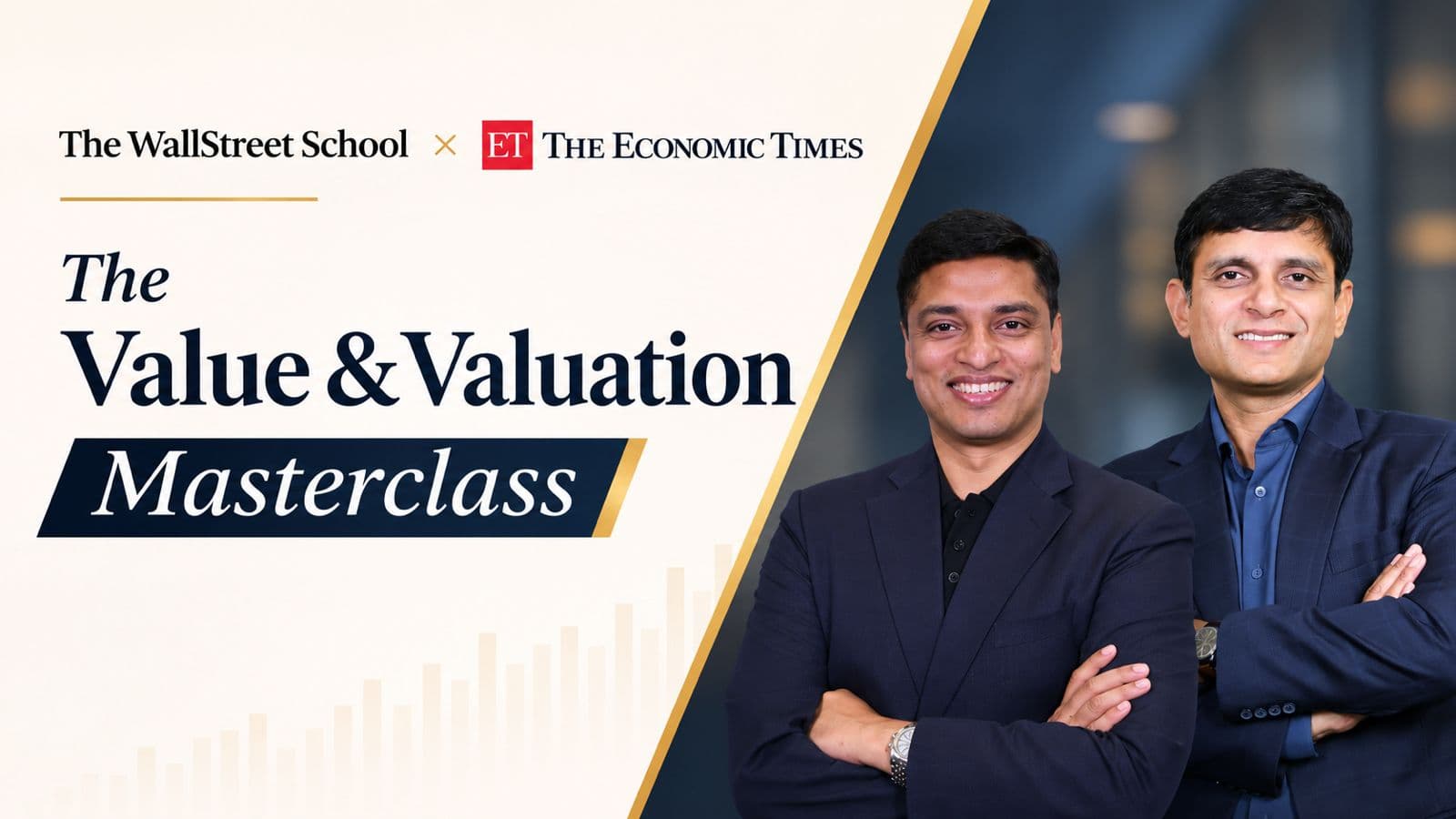
A classroom usually brings together people who are at a similar stage of learning. But the Value & Valuation Masterclasses, organised by The Economic Times in collaboration with The WallStreet School, brought together a rather different group of learners. Some were experienced professionals working with leading companies, some were business leaders who regularly made financial decisions, and others were young enthusiasts looking to understand the stock market better.
Across 10 editions, each masterclass brought together 250 to 500 participants. The audience included professionals from banking, technology, healthcare, manufacturing, consulting and several other industries. With so many different experiences in one room, even a familiar topic could lead to an unexpected discussion.
Bringing years of industry experience into the classroom, CA Manoj Goel and CA Himanshu Jain, co-founders of The WallStreet School, saw this collaboration as an opportunity to take financial learning beyond their regular classrooms. Mr. Manoj's professional background includes Goldman Sachs and Bennett Coleman, while Mr. Himanshu brings experience from organisations such as McKinsey, Moody's and PwC. Today, both lead The WallStreet School, combining their industry experience with years of training in investment banking, valuation and financial analysis. The sessions were designed around practical investment concepts, but the diverse professional backgrounds of the participants often took the conversations well beyond the planned topics.
When Everyone Has a Different Question
Consider a company that has been growing steadily, reporting healthy profits and expanding its market presence. Is it a good investment?
An investor might first look at its share price and ask whether the stock is undervalued. A private equity professional might be more interested in its business operations and the possibility of improving its profitability. Someone running a business may want to understand what makes investors confident about a company's future growth.
This is the kind of thinking that made the ET masterclasses interesting. Participants were not all approaching the subject as finance students. They were bringing questions shaped by their own professional experiences.
The audience included a VP from Deutsche Bank, a Senior Director from Procter & Gamble, the CTO of Tata Elxsi, a Director from the Ministry of External Affairs, a scientist from ISRO, a cardiac surgeon from Manipal Hospital, an Assistant Professor from ISB and the CFO of Monte Carlo. Senior professionals from ITC, Bata India, Central Bank of India and leading consulting firms also attended.
There were young finance enthusiasts sitting alongside people who had spent years working in their respective industries. Naturally, their expectations from the sessions were not the same.
For the founders, this meant that explaining a financial concept was only one part of the job. They also had to understand why someone was asking a particular question and connect the answer with something that person could relate to.
How Real Business Examples Made the Discussions Easier to Follow
One thing that helped bring everyone together was the use of real companies, financial statements and business situations rather than relying only on theoretical explanations.
For example, while discussing the competitive advantage of a company, the conversation could move from its financial numbers to questions about its customers, pricing power, industry position and ability to maintain its market share. A participant from the manufacturing sector could bring up the importance of operating costs, while someone from banking might look more closely at financial ratios and returns.
The founders could use the same business case to explain why these factors matter and how they eventually influence an investment decision.
This approach also helped participants understand that financial analysis is not about looking at one number in isolation. A company may report impressive revenue growth, but that does not automatically make it a good investment. Its debt, cash flows, margins, competitive position and the price at which its shares are available all need to be considered.
During the sessions, participants worked through actual financial information and explored how different valuation methods could lead to different conclusions. They also discussed how changing assumptions about future growth, profitability or market conditions could affect a company's estimated value.
For someone new to finance, these examples helped make technical concepts easier to understand. For experienced professionals, they offered an opportunity to question assumptions and look at businesses from another angle.
The idea was to make sure that everyone could follow the discussion, regardless of how familiar they were with financial terminology.
What Participants Explored Across the Masterclasses
Through a series of 10 editions, the masterclasses followed a four-day learning structure that covered different aspects of investing, business analysis and valuation. While the curriculum provided a clear direction, the discussions and questions from participants gave every edition its own character.
The sessions began with the fundamentals of value investing and the mindset required to make informed investment decisions. Participants explored how wealth is created through equities, why investors often make behavioural mistakes and how emotions such as fear and greed can influence buying and selling decisions.
From there, the discussions moved towards understanding businesses beyond their financial performance. Participants learned to examine business models, industry structures and competitive advantages to understand what helps a company maintain its position in the market. Identifying economic moats was an important part of these discussions.
The masterclasses also introduced participants to the use of AI in business research. They explored how AI tools could help analyse annual reports, identify growth drivers and business risks and study competitors. The emphasis remained on using technology to make research more effective while checking the information against actual business and financial data.
The later sessions brought these concepts together through practical case studies. Participants studied some of India's well-known wealth-creating businesses and worked with financial statements to understand company performance. They also explored Discounted Cash Flow and Relative Valuation, fundamental ratios, sensitivity analysis and stress-testing to see how different assumptions can change the estimated value of a business.
During these master classes, participants worked through more than 15 real-world industry case studies and formula-powered Excel sheets for stock analysis. The objective was to help them move from understanding financial concepts to applying them when evaluating companies, identifying investment opportunities and deciding when to buy, hold or exit a stock.
The four-day format gave participants time to build their understanding step by step, while the interactive discussions and dedicated Q&A sessions allowed them to explore questions beyond the scheduled curriculum.
The Questions That Took Sessions Beyond Their Planned Hours
Our co-founders had a very unique experience during these sessions because of the variety of questions they encountered, which differed from what they face in regular training sessions
At The WallStreet School, they regularly work with students who are preparing for careers in investment banking, financial analysis and other finance-related fields. The ET masterclasses brought people who were already working in different professions and wanted to understand financial markets for their own reasons.
A question about financial ratios could come from someone who wanted to analyse stocks for personal investments. Another participant might want to understand how investors evaluate a business before funding it. Someone else could be interested in knowing how to assess the financial health of a company in an industry they already understand well.
The founders had to make sure that the discussions remained useful for all these participants without making them too basic for experienced professionals or too technical for beginners.
The questions also encouraged participants to learn from one another. Someone with years of experience in a particular industry could offer a practical perspective that another participant had never considered. At the same time, a young learner could ask a fundamental question that helped everyone revisit an important concept.
In this way, the sessions became a shared learning experience rather than a one-way exchange between the speaker and the audience.
When a 12-Hour Session Turns into a 16-Hour Discussion
One detail that stayed with the founders was how difficult it sometimes became to bring the sessions to a close.
Sessions originally planned for around 12 hours occasionally stretched beyond 16 hours because participants wanted to continue asking questions and discussing different companies and market situations.
The Q&A sessions were particularly interesting because the questions were not limited to the topics covered in the curriculum. Participants also brought up stocks they followed, market developments and companies they wanted to understand better.
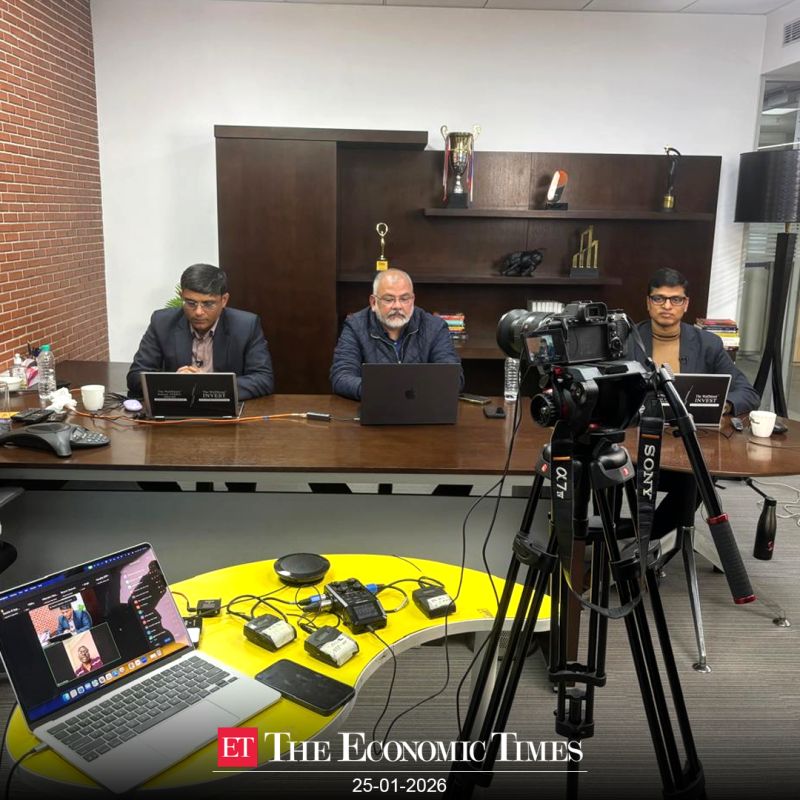
A special highlight was the Q&A session co-hosted by CA Manoj Goel, CA Himanshu Jain and Mr. Rajiv Nagpal, Head of Market Intelligence at The Economic Times. The range of questions, including those about lesser-known stocks, brought out how differently people interpret market information and how easily investment decisions can be influenced by popular opinions and online discussions.
The founders also noticed the strong participation of women across the editions. Their involvement in discussions around investing and financial decision-making reflected a growing interest in understanding and managing personal finances.
These interactions made every edition slightly different from the previous one. Even when the subject remained the same, the people in the room brought new questions and experiences into the discussion.
What the Founders Learned Along the Way
Teaching finance to students preparing for investment banking or equity research careers is one experience. Standing in front of an audience that includes CEOs, CFOs, technology leaders, consultants, entrepreneurs and students is quite another.
For Mr Himanshu and Mr. Manoj, the masterclasses were an opportunity to understand how people from different professional backgrounds approach the same financial subject.
Manoj Goel reflected:
"What stayed with me most was the variety of perspectives in the room. Seasoned professionals and young learners were equally curious and eager to engage. We didn't just discuss numbers. We talked about strategy, capital efficiency, investor readiness and the long-term thinking that drives value.
The core topic stayed the same, but every batch saw valuation through a different lens. That's the beauty of teaching finance. It evolves with the people in the room."
For the founders, these interactions were also a reminder that teaching is not always a one-way process. When people with different experiences share their understanding of a business, they often bring questions and insights that make the discussion richer for everyone, including the person leading it.
Himanshu Jain shared:
"Teaching with The Economic Times has been one of the most exciting experiences of our journey. Honestly, standing in front of audiences of this scale, with CEOs, CFOs, CTOs, consulting partners, entrepreneurs and students all deeply passionate about the stock market, was something we never took for granted.
Sessions we planned for 12 hours kept stretching past 16 and the group still wanted more. That's the kind of energy these rooms carried. What stood out just as much was the strong participation from women. It's clear proof of a shifting mindset. Women are now confidently managing their finances and leading discussions in rooms that were once male-dominated.
And yes, co-hosting a Q&A with Mr. Rajiv Nagpal, Head of Market Intelligence at The Economic Times, was a real highlight. The range of questions we received, even about obscure stocks, was eye-opening. It shows how even the brightest minds can be influenced by what's trending online."
Taking Practical Financial Learning Beyond the Classroom
These masterclasses with The Economic Times were more than a series of sessions on value investing and valuation. They brought together people from different professions, industries and stages of their financial journeys, creating a space where financial concepts could be explored through multiple perspectives.
For The WallStreet School, the experience reinforced an important aspect of financial education: concepts become more meaningful when learners can connect them with real businesses and decisions. The discussions went beyond financial statements and valuation formulas to explore business strategy, capital allocation, competitive advantage and the factors that influence investment decisions.
CA Himanshu Jain and CA Manoj Goel brought their experience in investment banking, consulting and valuation to the sessions. Equally important was what the participants brought into the room through their professional experiences, questions and perspectives. This exchange made each edition different and gave the founders new ways to look at familiar financial concepts.
One thing remained consistent throughout the master classes that is the interest in understanding what lies behind the numbers. And that is the approach The WallStreet School continues to carry into its finance programmes, where the focus is not just on learning financial concepts but on understanding how they work when applied to real businesses and investment decisions.
Interested in Learning Finance Professionally?
Our courses take you from fundamentals to expert level — with live mentors and placement support.
Explore Our Courses