What Are the Best Risk Management Jobs for FRM Holders?
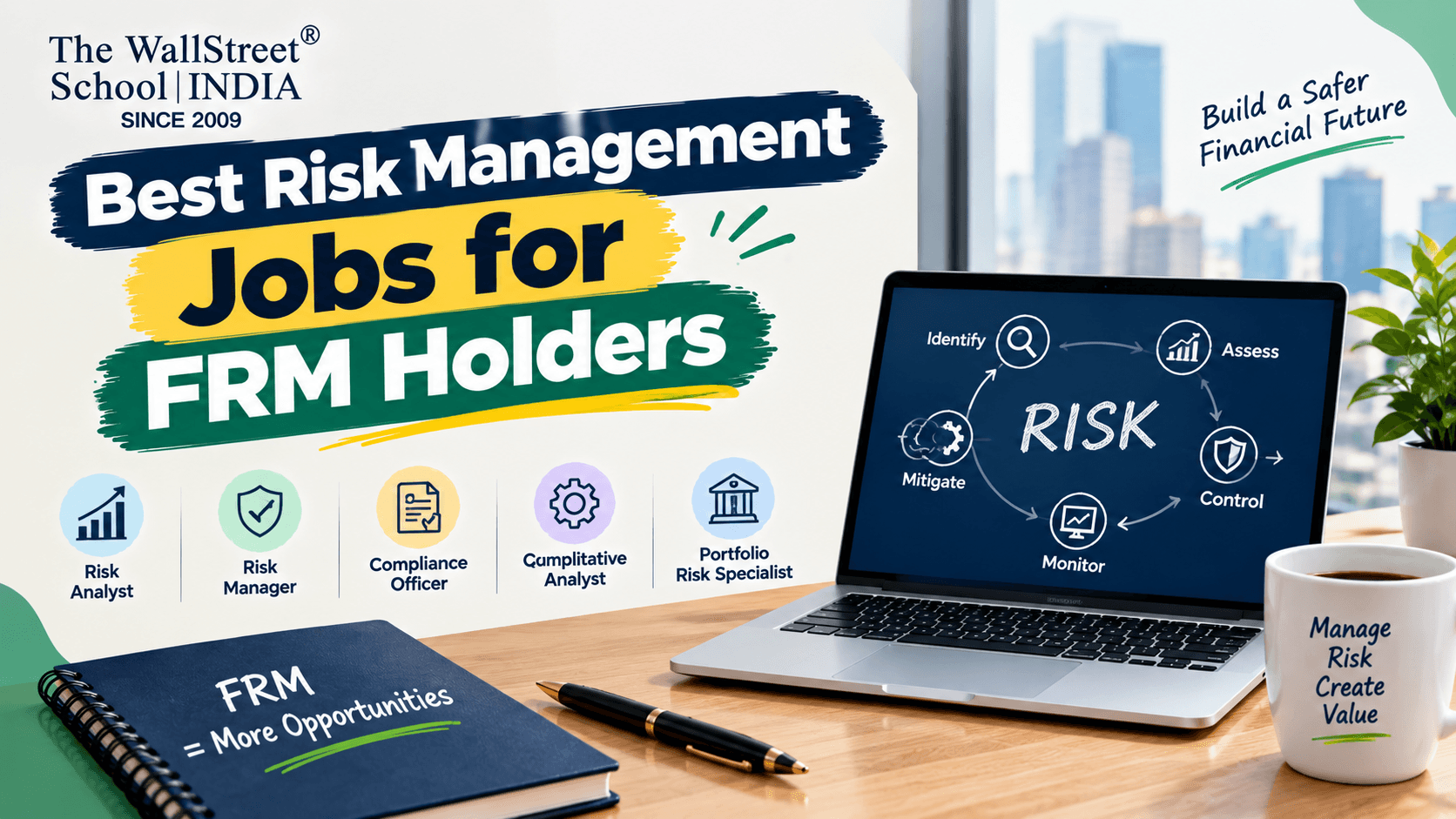
Cleared your FRM or close to it and now wondering what jobs actually open up? Here's the real list, not a generic one.
FRM Certification doesn't lead to one single job title. It opens doors across banking, NBFCs, insurance, consulting and global markets firms and the roles look pretty different from each other depending on where you land. Below is what's actually hiring FRM holders in India right now, what the work looks like day to day and what it pays.
The Best FRM Jobs Right Now
1. Market Risk Analyst
This is probably the most common first job for FRM holders. You're tracking how market moves, interest rates, currency swings, equity volatility, could hit your firm's positions. Day to day means running VaR models, stress testing portfolios and flagging exposure before it becomes a problem.
Who's hiring: banks like HDFC, ICICI, Axis, Kotak, plus global markets firms with India offices.
2. Credit Risk Analyst
Instead of market moves, you're looking at whether borrowers or counterparties will actually pay back what they owe. This means building credit scoring models, reviewing loan books and setting exposure limits.
Who's hiring: banks, NBFCs and increasingly fintech lenders who need this skill set as they scale lending books.
3. Operational Risk Manager
Less about markets, more about what can go wrong internally, process failures, fraud, system outages, compliance gaps. You're the person mapping where the firm is vulnerable and building controls around it.
Who's hiring: banks and insurance companies with dedicated ops risk teams, especially post-RBI's tightened governance push.
4. Risk Consultant
You're not sitting inside one firm's risk desk, you're advising multiple clients on their risk frameworks, model validation and regulatory readiness. More variety, more client-facing work, often faster career growth.
Who's hiring: EY, KPMG, Deloitte, PwC and boutique risk advisory firms..
5. Treasury Risk Analyst
Managing a firm's own interest rate, currency and liquidity exposure. This role sits closer to the business side, you're not just measuring risk, you're helping decide how to hedge it.
Who's hiring: corporates with treasury functions, banks and NBFCs managing their own balance sheets.
6. Basel Compliance and Regulatory Reporting Analyst
Making sure the firm's capital and risk reporting actually meets what regulators expect under Basel III. Detail-heavy work, but it's one of the most stable, in-demand risk functions right now.
Who's hiring: banks and NBFCs, particularly larger ones under closer RBI scrutiny.
7. Quantitative Risk Analyst
If you're strong on the math side, this is where FRM holders end up building and validating the actual risk models everyone else uses, VaR engines, credit models, pricing risk into derivatives.
Who's hiring: hedge funds, prop trading desks and global capital markets firms with quant teams in India.
8. Chief Risk Officer (a long-term track)
Not an entry point, but worth knowing it's where this path can lead. CROs head the entire risk function for a bank, NBFC or insurance firm, sitting close to the board on major decisions.
Who's hiring: this is a 10 to 15 year build, but FRM plus the right track record is exactly how people get there.
FRM Salary in India by Role
Numbers vary by city and employer, but here's a realistic range to work with:
Role | 0 to 2 years | 3 to 6 years | 7+ years |
Market/Credit Risk Analyst | Rs 6 to 10 LPA | Rs 12 to 18 LPA | Rs 22 LPA+ |
Risk Consultant (Big 4) | Rs 7 to 11 LPA | Rs 14 to 20 LPA | Rs 25 LPA+ |
Quant Risk Analyst | Rs 8 to 12 LPA | Rs 16 to 24 LPA | Rs 30 LPA+ |
CRO track (senior) | — | — | Rs 50 LPA+ |
Quant risk and consulting tend to pay a premium early on. Straight risk analyst roles at banks pay solidly but climb more gradually and that's where holding both CFA and FRM tends to push you toward the top of the band.
What Actually Gets You Hired for These Roles
Here is what recruiters for FRM Jobs are actually assessing :
-Excel and SQL should form part of every risk desk's toolbox at minimum. Most risk desks rely on Excel for reporting, while SQL helps extract information from internal systems. If either are difficult for you, that should be your initial target to close.
-Experience with Python or R is becoming increasingly important for risk and model validation roles in quant risk and model validation departments, even just having basic working knowledge will set you apart.
-Know Basel norms deeply - not just through what's taught on an FRM syllabus as your target employer implements them. Before attending an interview with any bank, read their annual report risk section, reading this could prove immensely useful!
-Some roles at banks require FRM Part 2 certification as part of their requirements for applications. Many roles specifically mention having completed this step as a filter criteria.
How to Actually Land Your First Risk Role
First, target the right companies. Don't mass apply, rather, select 15 to 20 banks, NBFCs and consulting firms with dedicated risk teams as targets and tailor your applications specifically towards them.
Try and reach out to people for internal referral if possible. Risk teams tend to be smaller than most departments, so most hiring takes place through word of mouth or referrals before job boards. LinkedIn can be useful here, just message people working in roles similar to what you seek!
Develop one small project you can discuss during an interview. A straightforward VaR calculation on a sample portfolio in Excel or Python offers something tangible to show an interviewer instead of simply repeating your syllabus.
Know your numbers inside out. Interviewers will test if you understand VaR, stress testing and Basel ratios beyond simply memorizing their definitions. Be ready to explain any concept using your own words rather than those found in textbooks.
Frequently Asked Questions
Q1. What is the best job for a fresher with FRM?
Market risk analyst or credit risk analyst roles at banks are usually the most accessible entry points. They hire more freshers than consulting firms do and they give you broad exposure before you specialize further.
Q2. Do I need both FRM parts to get hired?
Most banks and NBFCs prefer candidates who've cleared FRM Part 2, even if you're applying for a junior role. Part 1 alone can get you some junior analyst interviews, but your options widen a lot after Part 2.
Q3. Is FRM enough on its own or do I need CFA too?
FRM Course alone is enough for most risk management jobs. CFA becomes useful specifically if you want roles that blend investment decision-making with risk oversight, like treasury or CRO-track positions later in your career.
Q4. Which pays more, risk consulting or an in-house risk role at a bank?
Consulting at the Big 4 often pays a bit more early on and moves faster in terms of promotions, but in-house roles at banks tend to offer more stability and a clearer long-term path toward senior risk leadership.
Q5. Can someone from a non-finance background get into FRM jobs?
Yes, plenty of engineers and quant graduates move into risk roles this way, especially on the quantitative risk side where strong math skills matter more than a finance degree. FRM itself doesn't require a finance background to start.
The Career Move Most People Miss
Everyone focuses on clearing the exam. Fewer people think about which of these roles actually fits how they work. If you like variety and client exposure, consulting suits you. If you'd rather go deep on models and data, quant risk is the better fit. If you want stability and a long runway toward leadership, an in-house bank role is probably it.
If you're not sure which of these actually fits your strengths, that's worth figuring out before you start applying randomly. Our counselling team at The WallStreet School can walk through your background and help you figure out which risk path makes sense for you specifically, not just which one sounds impressive.
Contact us at www.thewallstreetschool.com
Interested in Learning Finance Professionally?
Our courses take you from fundamentals to expert level — with live mentors and placement support.
Explore Our Courses