How to Get Into Investment Banking Course in India: Skills & Jobs
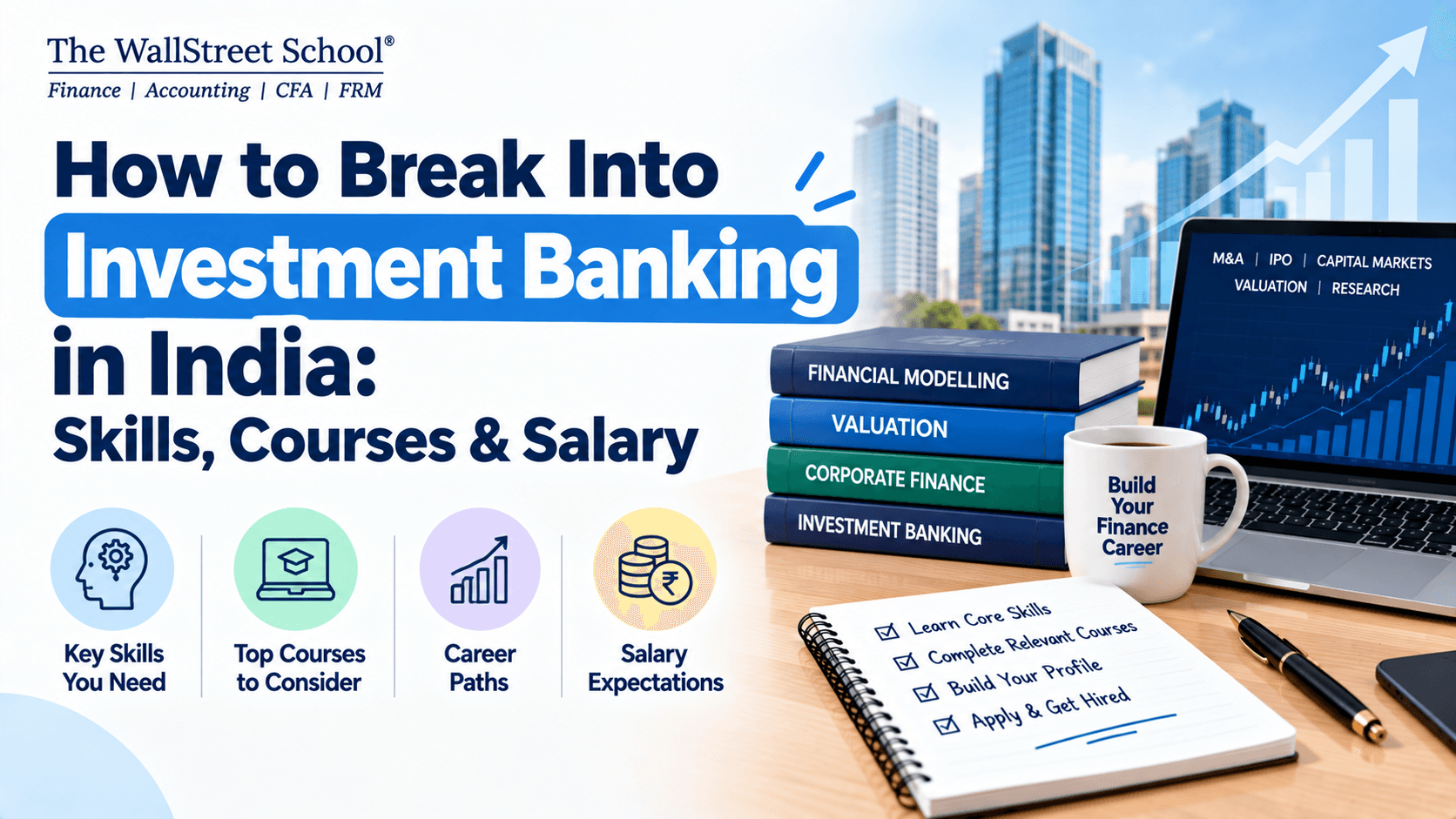
Picture this: you're sitting in a lecture hall, professor droning on about opportunity cost, and somewhere in the back of your brain a tiny voice whispers, "bro, you could be wearing a sharp blazer, closing deals, and living your own personal Suits spinoff." Welcome to the eternal fantasy of Investment Banking — equal parts Wolf of Wall Street adrenaline and Billions-style power moves, minus (hopefully) the federal investigations.
But here's the thing nobody tells you in that daydream: breaking into Investment Banking in India isn't about owning a good suit or quoting Gordon Gekko at parties. It's a very specific, very learnable game — and like any good RPG, you need the right skill tree, the right side quests, and the right guild (read: courses and certifications) to level up. So let's break down exactly how this works, minus the dramatic music.
Why Everyone's Suddenly Obsessed With Investment Banking Jobs
Let's be honest — part of the appeal is the same reason people binge Succession: money, power, and the delicious chaos of high-stakes decision-making. Investment Banking Jobs sit at this intersection of prestige and paycheck that makes LinkedIn influencers lose their minds. But beyond the Roy-family fantasy, IB genuinely offers one of the fastest tracks into serious finance — M&A advisory, capital raising, valuations, IPOs — the stuff that actually moves markets, not just moves your Instagram engagement.
An Investment Banking Career in India today isn't limited to South Bombay boardrooms either. With global banks setting up massive Global Capability Centres (GCCs) in Mumbai, Bangalore, and Gurgaon, and boutique advisory firms popping up faster than cafés in Koramangala, the opportunities have genuinely multiplied. It's less "exclusive club" and more "competitive but accessible arena," which honestly, is good news for you.
The Skills You Actually Need (Spoiler: It's Not Just Excel Wizardry)
If Investment Banking were a video game character sheet, here's what your stats would need to look like:
1. Financial Modeling — Your Primary Weapon
If you take away one thing from this entire blog, let it be this: Financial Modeling is non-negotiable. This is the Excel-based crystal ball that lets you build company valuations, forecast cash flows, and run DCF models like you're some kind of finance oracle. Recruiters don't just want you to know what a three-statement model is — they want you building one, live, under pressure, like a Formula 1 pit crew but with formulas instead of tires.
2. Valuation Know-How
DCF, comparable company analysis, precedent transactions — these aren't just buzzwords to drop in interviews to sound smart (though, yes, they will make you sound smart). They're the actual toolkit you use daily. Think of it as your Avengers assembling — each valuation method brings something different to the fight, and you need to know when to call on which one.
3. Communication and Storytelling
Here's an underrated one. Bankers don't just crunch numbers; they sell narratives to clients and investors. If you can't explain why a merger makes sense in a way that doesn't put people to sleep faster than a Christopher Nolan movie's third act explanation scene, you're going to struggle.
4. Stamina (Yes, Really)
Nobody talks about this enough, but Investment Banking Skills also include the very unglamorous ability to survive long hours without turning into a zombie from The Last of Us. Late nights, tight deadlines and last-minute pitch decks are part of the deal.
5. Attention to Detail
One misplaced decimal in a model and suddenly you're the office's cautionary tale, whispered about like Voldemort. Precision isn't optional here.
The Courses and Certifications That Actually Move the Needle
Okay, so you've got the skill list — now, how do you actually build it? This is where an Investment Banking Course comes in, and honestly, this is the part where people either invest wisely or waste six months watching random YouTube tutorials hoping osmosis kicks in.
A solid Investment Banking Certification typically covers:
Financial statement analysis
Financial Modeling and valuation (DCF, LBO, M&A models)
Excel and PowerPoint for pitch decks
Case studies on real transactions
Interview prep specifically tailored for IB roles
This is also where I'll drop the customary nod: if you're looking for structured, India-specific Investment Banking Course options that don't feel like a generic Coursera video read off a script, institutes like TWSS have built a name for themselves in this exact space — practical, deal-driven, less "textbook theory," more "here's how an actual pitch book looks." Just putting that out there, no dramatic reveal needed.
The beauty of a well-structured course is that it compresses years of on-the-job learning into months. It's basically the finance equivalent of downloading kung fu directly into your brain, Matrix-style — except instead of "I know kung fu," you get to say "I know how to build a leveraged buyout model," which, let's be honest, is way more impressive at a networking event.
The Investment Banking Analyst Role: What You're Actually Signing Up For
Let's demystify the entry point. The Investment Banking Analyst role is usually where fresh graduates and career switchers land first. Think of it as your training arc — like Rocky running up those Philly steps, except instead of raw eggs, you're consuming financial statements for breakfast.
As an analyst, your day-to-day typically includes:
Building and updating financial models
Preparing pitch books and client presentations
Conducting industry and company research
Supporting senior bankers on live deals
Running valuation analyses
It's intense, yes. But it's also where you build the foundational muscle that makes every future finance role– private equity, corporate finance, consulting– feel comparatively manageable. Think of the analyst years as your character's origin story. Every superhero has one, and yours involves spreadsheets instead of spider bites.
Let's Talk Money: The Investment Banking Salary Question
Alright, I know this is what half of you scrolled down for, so let's not beat around the bush like a Bollywood love confession scene.
In India, Investment Banking Salary structures vary quite a bit depending on whether you're at a bulge bracket bank, a boutique firm, or a domestic advisory shop. Broadly speaking:
Entry-level analysts at reputed firms typically start anywhere in the range of Rs 8-18 LPA, with bulge bracket global banks often at the higher end.
Associates (usually 3-4 years in, or post-MBA hires) can see packages jumping to Rs 20-40 LPA depending on the firm and deal flow.
Bonuses can be a significant chunk on top of base salary, especially during strong deal-making years — bonus season hitting different, almost as satisfying as a plot twist landing perfectly.
Of course, these numbers shift with market cycles (M&A activity isn't exactly Fast & Furious — it doesn't just keep accelerating forever), but the overall trajectory in IB remains one of the steeper salary curves in Finance Jobs broadly.
So, How Do You Actually Break In?
Here's your no-nonsense action plan, stripped of any dramatic monologue:
Build your fundamentals — accounting, corporate finance, valuation basics.
Get hands-on with Financial Modeling — through a proper Investment Banking Course, not just random PDFs floating around Telegram groups.
Earn a relevant Investment Banking Certification to signal seriousness to recruiters.
Network aggressively — LinkedIn outreach, alumni connects, informational interviews. This industry runs heavily on referrals.
Practice case studies and technical interviews — because IB interviews are notoriously grilling, somewhere between a Shark Tank pitch and a courtroom cross-examination.
Target the right entry point — internships, off-campus placements, or lateral moves from related Finance Jobs like equity research or corporate banking.
Final Take
Breaking into Investment Banking in India isn't about being a finance prodigy who was born reciting the CAPM formula. It's about deliberately building the right skills, picking up credible certifications, and putting in the reps — much like how no superhero wakes up already knowing how to use their powers. There's always a training montage.
So if the Suits-fueled fantasy has been living rent-free in your head, know this: the fantasy is achievable, it's just going to take Financial Modeling practice instead of a well-tailored suit to get you there. Build the skills, pick the right course, and let the salary — and the deal-closing bragging rights — follow.
Now go forth and become the finance protagonist your LinkedIn profile deserves.
FAQs
1. What qualifications do I need for investment banking in India?
A bachelor's degree in finance, commerce, economics or engineering is typically the minimum entry point, though MBAs from top B-schools dominate lateral and associate-level hiring. Beyond the degree, strong Financial Modeling skills and a relevant Investment Banking Certification often matter more to recruiters than the degree name itself.
2. Is CFA or an investment banking course better for breaking into IB?
CFA builds strong theoretical finance knowledge but isn't IB-specific, while a dedicated Investment Banking Course focuses directly on modeling, valuation and pitch-book skills used on the job. Many successful candidates do both — CFA for credibility, IB courses for practical, deal-ready skills.
3. What is the average investment banking salary for freshers in India?
Entry-level Investment Banking Analyst salaries usually range from ₹8–18 LPA depending on whether it's a bulge bracket bank, boutique firm, or domestic advisory shop. Bonuses can add a significant amount on top, especially in strong deal-making years.
4. Can someone from a non-finance background get into investment banking?
Yes — engineers, especially from top IITs/NITs, regularly break into IB roles, since strong quantitative and analytical skills transfer well. Building Financial Modeling expertise through a structured course and networking aggressively usually closes the knowledge gap.
5. How many hours do investment banking analysts actually work?
It's genuinely intense — 70–100 hour work weeks are common, especially during live deal closures or pitch season. It's demanding, but it's also why the early analyst years compress years of learning into a short, high-growth period.
Interested in Learning Finance Professionally?
Our courses take you from fundamentals to expert level — with live mentors and placement support.
Explore Our Courses