Can You Learn Financial Modeling for Free?
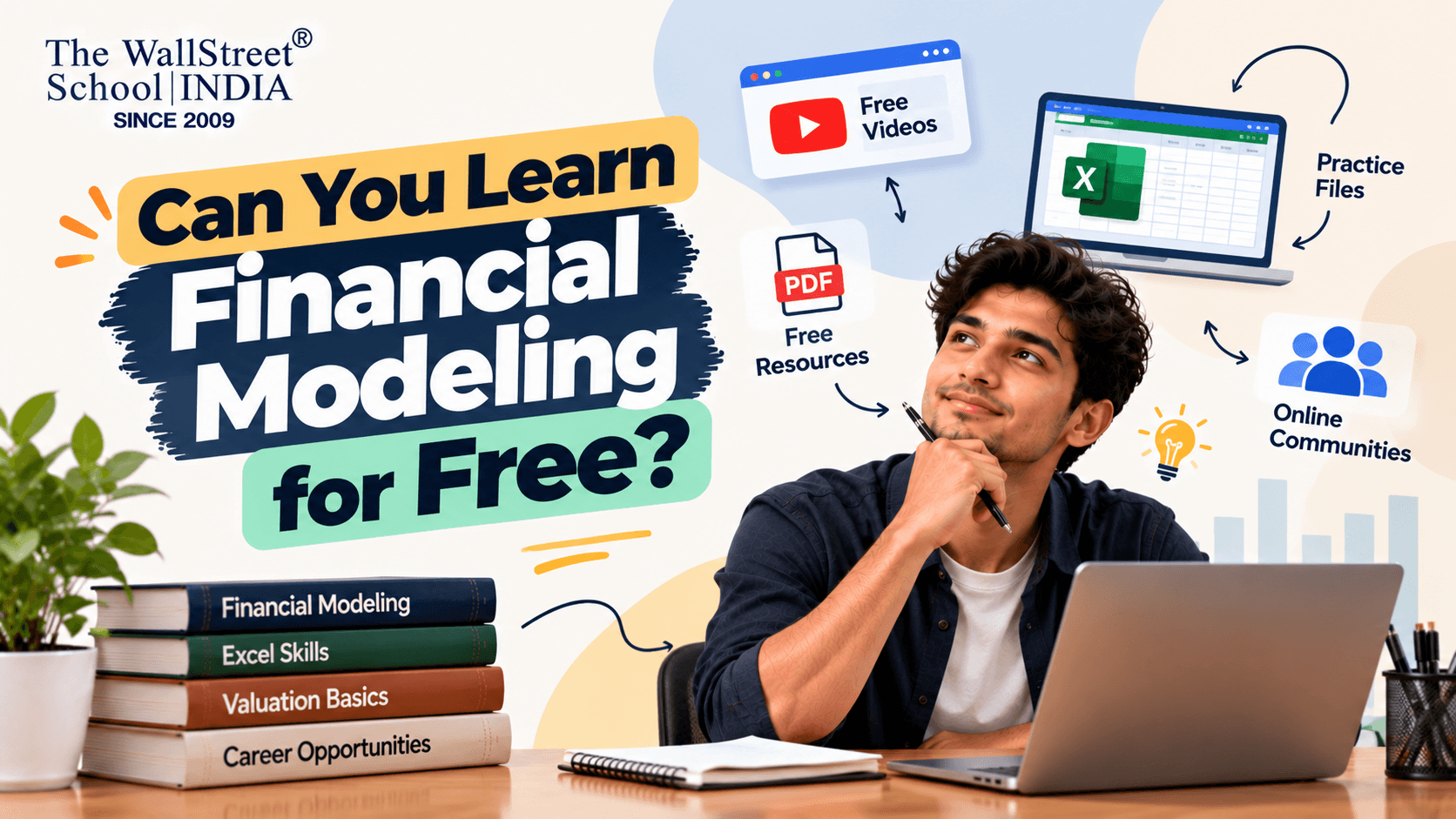
Yes, you can learn financial modelling for free. Excel, accounting logic, three-statement models, even DCF valuation, all of it exists online at no cost. But if you actually go looking, you will notice something quickly. Most of what shows up first is paid or at best, a cheap taster version that pushes you toward a paywall halfway through. Free financial modelling training is out there, but it is scattered and rarely gives you the one thing finance recruiters actually look for on your resume, a recognised certificate.
And that certificate gap matters more in finance than in almost any other field.
Why Does a Certificate Actually Change Things in Finance?
Think about how hiring works in this in
dustry for a second.
A hiring manager is scanning through fifty resumes for one analyst role. They do not have time to test whether you can actually build a three statement model. What they do have time for is scanning for a familiar name, a recognised financial modelling course, a certificate that tells them someone else already vetted your skills.
That is just how finance works. It is a field built on trust, credibility and paper proof. A self taught skill is real and it matters once you are in the room, but a certificate is often what gets you into the room in the first place. Free financial modelling tutorials can absolutely teach you how a model works. What they usually cannot do is put a logo on your resume that an HR filter or a recruiter's eye instantly recognises.
So if your goal is genuinely to learn for curiosity, free works fine. But if your goal is to land an interview, get shortlisted, or switch into an investment banking or equity research role, a paid financial modelling course online, one with an actual certificate at the end, tends to open doors that free learning quietly closes. Which raises the obvious next question.
Where do you actually go to get both, real skill and a certificate that means something, without wasting months piecing it together on your own?
That is the exact space The WallStreet School built its Financial Modelling Course to fill. Excel skills and modelling concepts are taught together from day one, so complete beginners get the same hands on attention as someone who already knows their way around a spreadsheet. Mentors with real deal experience guide every model live, correcting mistakes on the spot and learners walk away with a certification that recruiters in finance actually recognise.
What You Actually Get From a Proper Course?
Whether you go the free route or invest in a paid financial modelling and valuation course, the core learning looks similar.
A solid course covers Excel formulas, shortcuts and formatting that save real time, how the income statement, balance sheet and cash flow statement connect, forecasting revenue, expenses, working capital and capex, building an integrated three statement model that does not break under pressure, discounted cash flow valuation, sensitivity and scenario analysis, basic comparable company analysis and structuring a model so it looks job ready, not like a college assignment.
But a proper, paid course usually gives you a lot more sitting around that core learning, things like:
WhatsApp or community groups where you can ask doubts at any hour
Structured, easy to revise notes instead of scattered tutorial screenshots
Tips from mentors on where to focus your energy and what actually matters
Mock interviews to help you practice explaining your own model
Resume checking from people who know what recruiters look for
Real time doubt solving from someone who has actually sat in that seat
Practical examples pulled from real companies instead of generic templates
The difference is not just what you learn. It is what you can prove afterward and how ready you actually feel walking into that first interview.
The Free Route, If You Want to Test the Waters First
If you are still deciding whether financial modelling for beginners is even the right path for you, testing it for free before spending a rupee makes sense. Here is roughly how that path looks.
Start with Excel. Learn SUMIFS, INDEX MATCH, XLOOKUP, IF, IFERROR and basic date functions, along with absolute references and data tables. You can find YouTube channels that covers these well, even though neither is a structured financial modelling course on its own.
Next, go back to accounting basics. Understand how net income flows into retained earnings, why depreciation gets added back in cash flow even though it reduces profit, how capex pulls cash down and why the balance sheet has to balance after every single forecast period.
Then try building one three statement model yourself. Pick a listed Indian company like Asian Paints, HDFC Bank or TCS, pull its annual report and rebuild the historical statements from scratch before forecasting five years forward. Skip banks for your first attempt, their statements are structured differently and will only confuse you early on.
Finally, layer in valuation. Free cash flow to the firm, weighted average cost of capital, terminal value, enterprise value, net debt and implied share price. This part feels intimidating the first time and that is completely normal.
An Eight Week Plan, Whether You Go Free or Paid
Week | Focus | What You Should Have Ready |
1 | Excel basics | A practice workbook with clean formulas |
2 | Accounting links | Three historical financial statements |
3 | Forecasting | An assumptions schedule |
4 | Integrated modelling | A five year three statement model |
5 | Working capital, capex, debt | Supporting schedules |
6 | DCF valuation | A completed valuation |
7 | Scenarios | Base, upside, downside cases |
8 | Review | A portfolio ready model |
This plan works whether you are following free financial modelling tutorials on your own or working through a structured, paid financial modelling course. The learning path barely changes. What changes is the proof you walk away with.
So Should You Actually Pay?
Learn financial modelling for free if you want to explore the subject, build your first model and figure out whether this career path even excites you. Nobody needs to spend money just to test curiosity.
But once you are serious, once you are applying for internships, entry level analyst roles, or trying to switch into investment banking or equity research, a paid course starts to matter for a different reason entirely. It is rarely about the content being dramatically better. It is about the certificate carrying weight with recruiters, the structured feedback that catches your mistakes before an interviewer does and the credibility that comes from a name a hiring manager already trusts.
Most people searching for a financial modelling free course eventually realise this the hard way, usually after a few rejections where a candidate with a recognised certificate got the callback instead. It stings but it is a useful lesson learned early rather than late.
Lastly
So yes, you can learn financial modelling for free and the skills you build that way are completely real. But be honest with yourself about what free actually gives you and what it does not. It builds your understanding. It rarely builds the credibility that gets your resume past the first filter in a competitive finance job market. If you are serious about the job, not just the skill, a recognised, paid financial modelling course is usually what tips the scale in your favour during an actual interview.
People Also Ask About Financial Modelling Course
Can I learn financial modelling for free?
Yes, the core skills including Excel, accounting logic, three statement modelling and DCF valuation can all be learned for free. What free learning usually will not give you is a recognised certificate.
Does a certificate really matter for financial modelling jobs?
In finance, yes, quite a lot. Recruiters and hiring managers often use a recognised certificate as a quick trust signal, especially when they are screening dozens of resumes for one role.
Should I do a free financial modelling course or a paid one?
Start free if you are exploring the field. Move to a paid financial modelling course online once you are seriously job hunting and need a credential recruiters recognise.
Which company should I use for my first practice model?
Pick a simple, non financial company like Asian Paints, HDFC Bank, or TCS, and avoid banks for your very first attempt since their statements follow a different structure.
Interested in Learning Finance Professionally?
Our courses take you from fundamentals to expert level — with live mentors and placement support.
Explore Our Courses