Can You Fail the FRM Exam? What Happens Next?
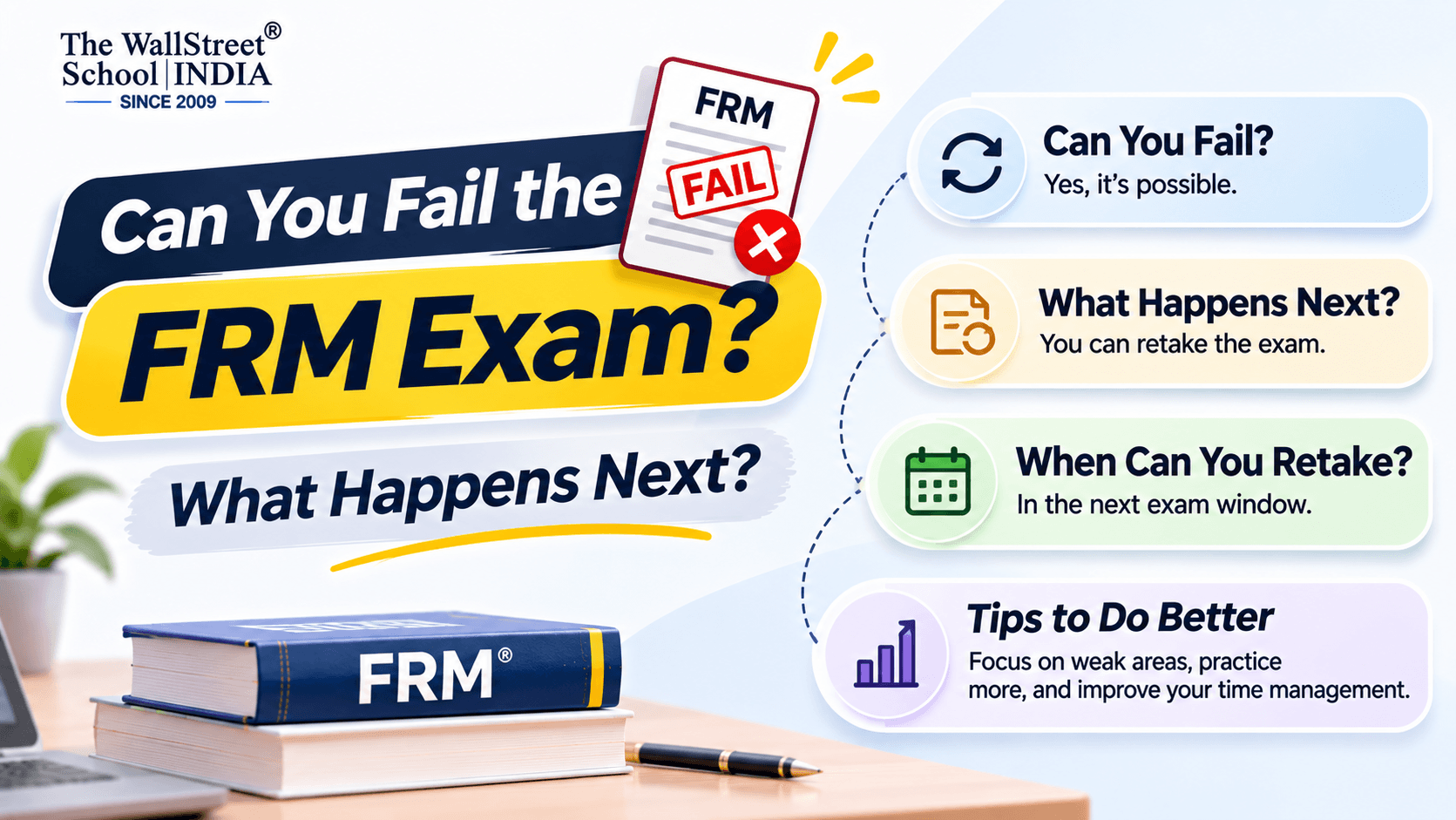
Yes, you can fail the FRM Exam . A lot of people do and it's not the career-ending certification it feels like at 2am while refreshing your results page. Here's what actually happens and what to do ab
Yes, you can fail the FRM Exam. A lot of people do and it's not the career-ending certification it feels like at 2am while refreshing your results page. Here's what actually happens and what to do about it.
Do People Actually Fail FRM?
Regularly. Pass rates for both parts typically hover somewhere in the 40 to 50 percent range depending on the exam window, which means close to half the people sitting for it don't clear it on a given attempt. That includes people with finance degrees, people with years of work experience and people who studied hard. Failing FRM Part 1 or Part 2 isn't a sign you're not cut out for this. It's a normal, common outcome that a huge number of eventual charterholders went through at least once.
If you're currently staring at a fail result, that number alone should take some of the panic out of the room.
What Actually Happens If You Fail
Nothing dramatic, honestly. Here's the real sequence.
Your FRM Exam Results come with a breakdown, not just pass or fail.
You'll see a quartile performance chart across each topic area. This is the most useful thing you get from a failed attempt, it tells you exactly where you were weak, not just that you were weak somewhere.
You can register for the next available window.
FRM exams run twice a year for Part 1 and there's no penalty or waiting period for retaking. You simply enroll again, pay the exam fee for that attempt and sit whenever the next window works for you.
Your previous prep isn't wasted.
Whatever you learned the first time carries forward. Most candidates who fail and retake report the second attempt feeling noticeably more manageable, because the material isn't new anymore, only the gaps are.
There's no cap that stops you from trying again.
You're not locked out after one fail. People clear FRM Part 1 on their second or third attempt all the time and it doesn't show up anywhere on their eventual certification.
Why People Actually Fail FRM?
People who actually fail the FRM exam have reported that the following issues caused them the most trouble -
Being unable to finish all of the quantitative questions in Section 1 of the exam is the number one reason.
The FRM exam questions are very application-based. It is usually not sufficient to simply know and recognize a formula. Questions are based on various scenarios where the exam gives you a starting point and asks what a specific risk metric is implying.
The majority of s
students begin doing practice questions very late in their prep time. It has been reported that students spend 80% of their preparation time reading and reviewing and practicing questions very late in their prep time.
Noted one of the biggest mistakes students make is to spend an equal amount of time studying each topic. Students should spend a greater amount of prep time covering topics that cover a greater weightage in the FRM exam.
Lastly, several students report that they failed to prepare for the FRM exam by practicing taking the exam itself. Students report that they learn the FRM exam format and prepare for the exam in a very fragmented way.
What To Actually Do If You Failed
Practical steps, not pep talk.
Read your quartile breakdown properly before doing anything else. Don't just glance at it. Note exactly which topic areas you scored in the bottom quartiles. That's your entire study plan for the retake, right there.
Don't restart from scratch. Go back to your weak topics specifically. If Quantitative Analysis was your bottom quartile, that's where 60 to 70 percent of your next study block should go, not an even split across everything again.
Increase your mock exam volume, not just your reading volume. If you did two full-length mocks last time, aim for five or six this time. Under real time constraints, no notes, no pausing.
Time-box the quant sections specifically. If speed was your issue, practice solving quant questions with a visible timer running, even during regular practice, not just in mocks.
Give yourself a slightly longer runway this time. If you crammed the syllabus into 3 months last time, stretch it to 4 or 5. Rushing is a common reason for a repeat fail and there's no prize for retaking too soon and failing again.
Does Failing Once Hurt Your Career or Reputation?
No and this genuinely doesn't come up the way people fear it will. Employers and interviewers care whether you're an FRM charterholder, not how many attempts it took you to get there. Nobody asks in an interview "did you clear this on your first try. The certificate looks identical either way.
If anything, having gone through a failure and coming back to clear it shows something useful: that you can identify a weakness and fix it methodically, which is a decent trait for anyone going into risk management as a career.
Before You Retake, Ask Yourself This
A few honest questions worth sitting with before jumping straight back into FRM Exam Preparation.
Did you actually put in the practice hours last time or did prep get squeezed out by work and life? If it's the latter, the fix might be more about protecting study time than changing your method.
Was there one specific topic that tanked your score or were you weak broadly across the board? A narrow gap needs targeted fixing. A broad gap might mean your foundational understanding needs a full rebuild before jumping back into practice questions.
Are you retaking because risk management still genuinely interests you or because you feel like you have to finish what you started? Both are valid reasons to continue, but knowing which one you're working with changes how much pressure you should put on this next attempt.
Frequently Asked Questions
Q1. How many times can I retake the FRM Exam?
There's no official limit on attempts. You can register for as many exam windows as needed until you clear both parts, though each attempt requires paying the exam fee again.
Q2. Does a failed attempt show up on my final FRM Certification?
No. Once you clear both parts and meet the work experience requirement, your certification doesn't reference how many attempts it took. It looks the same as someone who cleared it on the first try.
Q3. Should I retake the next available window or wait longer?
Depends on your quartile breakdown. If your gaps were narrow and specific, the next window is often fine. If your fail was broad across multiple topics, an extra few months to rebuild fundamentals usually pays off more than rushing back in underprepared.
Q4. Is FRM Part 1 or Part 2 more commonly failed?
Both see similar pass rate ranges, but Part 1 trips up more people early because of its quantitative analysis section. Part 2 failures more often come from underestimating how application and scenario heavy the questions get.
Q5. Will failing once make it harder to get a risk management job later?
No. Recruiters and interviewers focus on whether you hold the FRM Certification and how well you can discuss risk concepts in an interview, not your attempt history. This isn't something that comes up in hiring conversations.
Bottom Line
Failing the FRM Exam feels like a bigger deal in the moment than it actually is in the long run. Close to half the people sitting for it don't clear it on a given attempt and a large share of eventual charterholders have at least one failed attempt somewhere in their journey. What actually matters is what you do with the quartile breakdown you get back, not the fact that you got one.
If you're trying to figure out whether to retake, switch up your prep approach, or even step back and rethink if this path is right for you, don't decide that at 2am right after checking your result. Sleep on it, look at your breakdown with a clear head, and if you want a second opinion, that's exactly the kind of thing we're happy to talk through with you. For guidance and more, contact us at www.thewallstreetschool.com
Interested in Learning Finance Professionally?
Our courses take you from fundamentals to expert level — with live mentors and placement support.
Explore Our Courses